Most shoppers hunting for a pressure cooker for weeknight dinners stall at the same fork in the road: a stovetop pot that hisses and rattles on the burner, or an electric countertop machine with a keypad and twelve buttons that mostly do the same thing. I have cooked on both for 15 years, and the fork matters less than people think.
I'm Tom. I cook dinner for five in Columbus, Ohio, I'm a former line cook, and I've owned 11 pressure cookers, from the rattling stovetop model my grandma handed down to most of the Instant Pot lineup. My kitchen runs on a meal-prep spreadsheet with more than 60 recipes and a cook-time log, because guessing is how you end up with shoe leather at 7:45 on a Tuesday.
Here's the lesson that took me the longest to learn: a pressure cooker is only as good as its weakest moment, and the weakest moment is almost never the pressure cooking itself. It's the sear before, the release after, and the cleanup at 8:40 p.m. when nobody in the house wants to scrub a pot.
So this is a how-to, not a spec sheet. Below is the workflow I run on a Tuesday, the two cookers I would hand a beginner, and the places where both of them will annoy you.
Why you should trust me
Three rules keep my recommendations honest. No recommendation without 10 real dinners cooked in it. No "one pot" claim without a clean-pans count. No pressure claim without checking whether the sealing ring can be bought separately, because a cooker with an unobtainable gasket is a disposable appliance.
That last one is not a nitpick. The sealing ring is the silicone gasket that holds pressure and absorbs the smell of every chili and curry you have ever cooked in it. If you cannot order a replacement, you are throwing away a working machine the first time the ring goes loose or the odor refuses to wash out.
In 2026 I'm cooking 30 weeknight dinners across seven pressure cookers, one chili, one pulled pork, and one soup per machine, with a cleanup timer running on the counter the whole time. The two cookers below are the ones I would start with at the entry level, one electric and one stovetop.
How I picked and how I tested
Every cooker goes through the same four questions, in this order.
Does the sauté mode get hot enough to brown without scorching? A weak sauté means you dirty a second pan, and the moment you dirty a second pan, the whole point of one-pot cooking is gone.
Does it come to pressure fast and hold it steady? A cooker that climbs slowly or drifts while it works turns a 40-minute dinner into a 70-minute one, and 70 minutes on a Tuesday is a different meal entirely.
Can I replace the sealing ring? Covered above, but it belongs on the list, because it decides whether the machine lasts three years or ten.
Would it survive 30 weeknight dinners in a house with five people? That is the real test. A pot can be brilliant on a Sunday and miserable on a Wednesday.
I also count pans. Every recipe gets a clean-pans count written next to it in the spreadsheet, and anything that scores three or higher gets rewritten or dropped. A pressure cooker that needs a skillet, a pot, and a colander is a stew maker with extra steps, and I already own a stew maker.
The two cookers I would start with
If you are buying your first cooker, the decision comes down to two shapes: a small programmable electric, or a stovetop pot. They are different tools for different cooks, and the right answer depends on how you actually cook on a Tuesday.
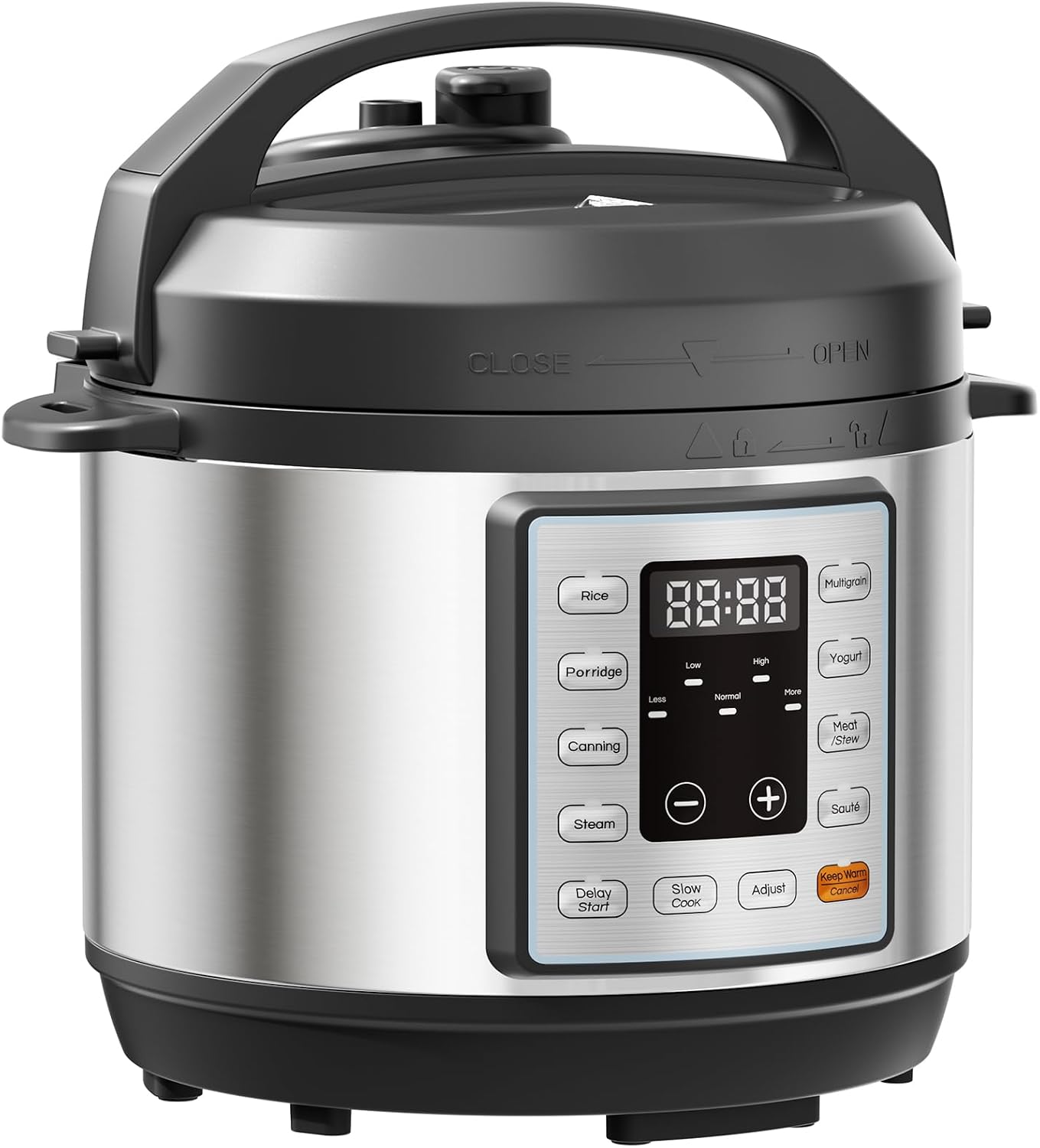
Budget pick: NEWBULIG 10-In-1 Electric Pressure Cooker, 3 Quart Multi Cooker for Rice, Stew and Steam, Small Programmable Stainless Steel Pot with Slow Cook Function and Ceramic Inner Pot
 Visit on Amazon →
Three quarts, programmable, and built around rice, stew, and steam, with a slow cook function and a ceramic inner pot. Check current Amazon price.
What that combination buys you is a countertop cooker sized for two to four people that can hold dinner on keep warm until the last person walks in the door. The ceramic inner pot is the part I care about most, because a ceramic surface is gentler on rice and grains than bare stainless, and it means you reach for a wooden spoon or a silicone spatula instead of a metal one. Treat it like a nonstick pan and it behaves like one.
The "10-in-1" label is the part I would ignore. Most of those programs are the same pressure with a different timer attached, and three good programs beat twelve gimmicks every time. Use the manual pressure setting, use the slow cook function when you want it, and let the rest of the buttons sit there.
Flaws but not dealbreakers: Three quarts is small if you batch cook for a family of five. Plan on two rounds, or size up. And check that a replacement sealing ring is available for your exact model before the original goes loose, because that single part decides how long the cooker lives.
Anyone cooking for one to four people who wants hands-off dinners and a real keep warm function will get the most out of this one.
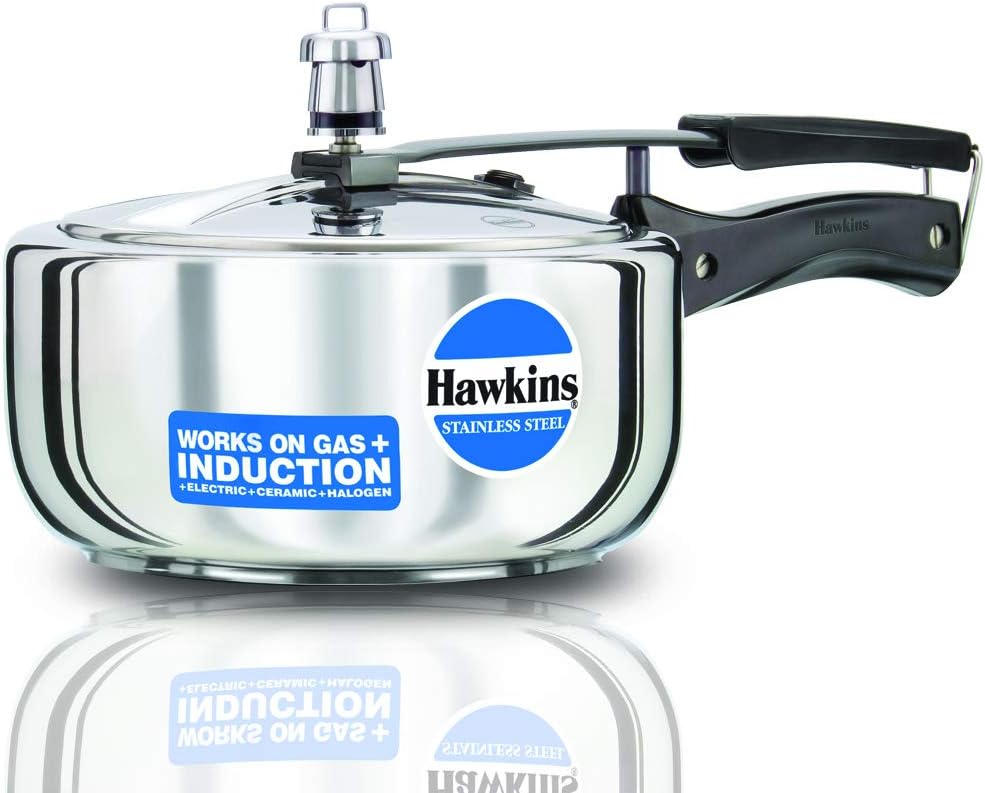
The stovetop option: Hawkins B60 Pressure Cooker, 3 L, Silver
 Visit on Amazon →
Three liters, stovetop, with the weighted regulator that has been the design for generations. Check current Amazon price.
Stovetop cooking comes up to pressure fast because the burner does the work, and there is no keypad to fail, no fuse to blow, and nothing to plug in. You also get a pot that browns on the same burner it cooks on, which is the thing I miss every time I use an electric. For beans, stocks, and anything where I want to watch the regulator and trust my own timer, this is the shape I reach for.
The trade is that it is completely manual. Nothing holds your hand, nothing switches itself to keep warm, and the release is on you. It will hiss and it will rattle, and if that sound makes you nervous, an electric is the honest answer. I tell every beginner the same thing: learn on electric, graduate to stovetop.
Flaws but not dealbreakers: Three liters is a side dish when you are feeding five, so treat this as a small-batch pot or a second cooker rather than the family workhorse. And because it is manual, a natural release you forget about is a natural release that keeps cooking.
Anyone who already cooks on gas, wants a pot that doubles as a regular saucepan, and does not mind standing in the kitchen will be happy here.
The weeknight workflow, step by step
This works on either cooker. The steps do not change, only the buttons do.
Step one: pick the pot before the recipe. Match capacity to servings before anything else. Three quarts feeds two to four. If you are cooking for five and you only have a small pot, split the batch or accept that you are making two dinners. Overfilling is how you get a steam vent that sprays your ceiling.
Step two: sear first, always. Sear first, pressure second. If your cooker can't sear, it's a stew maker with extra steps. On an electric, that means sauté mode, and you want to hear a real sizzle when the meat hits the pot, not a sad simmer. On a stovetop pot, brown in batches on the burner and do not crowd the pan.
Step three: deglaze and scrape. Pour in a splash of stock, wine, or even water, and scrape the browned bits off the bottom with a wooden spoon. Those bits are the flavor base for everything that follows. Leaving them stuck to the bottom is also how you trigger a burn notice on an electric cooker.
Step four: get the liquid right. Pressure cooking needs liquid to make steam, and the manual for your cooker tells you the minimum. Respect it. Too little and you scorch; too much and you get soup when you wanted stew. Remember that vegetables and frozen meat release water of their own.
Step five: seal and let it climb. Lock the lid, confirm the valve is set to sealing, and let the cooker come up on its own. Do not lift the lid to check. Every time you open it, you restart the clock and lose the heat you already paid for.
Step six: cook to the chart, then adjust. The timing chart in your manual is a starting point, not gospel. Write down what you actually did and how it came out, the same way I keep a cook-time log. Two or three dinners in, you will know your cooker's personality better than any chart does.
Step seven: natural release or quick release. Natural release means letting the pressure drop on its own, and it is the difference between tender pulled pork and shoe leather. Use it for large cuts of meat, beans, and anything you want falling apart. Quick release is for vegetables, rice, and anything that would turn to mush if it kept cooking. I preach natural release and then quick release my own chili, so do as I say.
Step eight: keep warm, then clean up. The keep warm function is where weeknight dinners are actually won, because it means dinner is ready when your family is, not the other way around. When you are done, pull the sealing ring out of the lid, wash it separately, and let both dry fully before you put the lid back on. Store the lid off or upside down. Trapped moisture is what makes a ring smell like last month's curry.
The cookers I compared along the way
I have spent real dinners with the Instant Pot Duo, the Instant Pot Pro, the Ninja Foodi, the Crock-Pot Express, and the Breville Fast Slow Pro, and they all come up in this conversation. They are also a different price bracket and a different guide. The Duo remains the best all-rounder for a family, the Pro is the one to buy if you sear a lot, the Foodi is the combo pick if you want crisp, the Express is the budget machine that simply works, and the Breville is the premium option with the best sauté and the most consistent temperature.
None of that changes today's job, which is learning the workflow on an entry-level cooker before you spend premium money on one. Buy the small electric if you want hands-off. Buy the stovetop pot if you want control. Then cook 10 dinners in it before you decide anything else.
What this actually costs you, in minutes
I stopped measuring cookers in dollars a while back and started measuring them in minutes, because minutes are the thing a weeknight does not give back.
The pressure cooking itself is the fast part. The minutes that decide whether a cooker stays on your counter are the ones around it: how long the sauté takes to come up, how long the climb to pressure takes, how long you stand there during a quick release, and how many pans end up in the sink.
That is the whole argument for one good pot. A cooker with a real sauté and a keep warm function gives you a dinner where the pan count is one, the standing time is near zero, and the food is done before anyone asks whether it is done. A cooker without those two things gives you the same food plus a skillet to scrub.
Check current Amazon price on both of the cookers above before you commit, and check the replacement sealing ring at the same time. If a ring is available, you are buying a tool. If it is not, you are renting one.
That's the job. Pick the shape, run the eight steps, and let the pot do the waiting for you.