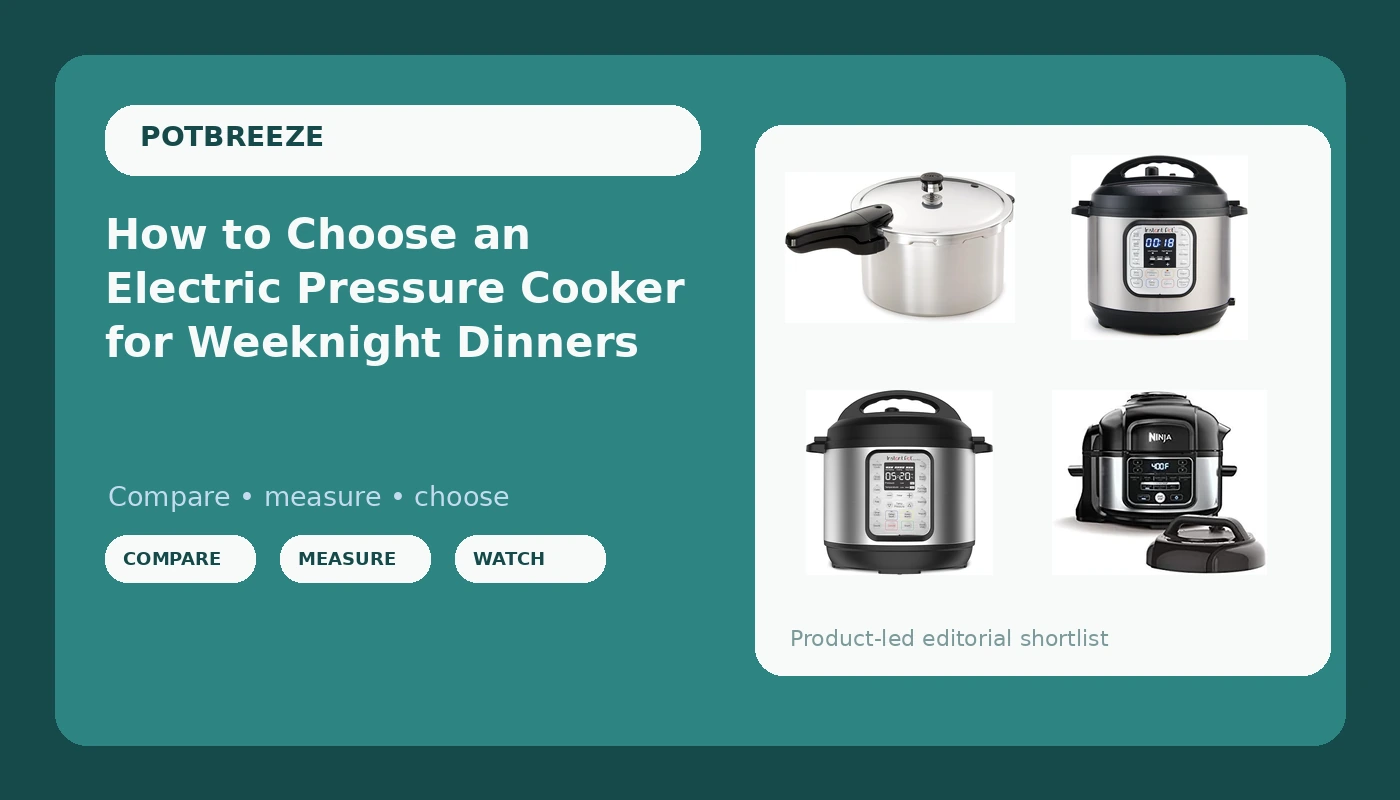
An electric pressure cooker promises one pot, one plug, and dinner on the table before anyone starts asking what smells so good. The catch is that the category splits into very different machines. There is a 6-quart electric cooker with a control panel full of one-touch programs, a 9-in-1 combo unit that pressure cooks and air fries in the same footprint, and a stovetop aluminum pot with no cord at all. Choosing between them comes down to three questions worth asking about any cooker: does the sauté mode get hot enough to brown meat, can the sealing ring be replaced once it starts holding onto last week's chili, and does keep warm actually keep dinner warm until the last person sits down. Answer those honestly and the shortlist writes itself.
Related: Instant Pot Duo vs Duo Plus: What the Extra Programs Actually Buy You →
Quick answer
For most households, a 6-quart electric pressure cooker covers the widest range of weeknight meals, and the Instant Pot Duo 6 Qt 7-in-1 is the most direct starting point because it handles the core jobs with the fewest decisions. Step up to the Instant Pot Duo Plus 6 Qt 9-in-1 if you want more one-touch programs in the same 6-quart body. Choose the Ninja OS101 Foodi if you want pressure cooking and crisping from a single appliance. Choose the Presto 01282 8-Quart if you want stovetop control and a larger batch size. The right pick depends on how you sear, how many people you feed, and whether you have room to store a second lid.
4 useful options
| Model | Best fit | What stands out |
|---|---|---|
| Instant Pot Duo 6 Qt 7-in-1 Electric Pressure Cooker | First electric cooker for a family | 6-quart stainless steel inner pot with seven built-in programs |
| Instant Pot Duo Plus 6 Qt 9-in-1 Electric Pressure Cooker | Cooks who want more one-touch programs | Nine built-in programs in the same 6-quart format |
| Ninja OS101 Foodi 9-in-1 Pressure Cooker & Air Fryer | Pressure cooking plus crisping | Two lids, a 5-quart cooking pot, a 4-quart Cook & Crisp plate, and a broil rack |
| Presto 01282 8-Quart Aluminum Pressure Cooker | Stovetop control and bigger batches | 8-quart aluminum body that runs on burner heat, no cord |
The default electric: Instant Pot Duo 6 Qt 7-in-1 Electric Pressure Cooker
This is the machine most people picture when they hear "electric pressure cooker," and for good reason. Seven programs is enough to cover pressure cooking, sauté, and the keep-warm function that decides whether dinner is actually ready when you are, without burying you in buttons that all do roughly the same thing. The 6-quart pot is the size that fits a family dinner plus a lunch portion the next day, and because the inner pot is stainless steel, you can brown in it and then go straight to pressure without dirtying a skillet. The trade-offs are real: 6 quarts is not a big-batch machine if you are feeding a crowd or freezing chili by the gallon, and an electric cooker occupies counter space permanently unless you have a cabinet tall enough to hide it. If you want the fewest moving parts and the shortest path from recipe to dinner, start here.
The preset upgrade: Instant Pot Duo Plus 6 Qt 9-in-1 Electric Pressure Cooker
More buttons is not more cooker. Two extra programs only matter if they replace a step you would otherwise do by hand, which is why the Duo Plus is worth considering rather than automatically upgrading to. What makes it an easy call is that the size and shape do not change: it is still a 6-quart stainless steel pot with the same family-sized capacity, so any recipe that works in the Duo works here. If you already know which two or three programs you actually use and the rest are decoration, save the decision for something else. If you like the idea of a one-touch starting point for more dishes, this is the same platform with a longer menu.
The combo cooker: Ninja OS101 Foodi 9-in-1 Pressure Cooker & Air Fryer
The appeal here is the second act. A pressure cooker that can also air fry means pulled pork and crisp chicken skin can come out of the same base, and the broil rack plus Cook & Crisp plate give you a real surface for crisping instead of a soggy approximation. The honest trade-off is that a combo appliance splits its attention. The cooking pot is 5 quarts rather than 6, so batch sizes run smaller than the Instant Pot models above, and you now own two lids that both need somewhere to live. If you have one counter slot and want both jobs covered, that is a fair trade. If you already own an air fryer, you are paying for a function you will not use.
The stovetop original: Presto 01282 8-Quart Aluminum Pressure Cooker
This is the pot your grandmother had, and it still does one thing the electrics cannot: it sears like a skillet because it is sitting on a live burner. You bring it up to pressure, you dial the heat down, and you watch the clock. Eight quarts means a whole chicken or a double batch of soup without negotiating space, and there is no cord, no panel, and nothing to plug in. The trade-off is the learning curve. You manage the heat yourself, the pressure regulator makes noise, and the release is something you time rather than program. If you are new to pressure cooking, an electric model removes a layer of decisions. If you already cook on a stove with confidence and want capacity plus control, this is the option that gives you both.
Prices and availability may change. Product images, names, and retailer links must be matched by verified ASIN. Do not state a current price, rating, stock status, or measured result without current evidence.
How pressure cooking actually works
A pressure cooker is a sealed pot. As the contents heat, steam cannot escape, so pressure builds inside and the boiling point of the liquid rises well above the normal 212 degrees Fahrenheit. That hotter environment is why a pot of dried beans that would take hours on a simmer finishes in a fraction of the time, and why tough cuts of meat break down into something fork-tender.
Electric and stovetop models reach that pressure differently. An electric cooker seals, brings itself up to pressure, and then holds it with a sensor and a heating element, which is why you can walk away from it. A stovetop cooker reaches pressure over burner heat and stays there only as long as you keep the flame or element at the right level. Both approaches work. The difference is who is paying attention.
Three parts do most of the work. The sealing ring is the silicone gasket that holds pressure, and it absorbs the aroma of everything you cook, which is why being able to buy a replacement matters. The sauté mode is the browning function, and a weak one sends you to a second pan, which defeats the point of a one-pot dinner. Keep warm is the least glamorous feature and the one that decides whether dinner is still hot when the last person gets home.
Natural release, quick release, and when each one matters
Release method changes texture more than most people expect. A quick release vents pressure immediately, which stops the cooking right away. A natural release lets pressure fall on its own, so the food keeps cooking gently as the pot cools. Soups, beans, and braised meat generally want the slower path. Vegetables and anything you do not want to overcook want the faster one. If you are unsure, lean toward natural release and give it ten minutes before venting whatever remains.
Here is a weeknight routine that keeps any of these cookers in rotation:
- Read the recipe once and decide the release method before you start, not after the timer beeps.
- Brown the aromatics and the meat on sauté or on the burner first, since the sear is where most of the flavor comes from.
- Add liquid to the minimum your recipe calls for, and never fill past the maximum line, using less for anything that foams.
- Lock the lid, confirm the valve is set to seal, and let the cooker come up to pressure before you start counting cook time.
- Let pressure drop naturally, then check doneness and use keep warm to hold dinner until everyone is at the table.
What to check before you buy
- Confirm the sealing ring can be purchased separately, because a cooker you cannot re-seal is a cooker with an expiration date.
- Look at how the sauté function behaves, since a weak sauté means an extra pan and an extra round of dishes.
- Do the capacity math against your actual dinners: 5 quarts, 6 quarts, and 8 quarts produce noticeably different batch sizes.
- Count your storage. A second lid, a broil rack, and a Cook & Crisp plate all need a home when they are not in use.
- Be honest about the programs. Three functions you use beat twelve you scroll past every night.
Which option should you choose?
Choose the Instant Pot Duo 6 Qt 7-in-1 Electric Pressure Cooker when you want a straightforward 6-quart electric cooker that covers the standard weeknight rotation without extra decisions. Choose the Instant Pot Duo Plus 6 Qt 9-in-1 Electric Pressure Cooker when you want more one-touch programs in that same 6-quart format. Choose the Ninja OS101 Foodi 9-in-1 Pressure Cooker & Air Fryer when you want pressure cooking and crisping from one appliance and can live with a 5-quart pot and two lids. Choose the Presto 01282 8-Quart Aluminum Pressure Cooker when you want burner-level searing, an 8-quart capacity, and are comfortable managing heat yourself.
One caveat worth stating plainly: capacity, program count, and lid design are facts you can compare from a product listing, but how a cooker fits your kitchen is not. Counter space, how often you actually air fry, and whether anyone in the house will be comfortable with a stovetop regulator all matter more than a feature list. Buy for the dinners you cook most, not the ones you imagine cooking.
The bottom line
If you want one appliance that handles the majority of weeknight pressure cooking with the least fuss, the 6-quart electric Duo platform is the sensible center of this group, and the Duo Plus is the same machine with a longer menu of one-touch programs. The Ninja Foodi earns its place when crisping is a real part of your cooking rather than an occasional novelty, and the Presto 8-quart is the pick for anyone who wants stovetop searing and larger batches. Whichever you choose, check the sauté performance, confirm you can replace the sealing ring, and make peace with the fact that keep warm is the feature you will appreciate most at 6:45 on a Tuesday.