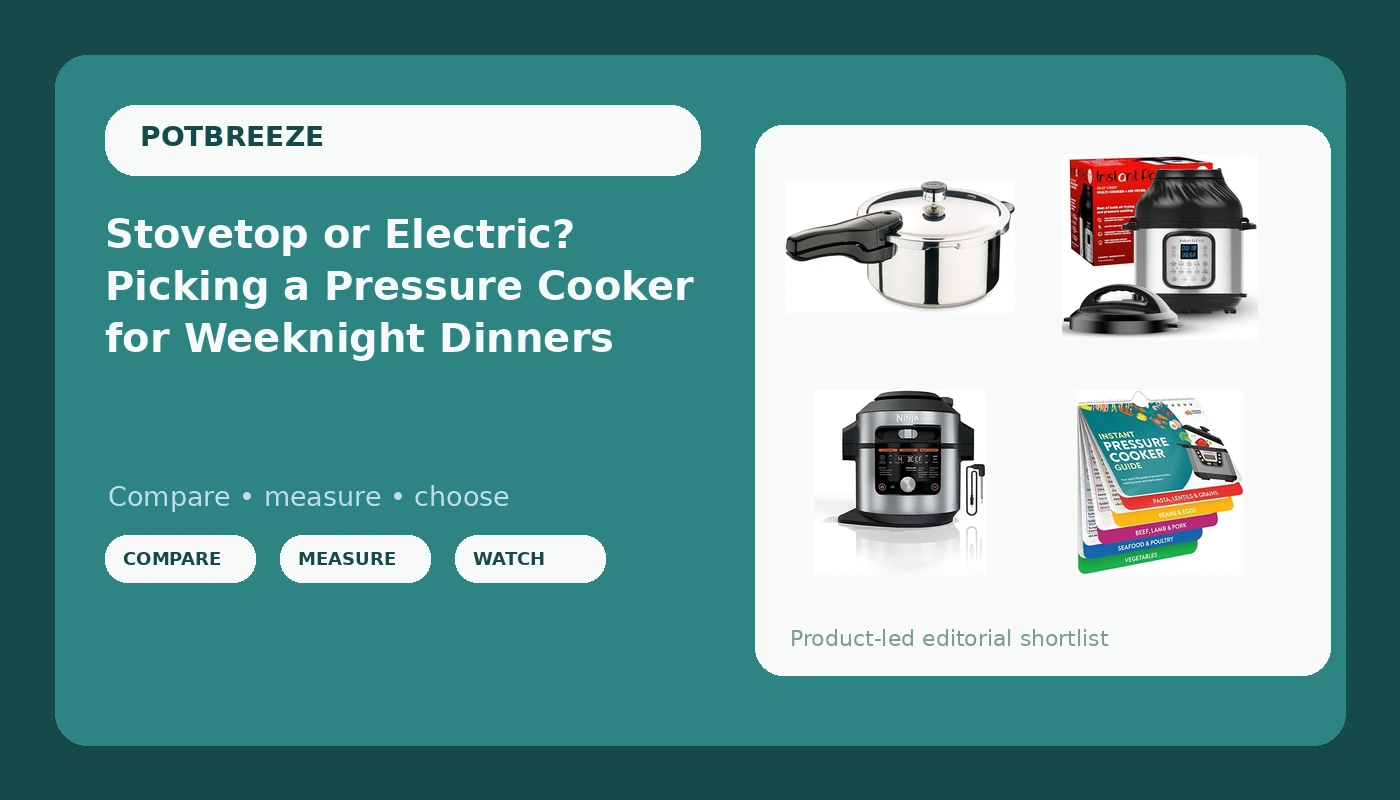
Related: Stovetop vs Electric Pressure Cookers: Which One Belongs on Your Counter?
A pressure cooker is a time machine. That part was never in dispute. The real question, the one a pressure cooker buying guide should actually answer, is which machine is also a good pot once the timer beeps.
I cook dinner for five people every weeknight, and I have owned 11 pressure cookers in 15 years. This year I ran 30 weeknight dinners across seven machines: one chili, one pulled pork, and one soup in each cooker, with a cleanup timer running on the counter beside every single one. That is the lens for this guide. Not button counts. Not spec sheets. What actually happens between 5:30 and 6:15 on a Tuesday when five people are hungry and the sink is already full.
Three of the machines below are cookers. One is the accessory that keeps me from guessing at cook times ever again.
Best Overall for Most Kitchens: Instant Pot Duo Crisp 6 Qt 11-in-1
This is the cooker I recommend to almost everyone, and it is the one I reach for on the nights when I want pressure cooking and a crispy finish without dirtying a second appliance. It pressure cooks, it air fries, and it does the slow cooker and steamer jobs my family asks for often enough to matter.
The sauté mode is the reason it wins. A weak sauté means you brown the meat in a skillet and then wash the skillet, which defeats the entire point of a one pot dinner. This one gets hot enough to put real color on a chuck roast before you lock the lid, and that sear is what makes everything downstream taste like a restaurant instead of a cafeteria.
Pressure comes up fast and holds steady. Natural release is where this machine earns its keep. Let the pressure drop on its own for a pulled pork and you get shreddable meat instead of shoe leather. Quick release a chili and you get a slightly looser pot of chili, which is fine, and also exactly what I do when I am running late, which is most nights.
Keep warm is the unsung hero here. Dinner is ready when you are, not when the timer dings, and with a household of five arriving at five different times, that matters more than any preset.
The compromises are honest ones. As a combo unit it does both jobs at about 80 percent. The crisp basket holds less than a dedicated air fryer, and small items can slip through the grate. The sealing ring is replaceable, which is non negotiable for me, because a gasket you cannot buy separately turns a 200 dollar appliance into a disposable one. Wash the ring, keep a spare, and this thing will outlast your kids' opinions about dinner.
Best for a Big Family or a Crisp Finish: Ninja OL701 Foodi 14-in-1 SMART XL 8 Qt
If you are feeding a crowd, this is the capacity answer. Eight quarts of pressure cooker plus a 5 quart crisp basket and a three layer setup means you can pressure cook a pork shoulder and crisp the top of it in the same machine without moving anything to a sheet pan.
The SmartLid is the feature that actually changed how I cook. On older combo machines you swap lids between pressure and crisp, and you inevitably grab the wrong one with wet hands. Here the lid stays on and the machine changes modes underneath you. Auto steam release takes one more thing off your mental checklist, and the built in thermometer means I am not opening the lid and losing pressure to check a chicken thigh.
Steam frying is the sleeper function. You get a crisp exterior with a steamed interior in one pass, which is how you make food that tastes fried without a vat of oil.
Now the honest part. This machine is big. It takes real counter space, and if your kitchen is small, you will feel it every day. There are also more programs than any family needs. Proofing is genuinely useful if you bake bread. The rest of the buttons are mostly variations on things you already have. More buttons is not more cooker, and this one proves it in both directions: the good programs are excellent, and the filler programs are filler.
It is a pressure cooker that is also an air fryer, and it does both well rather than perfectly. If crisp is the whole point of your purchase, buy a dedicated air fryer. If you want one machine that handles a Sunday pork shoulder and Tuesday's chicken wings, this is the one.
Best Stovetop Cooker: Presto 01341 4-Quart Stainless Steel
My grandma had a rattling stovetop cooker, and that rattling is where I learned that pressure cooking is patience with a timer. This Presto is the modern version of that pot, and it is the fastest cooker in this guide by a wide margin. A stovetop cooker hits pressure faster and runs hotter because your burner is doing the work, not a heating element and a control board.
Four quarts is the right size for beans, rice, and a pot of soup for four. Stainless steel means no coating to flake, no nonstick to baby, and a pot you can scrub with steel wool when someone leaves chili on the stove overnight. It is also the simplest machine here, which is its own kind of luxury. No firmware. No app. No beeping.
Here is the boundary I hold: skip a stovetop cooker if you are a beginner. The learning curve is real. You have to learn your burner, you have to listen for the jiggle, and you have to time your own release instead of pressing a button. The rattling will scare your family, and the first time you quick release something with too much liquid, you will redecorate the ceiling.
There is also no sauté and walk away. You sear on the stove, you lock the lid, you stand there. For a weeknight cook who wants to start dinner and go fold laundry, the electric machines win. For a cook who wants the fastest, most repairable, most indestructible pot on the market, this is it.
The Accessory That Earns Its Spot: Instant Pot Magnetic Cheat Sheet Magnet
I keep cook times in a spreadsheet that now has more than 60 recipes in it, and I still reach for a magnet more often than I open the laptop. This cheat sheet sticks to the fridge or the side of the cooker and puts times for rice, beans, chicken, and vegetables where your eyes already are when you are standing at the counter with wet hands.
It is the cheapest thing in this guide and the one that changes the most dinners, because the number one reason people get mediocre results from a pressure cooker is guessing at time and releasing pressure at the wrong moment. A reference you can read at a glance fixes that.
It is a magnet, not a machine, so calibrate your expectations. It will not tell you your machine runs hot on sauté, and it will not remind you that your sealing ring smells like last week's curry. Pair it with a thermometer and a spare ring and you have the full kit.
How I tested
I cooked 30 weeknight dinners across seven machines. Each cooker got one chili, one pulled pork, and one soup, plus whatever the family asked for on the other nights. A cleanup timer ran next to every cook, counting every minute I spent scrubbing, soaking, and washing parts.
The chili test tells me about sauté. Does the bottom of the pot brown the meat and the onions, or does it steam them grey and then scorch the fond into a layer that needs a chisel? The pulled pork test tells me about pressure and release. Does it come up to pressure fast, hold steady, and reward a natural release with meat that shreds under a fork? The soup test tells me about the sealing ring. Does the pot smell like last night's dinner three days later?
Then I lived with each one like a real person does. Filled it, emptied it, washed the ring, checked whether I could order a replacement ring without buying a whole new appliance, and counted how many nights I had to dirty a second pan because the sauté mode could not do the job.
Analysis and test results
Sauté quality decides everything. A weak sauté means dirty pans and sad sears, and a sad sear means a stew that tastes like nothing in particular. The Instant Pot Duo Crisp browns well enough that I stopped pulling out the skillet for chili. The Ninja OL701 keeps up, and its larger surface area means I can brown more meat at once. The Presto has no sauté at all, because on a stovetop cooker your burner is the sauté, and that is either a feature or a deal breaker depending on the cook.
Pressure and release separate the machines more than any spec sheet suggests. Electric cookers take longer to climb to pressure and hold temperature with a control board. Stovetop cookers get there faster and hotter. In a weeknight kitchen, that difference matters less than you would think, because the electric machines let you walk away. The stovetop machine requires you to stay.
The sealing ring check is where I draw my hard line. A ring you cannot replace is a countdown clock. Every cooker here takes a replaceable ring, and I keep a spare for each, because a ring that smells like last week's curry will make this week's rice taste like it too. If a machine ever fails that check in my kitchen, it leaves the kitchen.
Keep warm wins weeknights. It is the least glamorous function on any of these machines and the one that actually gets dinner on the table when practice runs late and the last person walks in at 6:40.
Button honesty is the last test. I counted how many programs I used more than once in 30 dinners. The answer was three: pressure cook, sauté, and air crisp or steam fry. Everything else is a preset for a recipe you could program yourself. That is not a reason to avoid the Ninja OL701, but it is a reason not to pay extra for a button count.
Cleanup timers told the same story in every kitchen: fewer parts, faster dinner. The combos add a crisp basket and a splatter guard. The stovetop pot is one piece of stainless steel. The magnet adds zero minutes, which is the best number in this guide.
The pressure cooker reference table
| Product | Type | Capacity | Best for | Price |
|---|---|---|---|---|
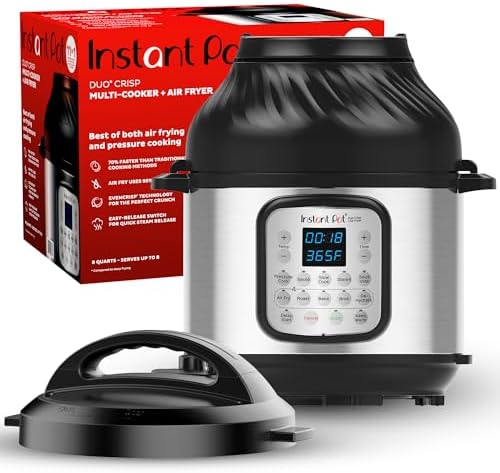 Visit on Amazon → Instant Pot Duo Crisp 6 Qt 11-in-1 |
Electric, pressure plus air fry | 6 qt | Most kitchens, one appliance for both jobs | Check current Amazon price |
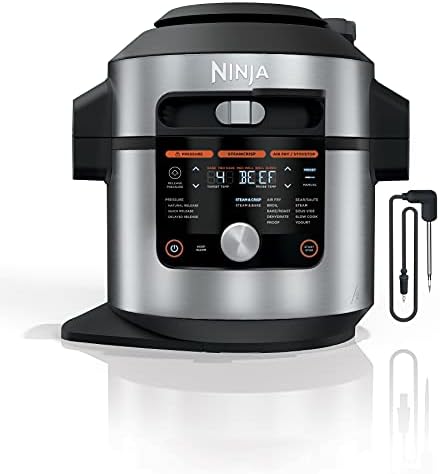 Visit on Amazon → Ninja OL701 Foodi 14-in-1 SMART XL 8 Qt. |
Electric, pressure plus steam fry | 8 qt, 5 qt crisp basket | Big families, steam frying, proofing | Check current Amazon price |
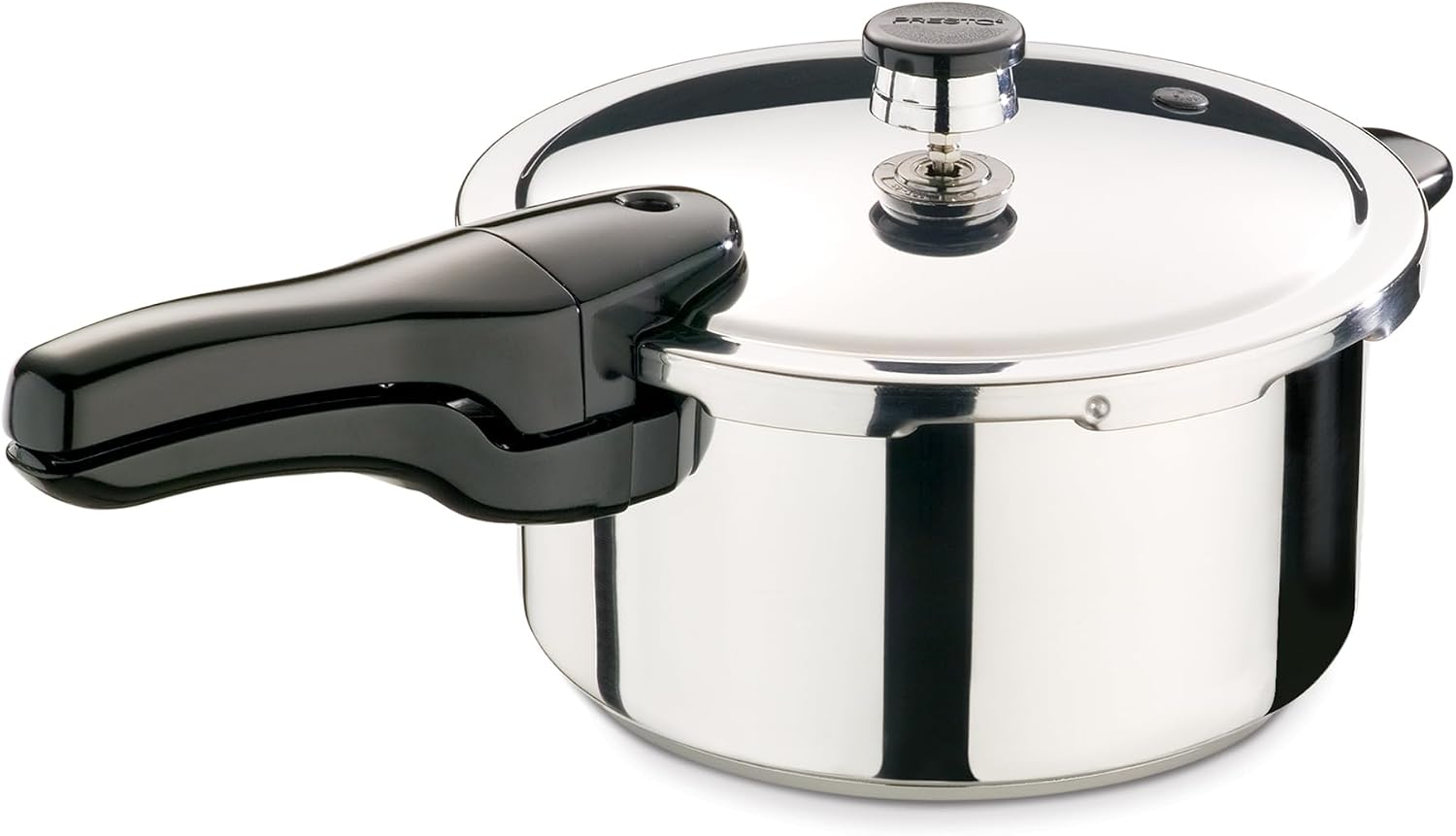 Visit on Amazon → Presto 01341 4-Quart Stainless Steel Pressure Cooker |
Stovetop, stainless steel | 4 qt | Fastest cooks, beans and rice, no electronics | $89.99 |
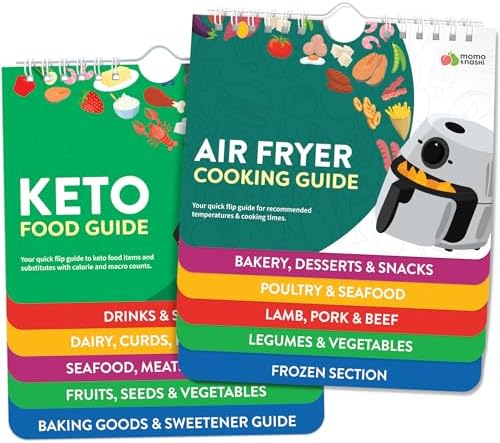 Visit on Amazon → Instant Pot Magnetic Cheat Sheet Magnet |
Accessory, cook time reference | Not applicable | Anyone who guesses at cook times | $8.42 |
The pattern in the table is simple. If you cook for two to four people and you want one appliance doing the work, take the Duo Crisp. If you cook for five or more and you want the biggest capacity plus steam frying, take the Ninja OL701. If you want speed, stainless steel, and zero electronics, take the Presto and accept that you are standing at the stove. Add the magnet regardless, because guessing is the most expensive habit in pressure cooking.
Should you buy the Instant Pot Duo Crisp?
Yes, for most kitchens. The sauté mode gets hot enough to brown without burning, the sealing ring is replaceable, and keep warm means dinner survives a late practice. It does pressure and crisp at about 80 percent each, and for a weeknight family that is more than enough.
Should you buy the Ninja OL701 Foodi?
Yes, if capacity is your problem. Eight quarts, a 5 quart crisp basket, and a three layer setup handle a crowd, and the SmartLid and auto steam release remove the two steps I used to fumble. Budget the counter space before you buy, and ignore half the buttons.
Should you buy the Presto 01341?
Yes, if you are experienced and you want the fastest pot in the kitchen. No, if you are a beginner. The learning curve is real, the rattling takes getting used to, and there is no walk away sauté. Buy it for beans, rice, and stock, not for a hands off Tuesday.
Should you buy the magnetic cheat sheet?
Yes. It is the cheapest upgrade in this guide and it fixes the mistake that ruins the most pressure cooked dinners, which is guessing at time and releasing pressure too early. Stick it on the fridge and stop opening a laptop with wet hands.