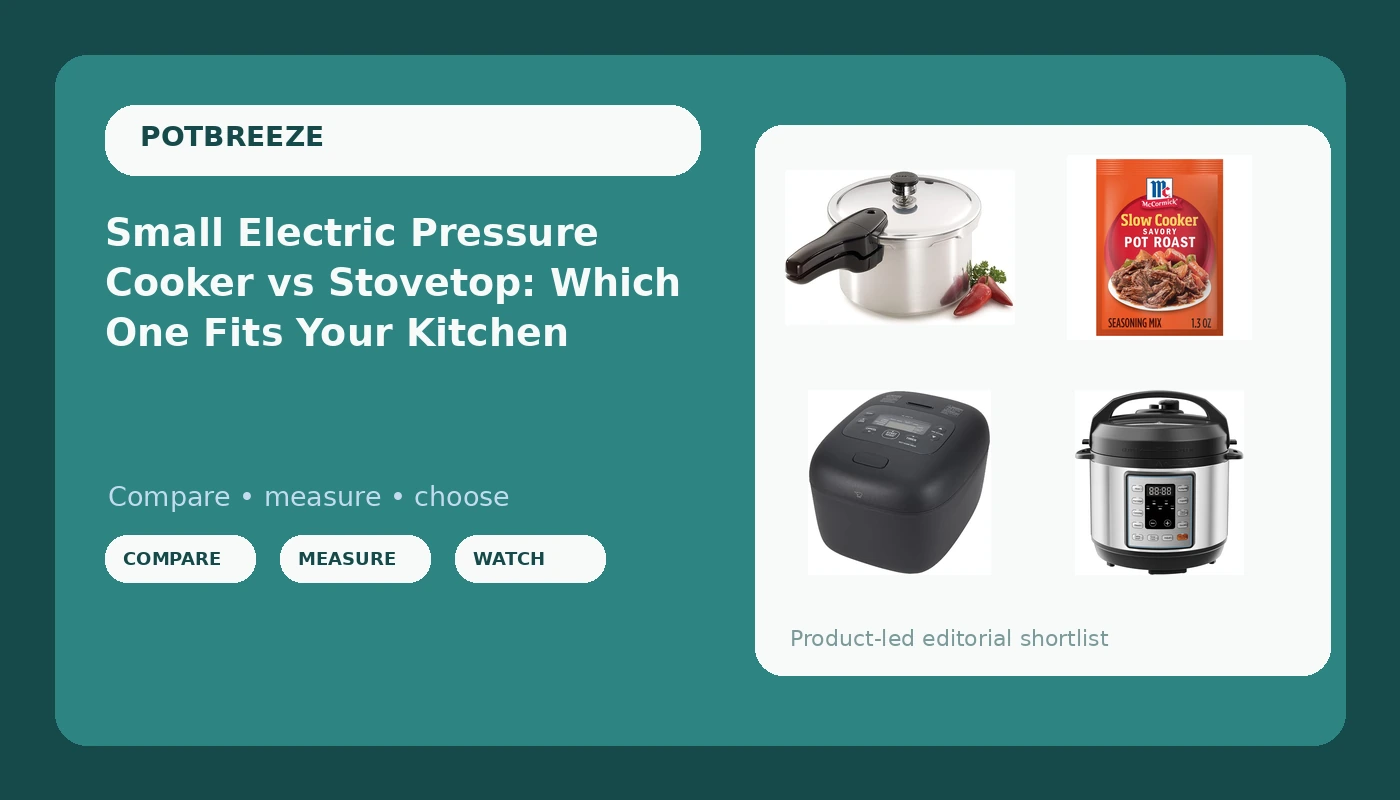
I cook dinner for five people most nights, which means anything that lives on my counter has to earn its square footage. A small electric pressure cooker has a harder case to make than a 6- or 8-quart machine, because it gives up capacity in exchange for fitting under a cabinet and coming up to pressure fast. So this comparison lines up four very different things: a 3-quart electric multi cooker, a 4-quart stovetop aluminum cooker, a 5.5-cup Micom rice cooker and warmer, and a slow cooker seasoning packet that exists to make one function on your cooker worth using.
I have owned 11 pressure cookers in 15 years. My grandma's rattling stovetop unit taught me that pressure cooking is patience with a timer, and a line cook I worked under taught me that a good sear makes everything after it taste like a restaurant. That is why I judge cookers on three unglamorous things: whether sauté gets hot enough to brown without scorching, whether the unit reaches pressure and holds it steady, and whether you can buy a replacement sealing ring when yours smells like last month's chili.
Two of the four items here are cookers. One is a rice specialist. One is a seasoning packet. I am not going to pretend otherwise, and I am not going to pretend I have run 30 weeknight dinners through every unit on this page. What I can tell you is what each one is for, what it costs you in cleanup and counter space, and where it will let you down.
Related: Stovetop vs Electric Pressure Cookers: Which One Belongs on Your Counter
The short answer: for a small household that wants one pot doing the work, the OLIXIS 10-in-1 3-quart is the small electric pressure cooker to start with, the Presto stovetop is the fast, loud, inexpensive classic for cooks who already manage their own heat, the Zojirushi is the rice specialist worth its premium if rice is on the plate most nights, and the McCormick packet is the pantry shortcut that decides whether your slow cook function ever gets used.
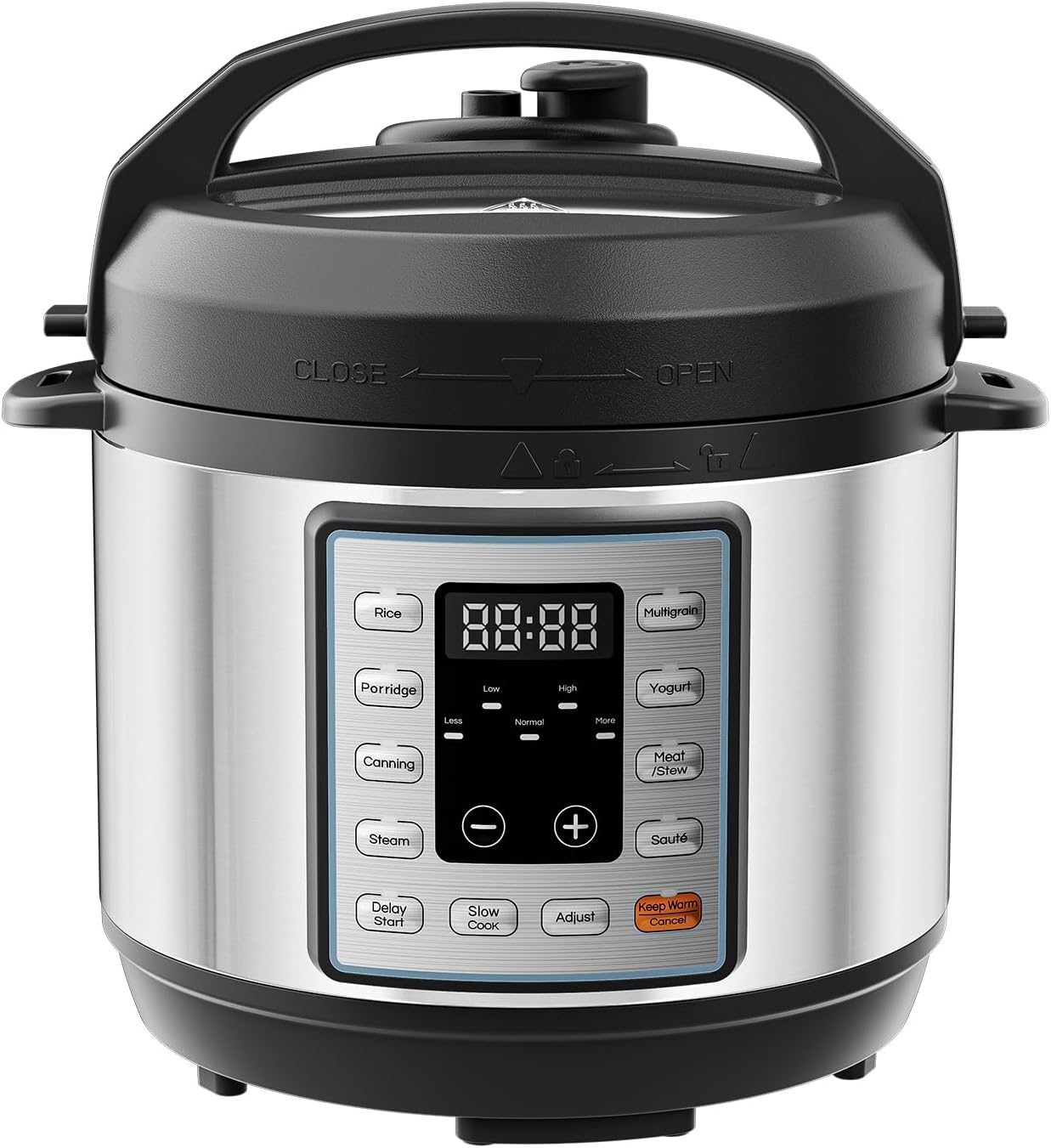
OLIXIS 10-In-1 Electric Pressure Cooker, 3 Quart
Smallest footprint here that still sautés, pressures, steams, and holds warm, with a ceramic inner pot and a slow cook function
3 quarts fills up faster than the box suggests, and the 10-in-1 panel is more menu than cooker
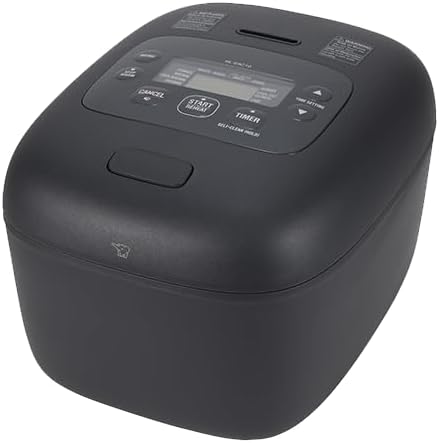
Zojirushi NL-EAC10BA Micom Rice Cooker & Warmer 5.5 Cups
Micom rice with a warmer that holds a pot for hours without drying it out, and 5.5 cups covers a family
It does not pressure cook anything, it does one job, and it is the premium pick in this lineup
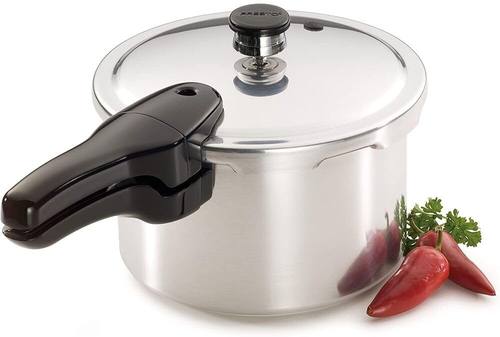
Presto 01241 4-Quart Aluminum Pressure Cooker
Stovetop speed, light aluminum body, no electronics to fail, and the least expensive way into real pressure cooking
The rattle scares beginners, you manage the heat yourself, and there is no keep warm setting
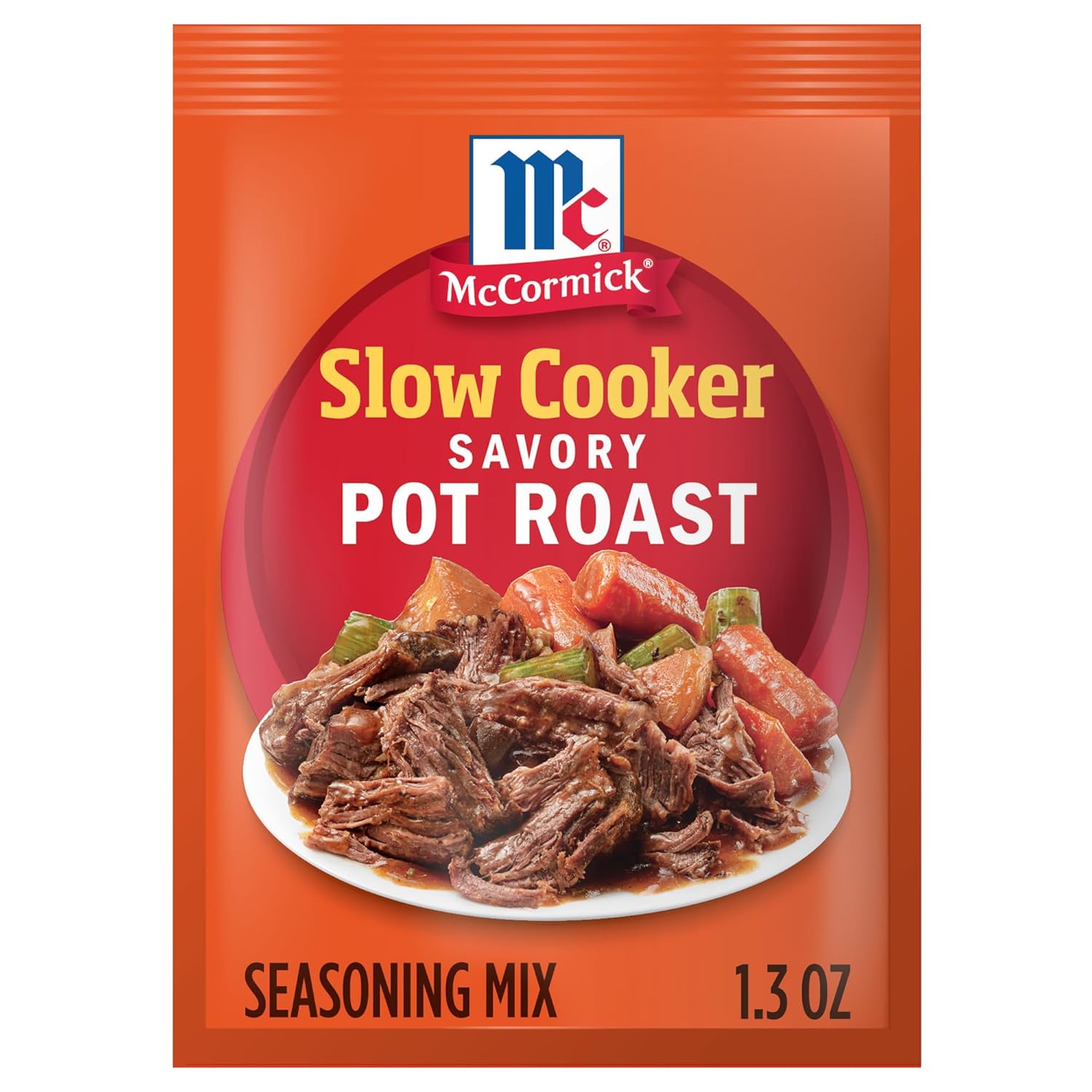
McCormick Slow Cooker Savory Pot Roast Seasoning Mix, 1.3 Oz
Turns a slow cook function into pot roast night with no measuring and nothing to plan
It is a packet, not a cooker, and it is salty and one note compared to building your own braise
Prices and availability were captured from Amazon Creators API and may change.
How I judge a cooker before it earns counter space
My prediction engine for any new cooker is four questions, and they have not changed since I started logging cook times in a spreadsheet.
First, does sauté get hot enough to brown a pound of chuck without burning the fond? If it does not, you will dirty a second pan, and the one pot claim is fiction. Second, does the unit hit pressure quickly and hold it, or does it cycle and stall while your vegetables turn to mush? Third, can I buy a replacement sealing ring, because the gasket is the part that fails and it absorbs the smell of every meal you have ever cooked in that pot. Fourth, would it survive 30 weeknight dinners in a house with five people and one dishwasher?
None of those questions are about button count. Twelve programs that all do the same low simmer is not more cooker, it is more menu. Three programs that work beat twelve that decorate a panel.
The 3-quart electric: OLIXIS 10-in-1
A 3-quart electric is the right size for two people who want leftovers, or a family of four where the cooker handles rice and a stew while something else roasts. The OLIXIS is programmable, stainless steel outside with a ceramic inner pot, and it covers rice, stew, steam, and a slow cook function, which is more range than most people use in a given week.
What it gets right: it is a genuine one pot machine at a size you can actually store. Sauté, pressure, keep warm, one insert to wash. For a household of one or two, that replaces a saucepan, a rice pot, and a stew pot on most nights, and the ceramic inner pot is the kind of surface you can scrub without babying it.
What it gets wrong: 3 quarts fills faster than the label suggests. Load it to the max fill line with dried beans and you will get less finished food than you planned, because everything in a pressure cooker expands and foams. If you are feeding five, treat this as a side dish cooker rather than a main. And the 10-in-1 badge is exactly the marketing I complain about. Count the programs you will use: rice, stew or soup, steam, slow cook, sauté. Everything past that is a button you will press once and forget.
The stovetop classic: Presto 4-quart aluminum
Stovetop pressure cookers are the original time machine. You control the heat, so you control the pressure, and the whole thing comes up to temperature faster than any electric unit I have used. The Presto 01241 is a 4-quart aluminum body, which means it is light, it heats fast, and there is no circuit board to fail in year three.
The honest trade-offs. A stovetop cooker is a skill. You listen to it, you adjust the burner, you learn what a steady rock sounds like versus a runaway. That rattle scares people, and it should, because it is telling you the pressure is up. There is no keep warm setting, no delay start, and no program to save you if you walk away. If you are a beginner, this is not the cooker I hand you first. If your range is induction, check compatibility before you order, because aluminum construction and induction burners do not always get along.
What it gets right is speed and simplicity. Sear in the pot on the stove, clamp the lid, and you are at pressure while an electric unit is still counting up. It is also the least expensive route into real pressure cooking, which matters if you are not sure you will stick with it.
The rice specialist: Zojirushi Micom
The Zojirushi NL-EAC10BA is not a pressure cooker, and that is the point. It is a Micom rice cooker and warmer with a 5.5-cup capacity, which means a microcomputer runs the cook cycle instead of a simple thermostat, and the warmer holds a pot for hours without turning rice into a brick.
Here is why it belongs in a pressure cooker comparison. A lot of the meals I make under pressure, chili, pulled pork, bean stew, braised short ribs, want rice underneath them. If your pressure cooker makes the main and your rice cooker makes the rice, both jobs finish at the same time and neither one is compromised. Rice out of a 3-quart multi cooker is fine. Rice out of a dedicated Micom cooker with a real keep warm cycle is better, and on a weeknight the keep warm cycle is the feature that actually gets dinner on the table when everyone eats at different times.
The trade-offs: it is the premium pick here, it does exactly one job, and it takes counter space next to a cooker. If rice shows up on your plates four nights a week, that premium is easy to justify. If rice is a once-a-week side, a multi cooker program will do, and you should spend the money elsewhere.
The pantry shortcut: McCormick pot roast packet
The McCormick Slow Cooker Savory Pot Roast Seasoning Mix is a 1.3-ounce packet, and I am including it because most people who buy a cooker with a slow cook function never use it. The function needs a plan, and a packet is a plan.
Empty it over a chuck roast with carrots and potatoes, set the slow cook function, and walk away. That is a real weeknight dinner for a household that gets home at 6. It is also the least expensive way to find out whether your cooker's slow cook mode is worth anything, because plenty of them run too hot and dry out a roast, and you would rather learn that with a packet than with a from-scratch braise you spent 20 minutes building.
The criticism: it is salty, it is one note, and you can build a better pot roast from a jar of pepperoncini, a packet of onion soup mix, and a bay leaf. Packets are training wheels, not technique. Keep one in the pantry for the nights when training wheels are exactly what you need.
The trade-offs nobody puts on the box
The sealing ring decides the lifespan. The gasket holds pressure and absorbs the smell of everything you cook. If you cannot buy a replacement, the cooker is disposable. Before you buy anything, find the replacement part and confirm it exists.
Sauté quality decides everything. A weak sauté means a second pan, which means your one pot dinner used two pots. Searing first is what makes a pressure cooked stew taste like something you tended instead of something you dumped.
Keep warm wins weeknights. The cooker that holds food at a safe temperature until the last person walks in is the cooker you keep using. That is a real feature, not spec sheet filler.
Capacity math is a trap. Max fill lines exist because contents expand and foam. A 3-quart cooker is not a 3-quart dinner. Plan for the food you actually get, not the number on the box.
Quick release sprays ceilings. Point the vent away from cabinets, or use natural release. Natural release is also the difference between tender pulled pork and shoe leather, so it is worth the extra minutes anyway.
Button count is not cooking power. Count the programs you will use in a normal week. Five is generous. The rest is decoration.
Which one fits your kitchen
You cook for one or two and hate dishes. The OLIXIS 3-quart electric. Small enough to store, programmable, and it sears, pressures, and holds warm in one insert. This is the pick I would make for a first pressure cooker in a small kitchen.
You want speed, control, and no electronics. The Presto 4-quart stovetop. Learn it with water and a timer before you load it with dinner, and respect the rattle. It is not a beginner's machine, but it is the fastest route from cold food to dinner.
Rice is a staple in your house. The Zojirushi Micom. It makes the side while your pressure cooker makes the main, and the warmer handles staggered dinner times better than any multi cooker program I have used.
You own a slow cook function you have never touched. The McCormick packet. One roast, one packet, one Wednesday. If the result is good, you learned your cooker has a second job. If it is dry and sad, you learned something about your cooker for the price of a packet.
What I am cooking next
I keep a spreadsheet with more than 60 recipes and cook-time logs, and the entries I care about most are the boring ones: how long a pot takes to come to pressure, how long it takes to release, and how many pans end up in the sink. Those three numbers predict whether a cooker becomes a habit or a cabinet ornament better than any feature list.
If you are shopping right now, do it in this order. Match the size to the number of people who actually sit at your table. Confirm you can buy a replacement sealing ring. Then pick the format that matches how you cook: electric for one pot convenience, stovetop for speed and control, and a dedicated rice cooker if rice is a staple rather than an afterthought. Everything else, including the ten-in-one badges, is noise.