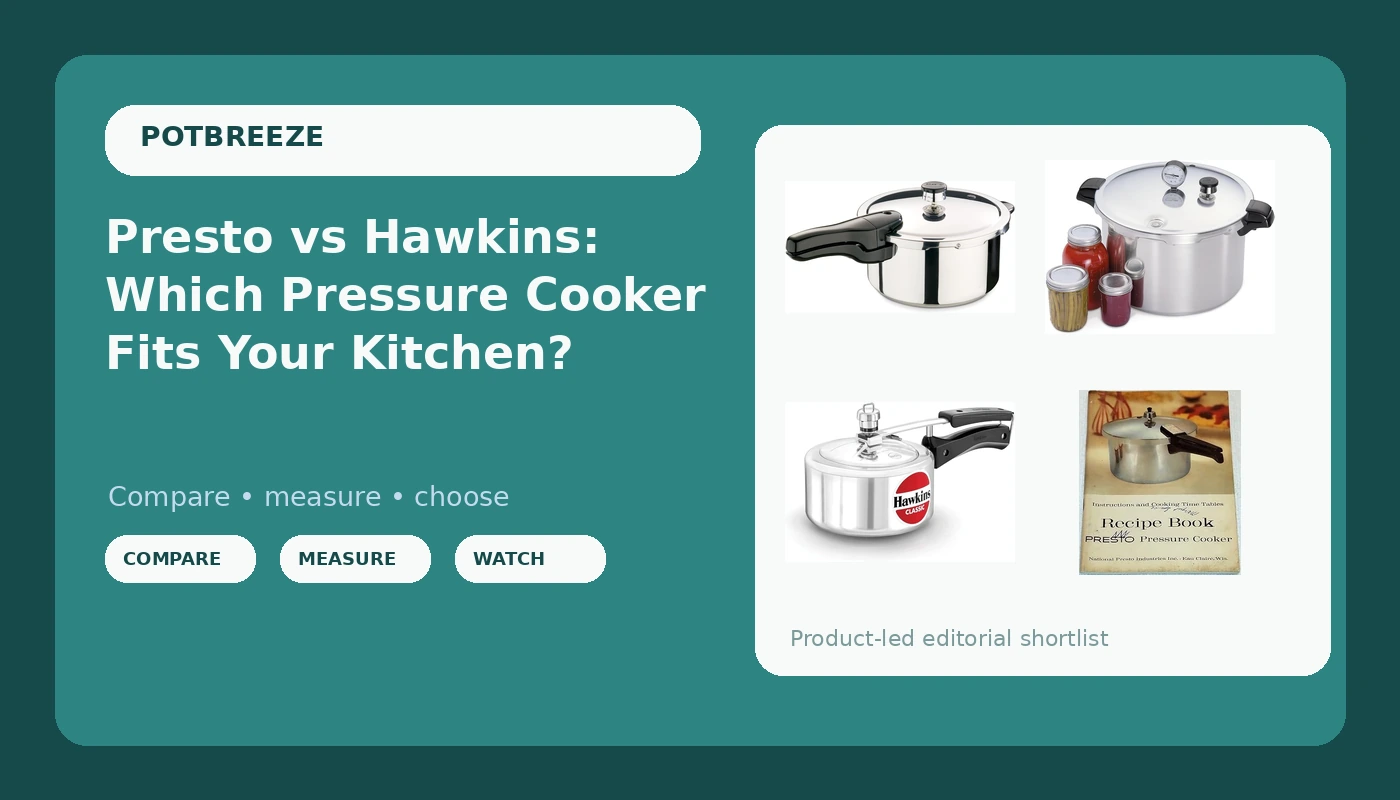
My grandma's Presto rattled like a paint shaker and scared every kid at the table, and it also turned a frozen pork shoulder into dinner in under an hour. I have cooked on stovetop cookers for fifteen years since, through a decade of weeknights where five people want food and I have forty minutes. This stovetop pressure cooker comparison is the version of the conversation I have with friends who text me photos of a cooker sitting on a shelf and ask whether it is worth the counter space.
Here is the short answer before the details: for most families, the Presto 01341 4-Quart Stainless Steel Pressure Cooker is the right first stovetop cooker, because four quarts covers a weeknight batch for five people and stainless steel means you can brown in it, deglaze it, and cook tomatoes without a metallic aftertaste. The other three picks here solve narrower problems: volume for canning, speed for small batches, and the timing knowledge that makes any of them predictable.
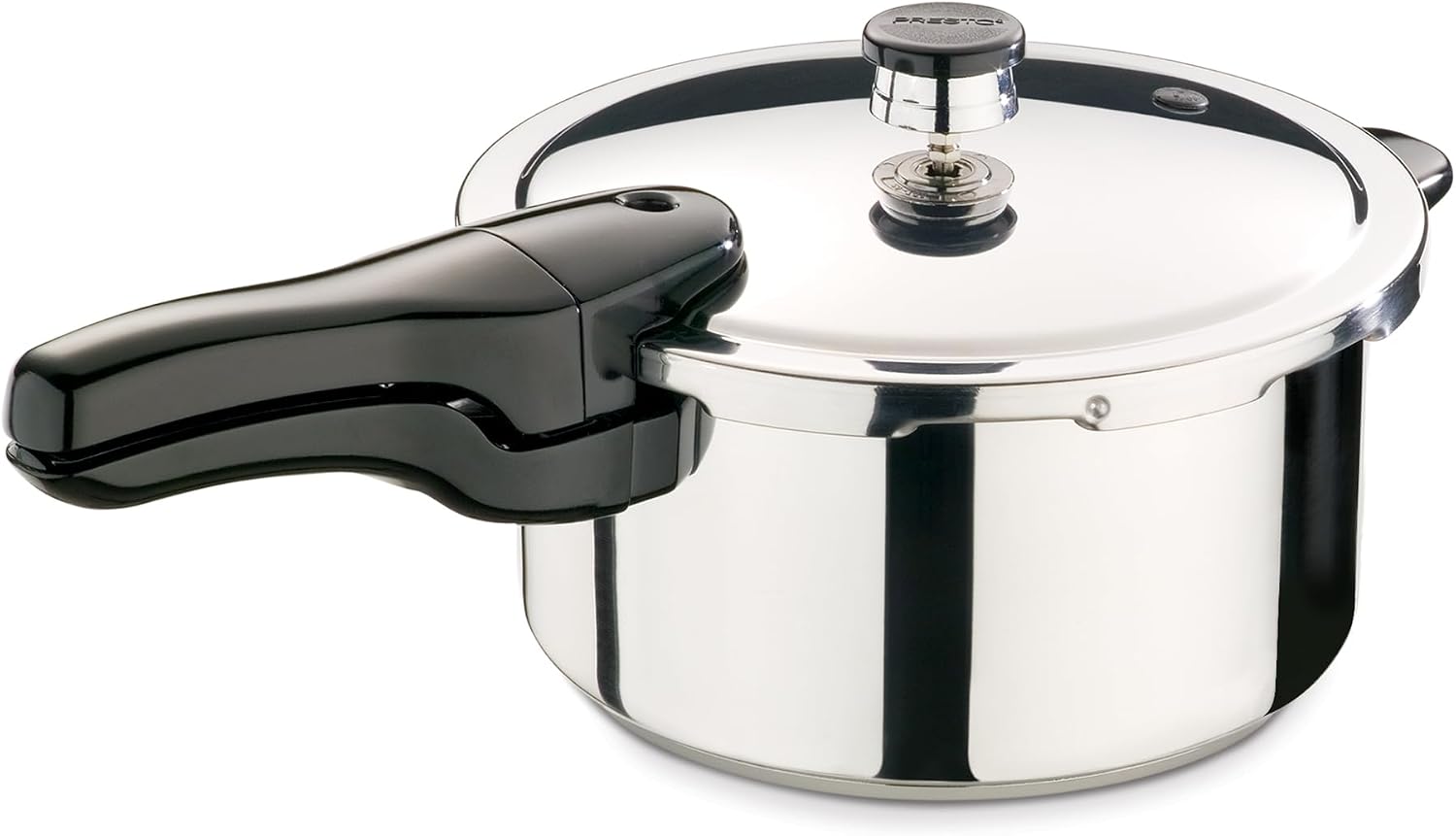
Presto 01341 4-Quart Stainless Steel Pressure Cooker
Stainless body takes a hard sear and acidic sauces without staining, four quarts is the sweet spot for a family dinner, and replacement gaskets and parts are easy to find
One pressure setting and no gauge, so timing is on you, and the handle gets hot if you rush the sear

Presto 01755 16-Quart Aluminum Pressure Canner and Cooker
Real canning capacity plus big-batch stock, chili, and pulled pork for a crowd, and it doubles as a water-bath canner for high-acid jars
It is enormous on a weeknight, aluminum reacts with long-simmered tomato and wine, and the empty pot is heavy before you add anything
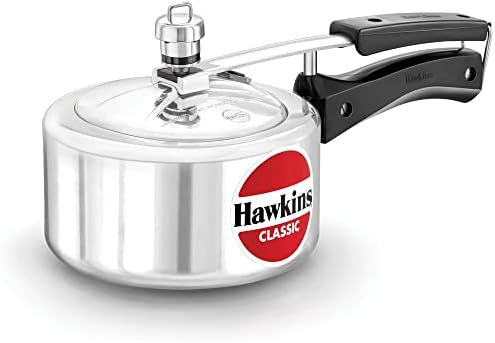
Hawkins Aluminium 1.5 Litre Classic Pressure Cooker, Best Inner Lid Cooker, Small Cooker, Silver
Small volume comes to pressure fast, the inner lid seats tight with almost no steam escaping at the rim, and it is the best size for dal, rice, and vegetables for two
1.5 litres will not feed five people, the aluminum body wants gentle washing, and the inner lid takes a session or two to learn
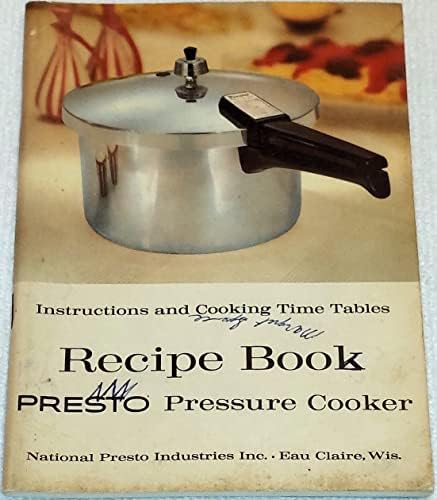
Presto Pressure Cooker: Recipe Book, Instructions and Cooking Time Tables
The timing tables turn guesswork into a schedule, and it covers the stovetop models people actually own
It is a book, not a cooker, and the times assume a stovetop pot rather than an electric multi-cooker
Prices and availability were captured from Amazon Creators API and may change.
How I judge a stovetop cooker
I run every cooker through the same four questions, and they have not changed in a decade of weeknight dinners.
First, does it brown without burning? A stovetop cooker is a pot before it is a pressure vessel, and if the base scorches onions at medium heat, you will dirty a skillet and lose the whole point of one-pot cooking.
Second, does it come to pressure fast and hold it steady? A cooker that takes twenty minutes to climb and then wobbles at the weight is a cooker that makes you guess, and guessing is how you get chewy beans.
Third, can I replace the sealing ring and the overpressure plug? If the answer is no, the cooker is disposable, and a disposable pressure cooker is a bad deal no matter what it costs.
Fourth, would it survive thirty weeknight dinners in my kitchen, with five people asking when food is ready? That is the real test, and it is why the picks below are boring, proven designs rather than anything with a screen.
The 4-quart stainless Presto: the weeknight workhorse
The Presto 01341 4-Quart Stainless Steel Pressure Cooker is the one I recommend to anyone who has never owned a stovetop cooker. Four quarts sounds small until you realize how much a pressure cooker actually holds. A batch of black beans, a chicken and rice dinner for five, a pot of beef stew, or four pounds of potatoes all fit with room to spare because pressure cooking does not need the headspace of a stock pot.
Stainless steel is the part that matters most to me. It takes a hard sear on the bottom without the metallic flavor that aluminum gives long-simmered tomato sauce, and it does not pit when I deglaze with wine or vinegar. That means one pot from sear to pressure to simmer, which is the entire argument for owning a stovetop cooker instead of an electric one. Sear first, pressure second. If your cooker cannot sear, it is a stew maker with extra steps.
The trade-offs are real. There is one pressure setting and no gauge, so you are working off the rocking weight and a timer. You cannot set it and walk away the way you can with an electric multi-cooker, and the first three dinners will involve hovering. The handle also gets warm during a long sear, so keep a towel nearby. What you get in return is a pot that hits pressure in a few minutes, releases in a few more, and has parts you can buy separately for years.
The 16-quart Presto canner: the once-a-year hero
The Presto 01755 16-Quart Aluminum Pressure Canner and Cooker is the one that lives in the basement until tomato season, and then earns its keep in a single weekend. Sixteen quarts is genuine canning capacity, and it is also enough to pressure-cook a twenty-pound batch of chili for a party or a month of freezer meals.
I like it for two jobs specifically. Canning low-acid vegetables, which needs a real pressure canner rather than a water bath, and big-batch cooking where you want to cook once and eat eight times. It also works as a water-bath canner for jam and pickles, which means one pot covers both halves of preserving season.
The reasons it is not my daily cooker are practical. It is enormous, and on a Tuesday night it feels like parking a truck in the driveway to get groceries. The aluminum body does not like long contact with acidic sauces, so a tomato-heavy braise will pick up a metallic edge if you leave it in there. And it is heavy before you put anything in it, which matters when you are lifting a full pot to the sink. Buy it for volume and canning, not for dinner for two.
The Hawkins 1.5 litre: the small-batch specialist
The Hawkins Aluminium 1.5 Litre Classic Pressure Cooker is a different philosophy entirely. This is an inner lid cooker, which means the lid sits inside the rim and seals with the pressure pushing it outward rather than clamping over the top. The result is a cooker that comes to pressure quickly and loses almost nothing at the rim, so small volumes cook fast and evenly.
For dal, rice, and vegetables for two people, it is excellent. The small volume is the point: less empty space means less time heating air, and a cup of lentils is done in a fraction of the time a big pot would take. If you cook for one or two and you eat a lot of Indian food, this is a smarter purchase than a four-quart cooker you only half fill.
Where it falls short is capacity and durability expectations. A litre and a half will not feed five people, full stop, and if you are feeding a family you will be cooking two batches. The aluminum body wants hand washing and gentle treatment, and the inner lid has a technique to it. If you have never used an inner lid cooker, give yourself two or three sessions before you trust it with dinner you care about.
The recipe book and timing tables: the fix for the learning curve
The thing nobody tells a new stovetop owner is that the cooker is not the hard part. The timing is. That is why the Presto Pressure Cooker recipe book, instructions and cooking time tables earns a spot in this comparison even though it is not a pot. It covers the stovetop models people actually own, and the cooking time tables replace the guessing that makes beginners afraid of the weight.
I keep timing notes for everything I cook, and a printed table does the same job without a spreadsheet. How long for soaked beans versus unsoaked, how long for a whole chicken, how long for potatoes you do not want to turn into paste. Once you know those numbers, the rattling weight stops being scary and starts being information.
It is a book, though, and it will not teach you to brown an onion or judge when a sear is done. It also assumes a stovetop pot, so if you own an electric multi-cooker the numbers will be close but not exact. Pair it with the four-quart Presto and you have a complete starter kit: the pot and the knowledge.
Sealing rings, parts, and the replacement question
The sealing ring is the part that decides whether a pressure cooker is a tool or a disposable appliance. Silicone gaskets absorb odors, stiffen with heat cycles, and eventually stop sealing. When that happens, you want to be able to buy a replacement ring for a few dollars, not replace a whole appliance.
Both Presto models in this comparison use gaskets and overpressure plugs that are easy to source, which is a big part of why I trust them for the long haul. The Hawkins uses a gasket as well, and inner lid cookers depend on that seal more than most, so check availability before you commit. My rule: if you cannot find a replacement ring for a cooker, do not buy it. A cooker with a dead seal is a very heavy mixing bowl.
Also check the vent. A steam vent that sprays sideways across your ceiling is a pet peeve of mine, and the older stovetop designs are usually better behaved than the newer ones because the weight sits straight up.
The trade-offs, in plain terms
The four-quart Presto gives you the best balance of size, material, and parts availability, and it asks you to stand near the stove. The sixteen-quart Presto gives you canning and crowd capacity, and it asks for storage space and careful handling of acidic food. The Hawkins gives you speed in small volumes and excellent sealing, and it asks you to cook in batches and treat the aluminum kindly. The timing book gives you predictability and asks for nothing but a read.
If you cook for a family, buy the four-quart first. If you can tomatoes or cook for a crowd, add the sixteen-quart. If you cook for one or two, the Hawkins is the smarter daily pot. If you are new to stovetop cooking, buy the book with whichever pot you choose, because the timing tables are what turn a scary rattling pot into a weeknight habit.
That is the whole comparison. A pressure cooker is a time machine, and the question is which one is also a good pot. For most kitchens, that is the stainless four-quart, with a spare sealing ring in the drawer and a timing table taped inside a cabinet door.