Related: Stovetop vs Electric Pressure Cookers: Which One Belongs on Your Counter
I have owned 11 pressure cookers in 15 years. My grandma's rattling stovetop Presto, a parade of electrics, a Ninja Foodi that now lives at my brother's house, and a couple of stovetop units I gave away because the gasket could not be replaced. So when I shop pressure cookers for weeknight dinners, I am not reading the button count. I am asking three questions: how fast does it come to pressure, how steady does it hold, and can I buy a replacement sealing ring a year from now when the old one smells like last month's chili.
Here is the thing nobody tells you in the appliance aisle: the cooker type decides more than the brand. An electric multicooker is a programmable appliance with a heating element and a brain. A stovetop cooker is a pot with a locking lid and a regulator, and the burner is the brain. Both will give you fork tender pulled pork. They fail in completely different ways, and they suit completely different kitchens.
I cook dinner for five people most nights and I keep a meal prep spreadsheet with more than 60 recipes and cook time logs, so I sorted the products on this page the way I would sort them for my own counter: a big stovetop cooker for a family, a small electric for one or two people, a compact aluminum pot for a small kitchen, and the replacement part that keeps a cooker out of the landfill. If you want the technique conversation first, start with the stovetop vs electric comparison.
Best Overall: KOBACH 8QT Stainless Steel Pressure Cooker
This is the one I would hand to a family of five who already knows how to cook. Eight quarts is the size where a whole chicken fits with potatoes underneath it, and where a double batch of bean soup still leaves headroom instead of threatening the vent. Stainless steel means no coating to worry about, no nonstick flaking into your chili, and a pot you can scrub hard if you scorch the bottom. It is dishwasher safe, which sounds minor until you have hand washed a pressure cooker on a Tuesday night with two kids still doing homework.
Compatibility is the other reason it sits at the top. It works on induction and gas, so it does not care what kind of stove you have, and that is not a given at this size. The one hand opening design matters more than the spec sheet suggests: when the lid seats and locks in one motion, you are not balancing a hot lid while holding a spoon in your other hand.
What you give up is automation. There is no keep warm holding dinner at temperature while you drive a kid to practice, and no timer that drops the pressure for you. A stovetop cooker rewards attention and punishes distraction. If you have never used one, this is not where I would start, and I say that as someone who learned on a rattling Presto that terrified my mother.
One more check before you buy any stovetop cooker: confirm the sealing ring for that specific model is sold separately. A cooker with an unreplaceable gasket is a disposable appliance no matter how good the steel is.
Best Small Electric: NEWBULIG 10-In-1 Electric Pressure Cooker, 3 Quart
Three quarts gets overlooked, and it is the right size for a lot of people. This NEWBULIG is a programmable multicooker with rice, stew, and steam programs, a slow cook function, and a ceramic inner pot inside a stainless steel body. The ceramic insert is the part I would care about most. It releases rice and oatmeal without an overnight soak, and it does not hold the smell of last night's curry the way bare metal can.
Who it is for: one or two people, a dorm room, an office kitchen, or anyone who wants a pot of rice and a small batch of stew without heating up the big machine. The slow cook function gives you a second job for the same counter footprint, which is how small appliances earn their keep.
The honest note on ten programs: most of them are the same pressure cycle with different default times. Rice, stew, and steam are the three that do real work. Buy this for the size, the programmable timer, and the ceramic pot, not the button count. Three good programs beat twelve gimmicks, and that goes double on a small machine where you will use two of them weekly.
Best Compact Stovetop: 4.2 Quart Pressure Cooker with Magnetic Bottom
This is the middle child, and it is the one I would put in a small apartment kitchen. Aluminum alloy body, 4.2 quarts, a magnetic bottom that makes it work on induction as well as gas, a release valve, and multiple protective devices built into the lid. The magnetic base is the detail that matters, because plenty of inexpensive aluminum cookers are gas only, and an induction compatible bottom widens the number of kitchens this pot can live in.
4.2 quarts sits between a personal pot and a family pot. It handles a chicken for two or three people, a pot of beans, or stock from a carcass. It stores in a cabinet instead of owning your counter. Aluminum heats fast and evenly, which helps if you like to sear before you lock the lid, and it is lighter than stainless, which matters when you are carrying a hot pot to the sink.
Multiple protective devices are worth naming rather than skipping past. On a stovetop cooker, the safety story is the lid: a release valve that clears a clogged vent, a locking mechanism that will not open under pressure, and a body that will not deform when the burner runs hot. Those are the features I want on any pot that holds steam at pressure, especially in a house with kids walking through the kitchen.
The Part That Ends Most Cooker Lifetimes: Sealing Ring for Instant Pot With Float Valve Caps, Mini 3Qt 2 Pack
If you take one thing from this page, take this: the sealing ring is the wear part. It is the silicone gasket that holds pressure, and over months of cooking it absorbs the smell of everything you have ever made in it. When it stops sealing, the cooker never reaches pressure, and most people blame the machine and buy a new one. The smell complaints you read online are almost always gasket problems, not cooker problems.
This two pack is made for the Instant Pot Mini 3 quart models, and it includes float valve caps, which are the small silicone pieces that vanish in the dishwasher and are nearly impossible to find on their own. A two pack means you can swap in a fresh ring and soak the old one, so you are never cooking with a gasket that smells like last month's chili. Plan on replacing it about once a year, sooner if you cook a lot of curry or fish.
Buy it before you need it. It is the cheapest way to add years to a cooker you already own, and it is the difference between an appliance and a disposable.
How I Judge a Pressure Cooker
Four questions, and they come from 15 years and 11 cookers, including the ones I regret.
Does the base get hot enough to brown without scorching? On an electric machine that is sauté mode, and a weak sauté means you dirty a second pan. On a stovetop pot it is a question of base thickness and your burner, which is why aluminum and a heavy stainless base both earn points.
Does it come to pressure fast and hold it steady? A cooker that takes forever to climb wastes the time it was supposed to save.
Can I replace the sealing ring? If the answer is no, the cooker has an expiration date printed on it in invisible ink.
Would it survive 30 weeknight dinners? Thirty dinners is roughly six weeks in my house. If a cooker is annoying by week three, it goes to the basement shelf and I start over.
I bring those four questions to every cooker on this page, and I would bring them to anything else you are considering.
Stovetop vs Electric: What These Four Picks Tell You
The four products here split cleanly. Two are stovetop, the KOBACH 8QT and the 4.2 quart aluminum pot. One is electric, the NEWBULIG 3 quart. One is a maintenance part.
Stovetop cookers win on sear, heat control, and durability. There is no circuit board to fail, no display to fade, and you can crank the burner when you want a hard boil before you lock the lid. Electric cookers win on walk away convenience, keep warm, and a timer you can trust enough to leave the room. The keep warm function is where weeknight dinners are actually won, because dinner is ready when you are instead of the other way around.
The best setup for a lot of families is one of each: a small electric for rice and oatmeal on autopilot, and a stovetop pot for the nights you actually want to cook. If you only have room for one, decide based on who is doing the cooking. If it is someone who will stand at the stove, buy the stovetop. If it is someone who needs dinner handled while they do four other things, buy the electric.
The Pressure Cooker Reference Table
This is the same table I keep in my kitchen notes, sorted the way I shop: by the job the cooker does, not by the order it appears in a store aisle.
| Cooker | Type | Size | Best for | Price |
|---|---|---|---|---|
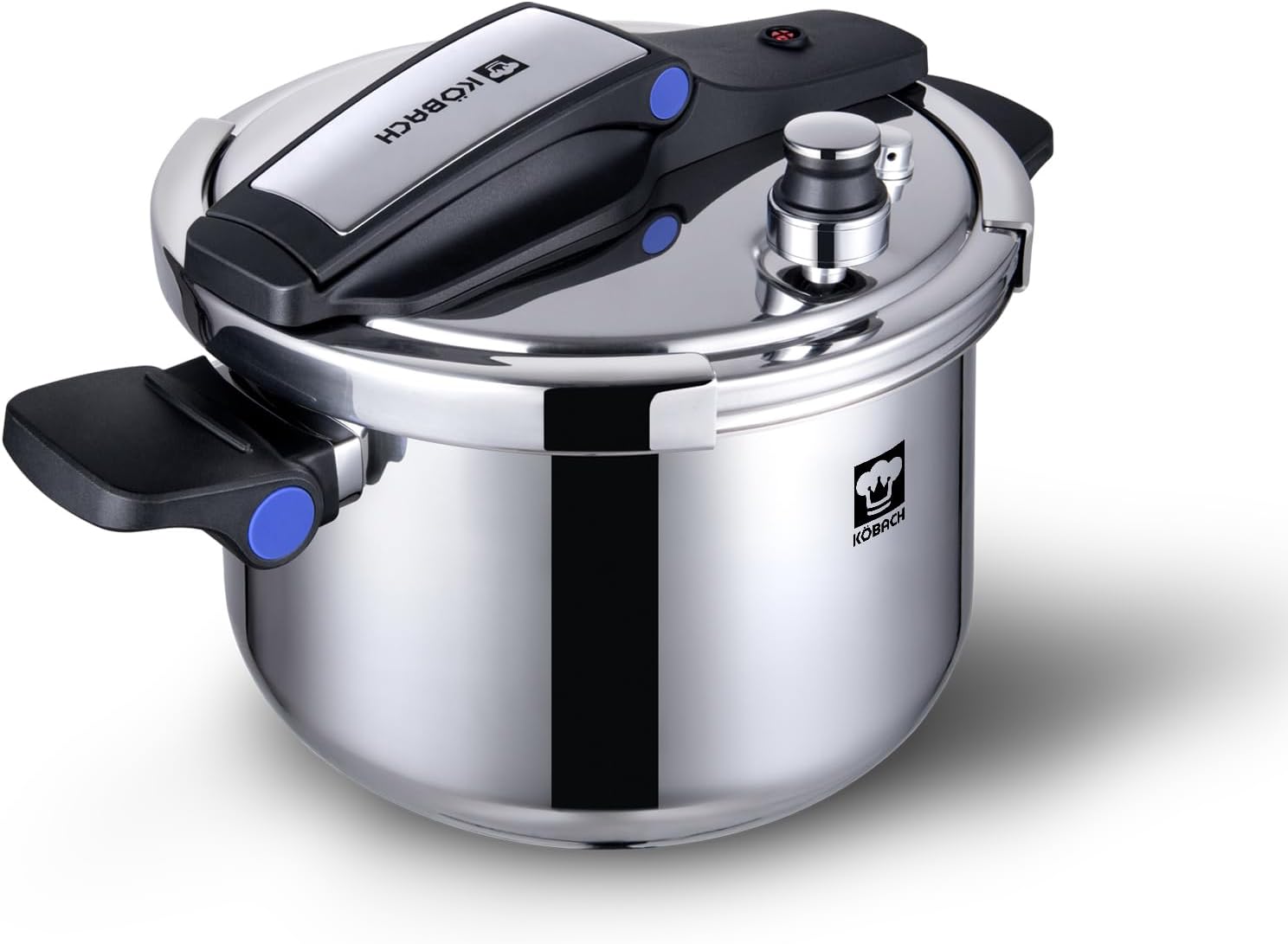 Visit on Amazon → KOBACH 8QT Stainless Steel Pressure Cooker |
Stovetop, induction and gas | 8 quarts | Families of four or more, big batches, searing first | $99.98 |
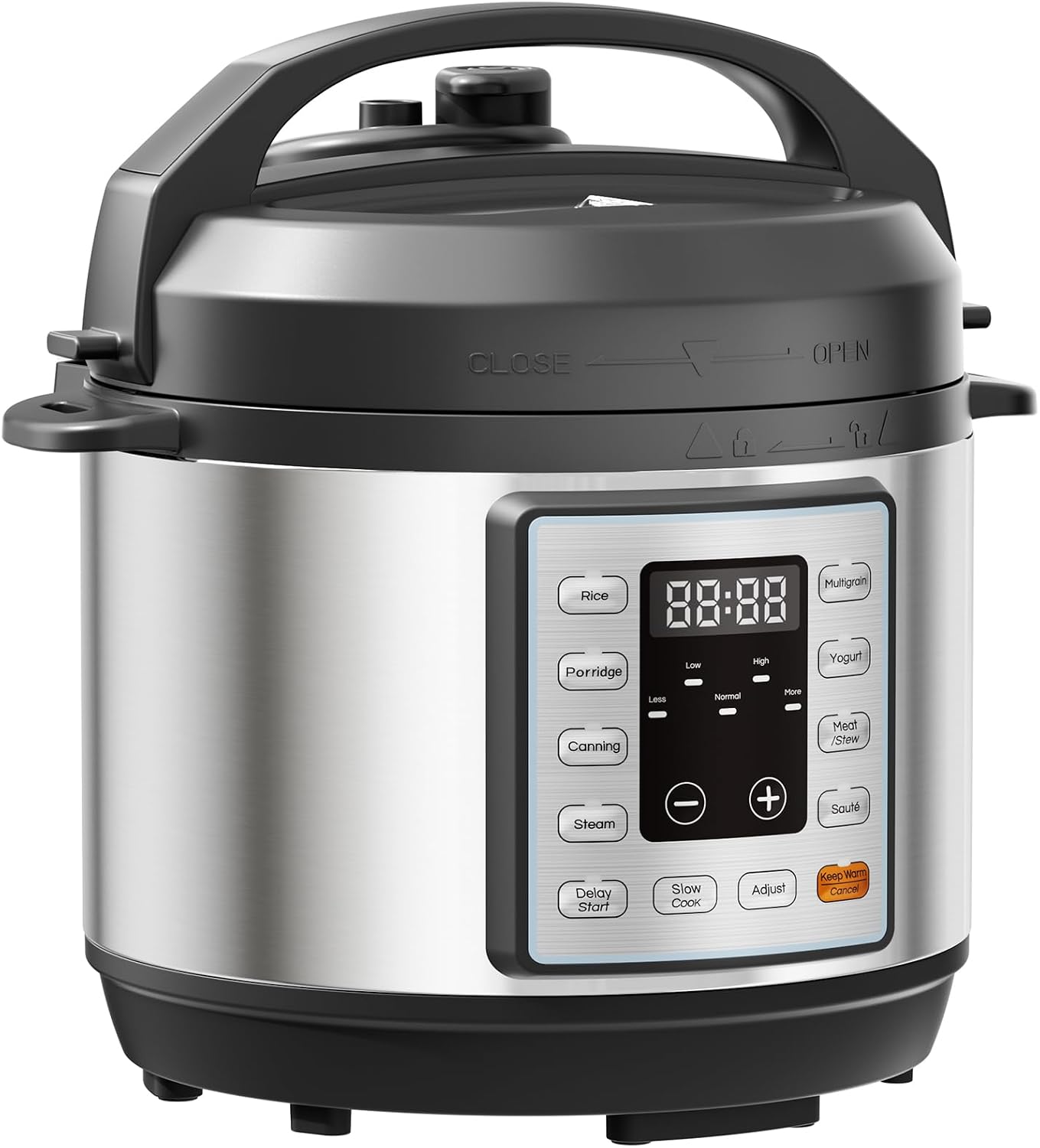 Visit on Amazon → NEWBULIG 10-In-1 Electric Pressure Cooker |
Electric, programmable, ceramic inner pot | 3 quarts | One or two people, rice, small stews, slow cooking | $47.99 |
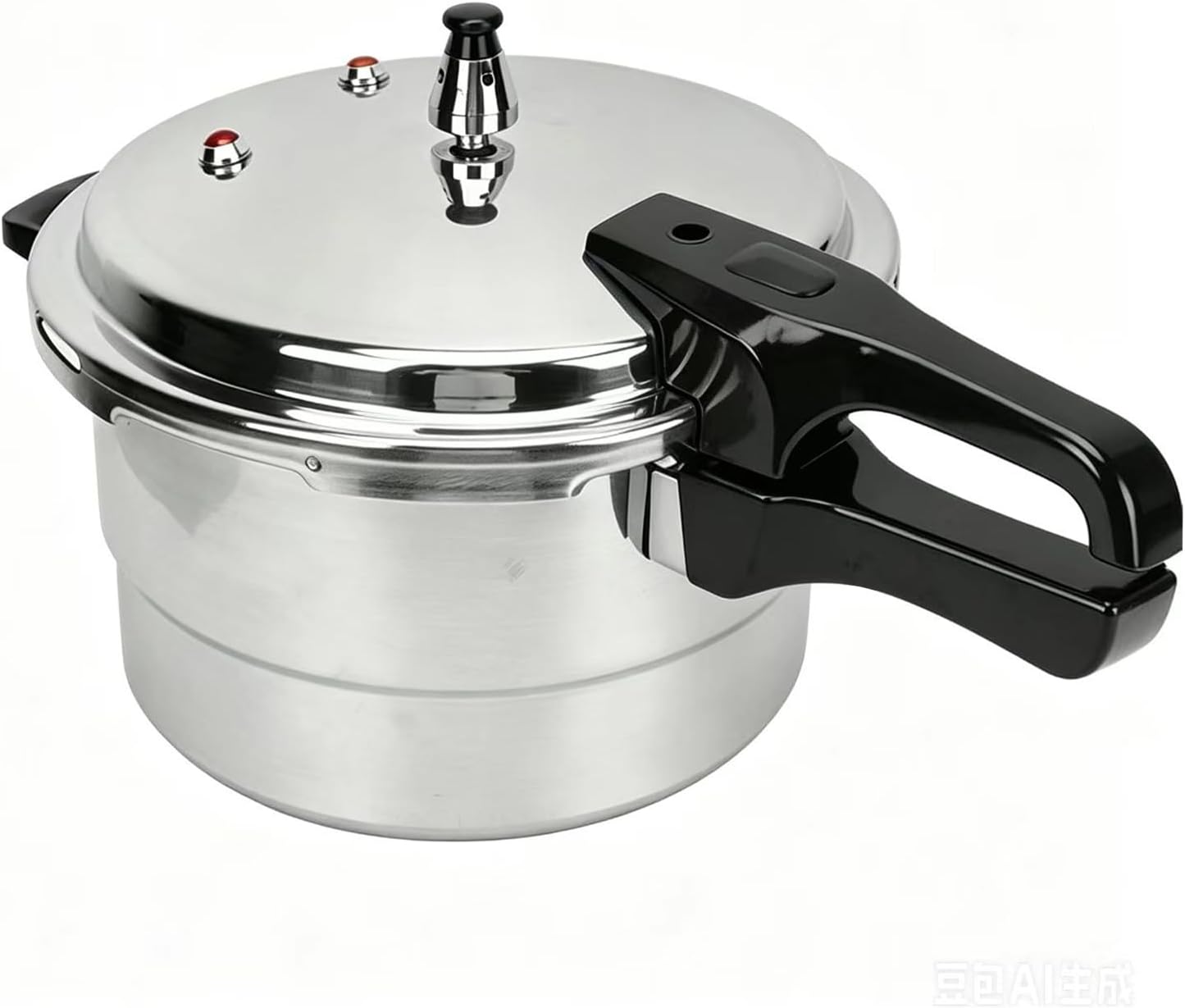 Visit on Amazon → 4.2 Quart Pressure Cooker with Magnetic Bottom |
Stovetop, aluminum alloy, induction and gas | 4.2 quarts | Small kitchens, two or three people, cabinet storage | Visit on Amazon → |
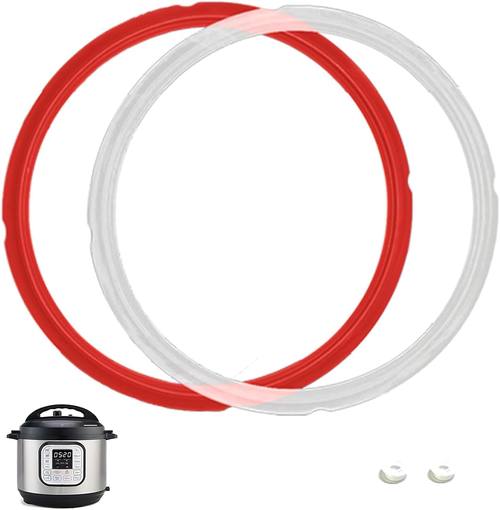 Visit on Amazon → Sealing Ring for Instant Pot With Float Valve Caps, Mini 3Qt 2 Pack |
Replacement gasket and valve caps | Fits Mini 3 quart models | Yearly maintenance, odor control, restoring pressure | $6.99 |
The table is short on purpose. A buying decision comes down to the size of your household and who stands at the stove, and everything else is noise.
Should you buy the KOBACH 8QT?
Yes, if you feed four or more people and you are willing to pay attention to a burner. Eight quarts of stainless steel on an induction or gas stove gives you heat control no electric unit can match, and the one hand opening design is a real quality of life feature when the counter is covered in prep bowls.
The tradeoff is that it is fully manual. No keep warm, no timer that releases pressure while you are out. If you want dinner to be ready without you, this is the wrong tool. If you want a pot that will outlast three electrics, this is the right one.
Should you buy the NEWBULIG 3 Quart?
Yes, for one or two people, a dorm, or a counter that cannot spare the space. Three quarts covers rice, a small stew, and a batch of oats, and the ceramic inner pot is easier to clean than bare stainless.
The ten programs are the part I would ignore. Rice, stew, and steam do the work. Buy it for the size, the timer, and the ceramic pot.
Should you buy the 4.2 Quart Aluminum Cooker?
Yes, if you want stovetop results in a small footprint and your stove is induction or gas. The magnetic bottom is what makes it flexible, and the protective devices on the lid are the features I would check on any pressure pot.
It will not feed a crowd, and it will not hold dinner warm for you. For two or three people and a cabinet that needs to close, it earns its spot.
Should you buy the sealing ring two pack?
Yes, and buy it before you need it. The ring is the part that fails, the float valve caps are the parts that disappear, and a two pack means you always have a fresh gasket on the shelf. Replace the ring about once a year, sooner if your cooker has started to smell like a spice drawer. That single purchase is the difference between a cooker that lasts a decade and one that ends up in a donation bin with nothing wrong with it.