Related: Stovetop vs Electric Pressure Cookers: Which One Belongs on Your Counter
I cook dinner for five people most nights in Columbus, Ohio, and I have kept a meal-prep spreadsheet long enough that it now holds more than 60 recipes and a column for cook times. Pressure cooker sizes are the part of that spreadsheet nobody warns you about. You buy the cooker that fits your cabinet and your budget, and then you find out whether it fits your family.
A pressure cooker is a time machine. The question is which one is also a good pot. I have owned eleven of them in fifteen years, starting with a rattling stovetop model my grandma handed down, and I have learned that capacity is the decision that goes wrong most often. Three of the four items here are stainless steel cookers at three very different sizes. The fourth is a sink part that has nothing to do with pressure and everything to do with the cleanup after.
I put every cooker through the same three dinners: one chili, one pulled pork, one soup. Then I count the dirty pans and check whether the sealing ring can be bought on its own. Here is how the sizes shake out.
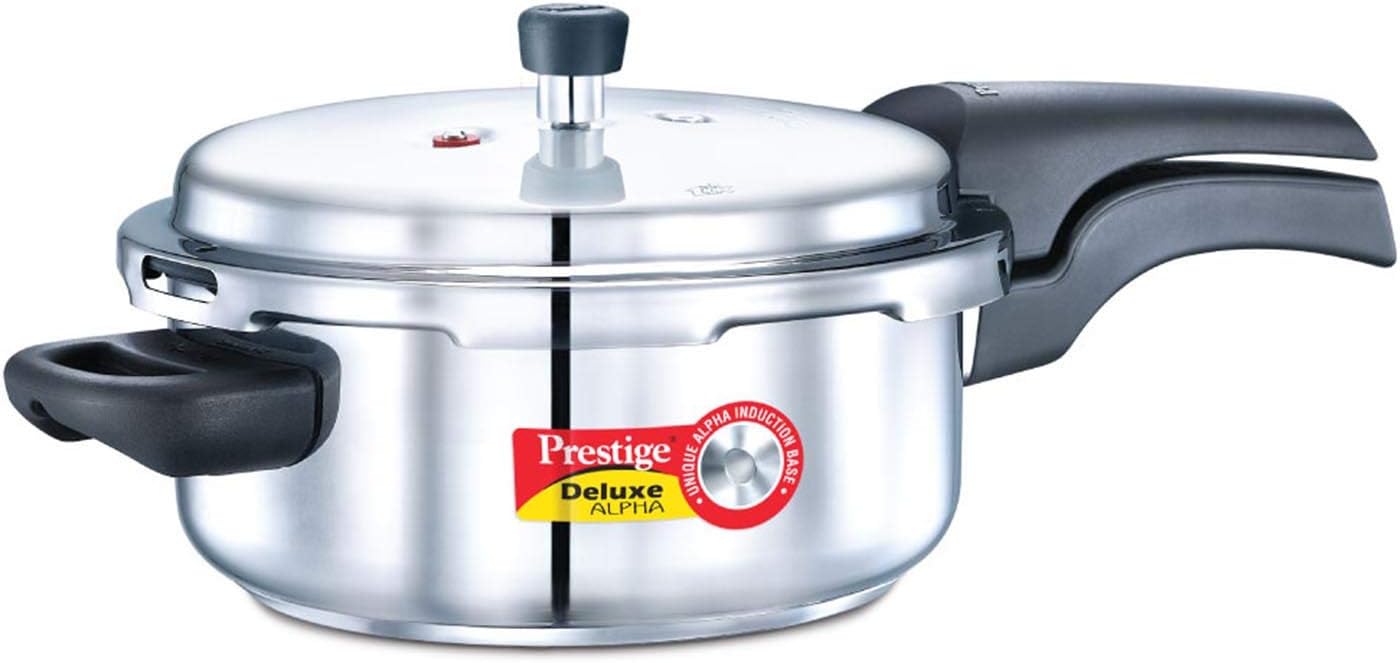
The Stovetop Pick: Prestige 3L Alpha Deluxe
If you want to learn pressure cooking instead of just pressing a button, this is where I would start. The Prestige Alpha Deluxe is a 3.0 liter stainless steel stovetop cooker with an induction base, which means it works on an induction burner, a gas burner, or the old coil element in a rental kitchen. That induction base is not a small detail. Plenty of stainless cookers sit in a cabinet because they will not work on the stove you actually own.
Three liters is a side dish size in my house. It is beans, rice, a pot of stock from a rotisserie chicken carcass, or enough chili for two adults who want leftovers for lunch. It is not a five-person dinner. For that, you need the big one further down this page.
What I like about stovetop cooking is that the burner is your sauté mode. There is no weak sauté function to complain about, because you are the function. Sear first, pressure second. Brown the meat in the same pot, add your liquid, lock the lid, bring it up. If a cooker cannot sear, it is a stew maker with extra steps, and you will dirty a skillet every single night.
The tradeoff is attention. A stovetop cooker rattles, and you manage the heat yourself. Natural release is still natural release, but you are standing near the stove while it happens. If the rattling will scare your family, or you want to walk the dog while dinner cooks, this is not the cooker for you. And before you buy any stovetop model, find out whether the gasket is sold separately. If you cannot replace the sealing ring, the cooker is disposable, and I do not buy disposable.
The Compact Pick: 3-Quart Mini Stainless Steel
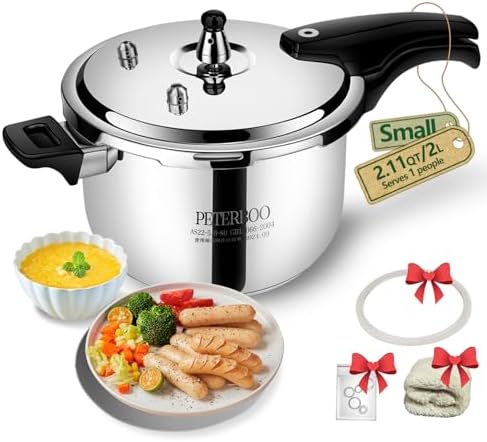
This is the small stainless steel pressure cooker listed as a 3 quart mini, with a 2 to 2.5 quart compact design and a 3qt+ rating. Read that listing carefully, because compact cookers are where capacity language gets slippery, and the number that matters is what fits under the lid without crossing the max fill line. Every pressure cooker needs headroom for steam. A pot filled to the brim is a pot that sprays your ceiling.
The listed uses are side dishes, grains, and camping, and that matches how a second small cooker earns its spot in a kitchen that already has a big one. Rice in the small pot while the main cooker does the pork. Oatmeal for two. A batch of soup for lunchboxes. Reheating leftovers without dragging out a 15 liter monster and washing it afterward.
Small families get a lot out of this size, and so do campers, since a 3 quart stainless steel pot travels well and does not need a wall outlet. Fast and safe for small families is the pitch, and the word I would underline is fast. A smaller volume comes up to pressure sooner and releases sooner, so there is less of the long nervous wait that makes beginners decide they hate pressure cooking.
The limit is the same as the Prestige above. Three quarts feeds two or three people, not five. Buy it as the second cooker, or as the only cooker if your household is small and you cook in small batches.
The Big-Batch Pick: 15-Liter Commercial Electric
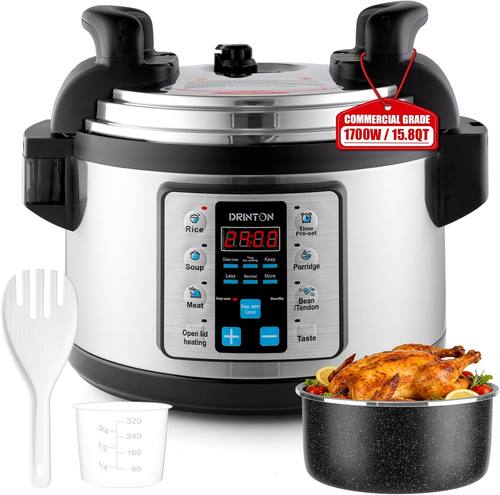
15 liters, 15.8 quarts, 1700 watts, five preset functions, a 24 hour timer, stainless steel, and a listing that says 25 to 35 people. That is a church basement cooker, a catering cooker, a canner, or the cooker you buy once when your family keeps growing and the holidays keep landing at your house.
The electric part matters here in a way it does not on a 3 quart pot. At this size, a stovetop version would be a two-hand lift and a fight with your biggest burner. Plugging it in and setting the timer means you can start a huge batch and walk away, which is the whole point of owning a machine this large.
Five presets is more than I need. More buttons is not more cooker, and three good programs beat twelve gimmicks every time. On a pot this size, though, presets are a reasonable shortcut for a cook who does not want to babysit a giant vessel on a busy day. The 24 hour timer is the feature I would use most, because big batches are usually for an event and an event has a timeline. Being able to load it and let it run later is the difference between cooking the day before and cooking the day of.
Two honest cautions. First, 1700 watts is a real draw, so plan the outlet and do not share that circuit with a toaster and a coffee maker at 7 a.m. Second, 15 liters is a storage decision. Measure the cabinet before you buy, not after the box is in your hallway.
The Sink Part: Murtenze Drain Gasket Set
This is not a pressure cooker part, and I want to be blunt about that, because the word gasket lives in both worlds and people order the wrong thing. The Murtenze set is four drainage seals for a basin drain, the piece under your kitchen sink that keeps water where it belongs. It will not fit a cooker. Do not buy it for that.
Why is it in an article about cooker sizes? Because pressure cooking is a lot of washing up. Big pots, heavy lids, steamer racks, sealing rings, and a sink that takes all of it three times a week. If the drain seal under your basin is old and weeping, you will find out on the night you cook for 30 people. Four sets is a cheap thing to keep in a drawer, and a drain gasket is one of those parts nobody thinks about until the cabinet floor is wet and the cardboard boxes under there are ruined.
Buy it because your sink works harder when you cook this way. Replacing a drain seal is a five minute job with a pair of pliers, and it saves you an afternoon of emptying a cabinet.
How I test
I cook three dinners in every cooker I live with: a chili, a pulled pork, and a soup. Thirty weeknight dinners is my real bar, but the three-dinner version tells me whether I want to keep going. The checks do not change with size.
Does it come up to pressure and hold steady? Does the lid lock without a fight and unlock without a burn? Can I buy the sealing ring separately, and does that ring smell like last night's chili after one wash? Does anything spray the ceiling when I release? And how many extra pans did I dirty because the browning step had to happen somewhere else?
Then there is the cleanup timer, the least glamorous column in my spreadsheet and the one that decides what I actually reach for on a Tuesday. A cooker that takes 20 minutes to clean after a 15 minute cook is not saving me anything.
For this article I focused on capacity and the sink, because size is the decision that goes wrong most often. People buy the volume that fits the cabinet, then discover it does not fit the family.
Analysis: what each size actually gets done
Three questions decide this for me. How many people are you feeding tonight? How many pans are you willing to wash? And can you replace the gasket?
On people, 3 liters and 3 quarts tell the same story two ways. Both feed two or three. The Prestige does it on a burner with your hand on the heat. The mini does it in a compact footprint with less to lift and faster pressure build. Neither one feeds my family of five on a Tuesday, and pretending otherwise is how people end up with a cooker they resent.
On pans, a stovetop cooker and a good burner beat any weak sauté function, because you brown in the pot and never dirty a skillet. That is a genuine advantage for the Prestige, and the trade is attention. The 15 liter electric trades the other way. You give up stovetop searing and get set-and-walk-away capacity for a crowd instead.
On gaskets, this is where cheap cookers lose me. A sealing ring is silicone, it absorbs odors, and it wears out. If you cannot order a replacement, you own a very heavy pot with a lid that does not seal. Check that before you check the price.
Stainless steel matters for all three cookers. It sears, it does not hold onto yesterday's curry the way a coated insert can, and it survives a metal spoon and a scouring pad. The sink gasket is stainless steel's boring cousin: rubber, inexpensive, and the reason your cabinet stays dry.
Pressure cooker sizes and what they cover
This is the table I keep in my kitchen notes. Capacities come straight from the listings. The last column is the part that saves you a return.
| Cooker or item | Capacity | Best for | Notes |
|---|---|---|---|
 Visit on Amazon → Prestige 3L Alpha Deluxe stovetop cooker |
3.0 liters | Beans, rice, stock, chili for two or three | Induction base, stainless steel, burner is your sauté mode |
 Visit on Amazon → 3 quart mini stainless steel cooker |
3 quarts, listed 2 to 2.5 quart compact design | Grains, side dishes, camping, small families | Compact footprint, faster pressure build |
 Visit on Amazon → 15 liter commercial electric cooker |
15 liters, 15.8 quarts | 25 to 35 servings, canning, events | 1700W, 5 presets, 24 hour timer, stainless steel |
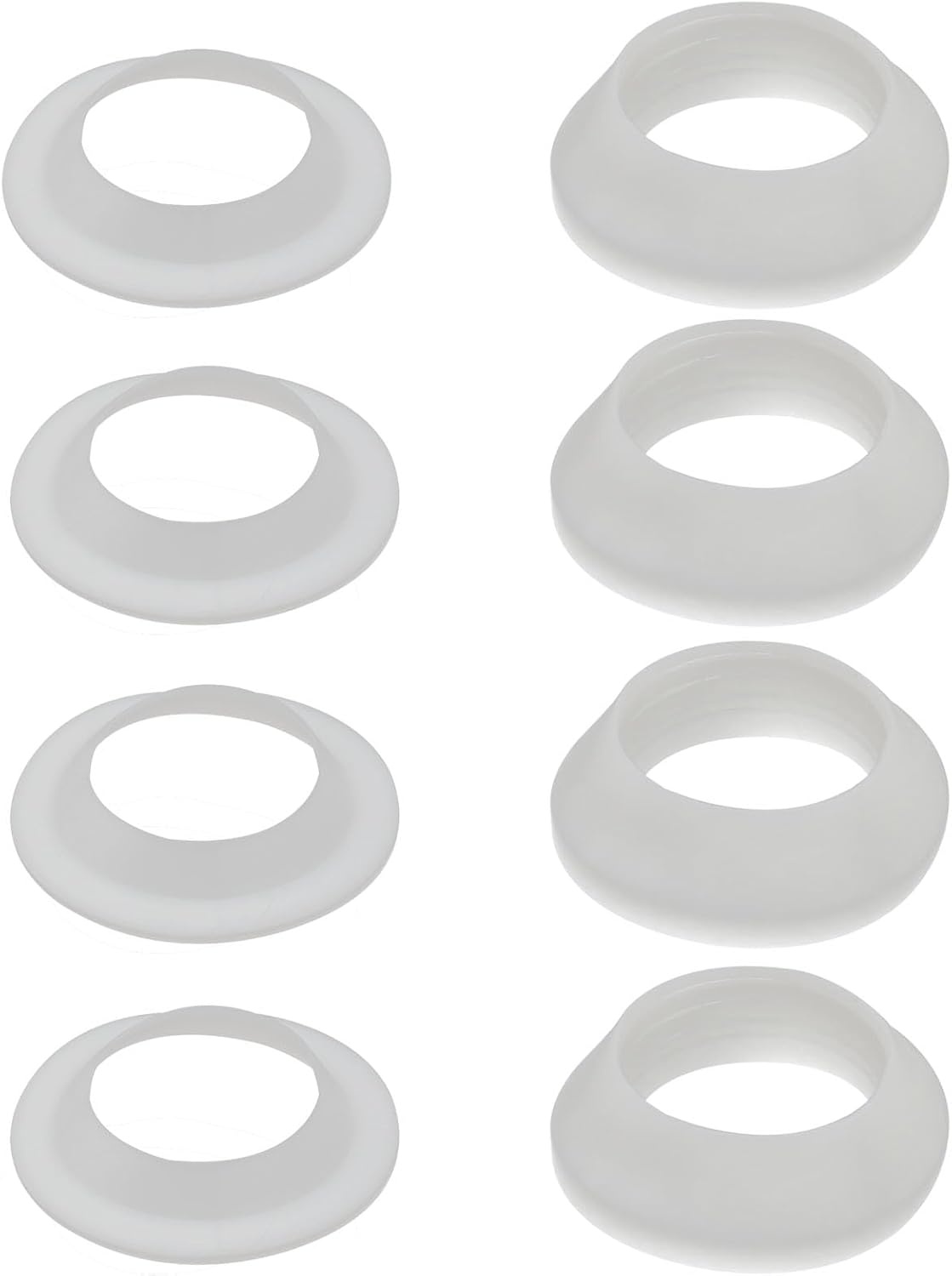 Visit on Amazon → Murtenze drainage seal set |
4 sets | Kitchen sink drain seal | Not a cooker part, does not fit a pressure cooker |
The pattern in that table is the one I want a first-time buyer to take away. Capacity is a people number, not a prestige number. The biggest pot in the room is the right answer for exactly two jobs: canning and a crowd. For everything else, the 3 quart and 3 liter sizes do the work, and the reason to own both is that one can hold grains while the other holds the main.
Should you buy the Prestige 3L Alpha Deluxe?
Yes, if you want to learn the craft and you cook for two or three. The induction base means it works on the stove you have, the stainless steel body sears like a skillet, and the burner gives you heat control no preset menu can match. Just confirm the gasket situation before you commit, because a stovetop cooker without a replaceable sealing ring is a rattling paperweight.
Should you buy the 3 quart mini stainless steel cooker?
Yes, as a second pot or as a small household's only pot. It is the fastest of the three to reach pressure, it stores in a small cabinet, and it handles the grains and side dishes that always seem to need their own burner. If you are feeding five, it will not carry the main course.
Should you buy the 15 liter commercial electric cooker?
Yes, if your guest list has a comma in it. For 25 to 35 servings, canning, or a holiday that lands at your house every year, this is the size that stops you from cooking in shifts. Check the outlet, check the cabinet, and accept that it is not the pot you reach for on a random Wednesday.
Should you buy the Murtenze drain gasket set?
Yes, for the sink, not the cooker. Pressure cooking puts more water, more grease, and more big pots through your basin than any other style of cooking I know, and a fresh drain seal is a five minute fix that keeps the cabinet under it dry. It will never hold pressure. It is not supposed to.