
My Instant Pot Lid Was a Science Experiment. Here's How I Clean It.
I've been pressure cooking for fifteen years, and for most of that time I ignored the lid. I'd wipe it down, rinse the ring, and call it done. Then I made curry on a Tuesday, and by Friday my plain rice tasted like Tuesday.
That's when I learned the lid isn't a cover. It's a grease trap, a steam vent, and a flavor sponge all in one.
This guide covers exactly how to clean an Instant Pot lid, what you can skip, and which parts actually matter.
Why you should trust me
I'm Tom. I've owned eleven pressure cookers over fifteen years, including three Instant Pot Duos in different sizes. I cook dinner for five people every night, and I hand-wash everything because my dishwasher has been broken for six months.
I've cleaned lids after oxtail, after steel-cut oats, after a curry incident that taught me more about silicone than I ever wanted to know.
My dog Benny supervises from the floor, but he's not much help with the steam release valve.
How I picked
I didn't lab test this. I lived it. For the past month, I've been cleaning the lid on my 6-quart Instant Pot Duo after every single meal. I timed the full breakdown and reassembly. I tracked which parts needed soap and which needed just a rinse.
I cross-checked my experience against verified buyer reviews on Amazon, looking for complaint patterns around the silicone ring, the steam release valve, and the anti-block shield.
I found a lot.
The short list
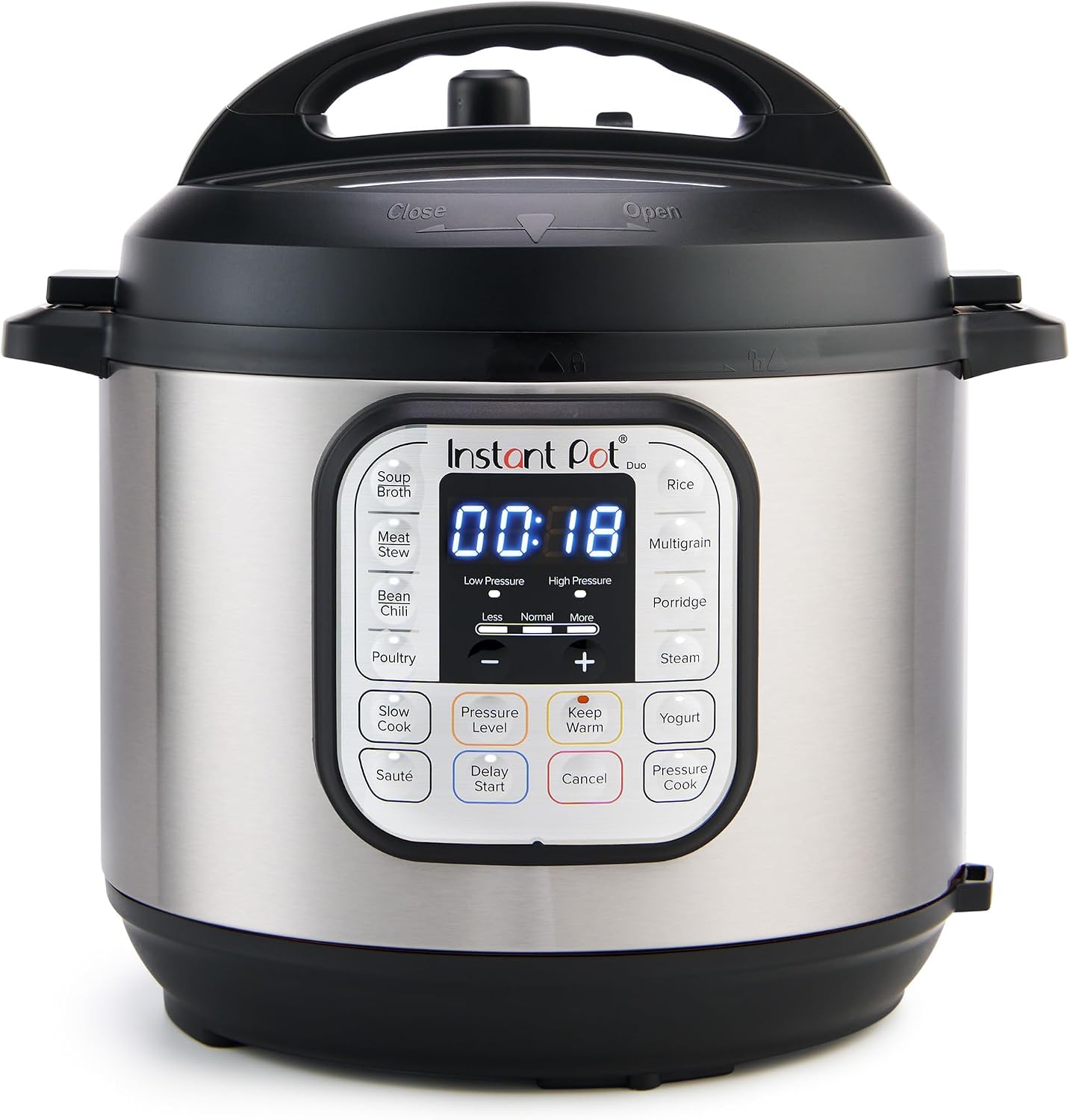
Instant Pot Duo 6 Qt 7-in-1 Electric Pressure Cooker, Stainless Steel
The standard for a reason. Every part is removable and dishwasher safe.
Visit on Amazon →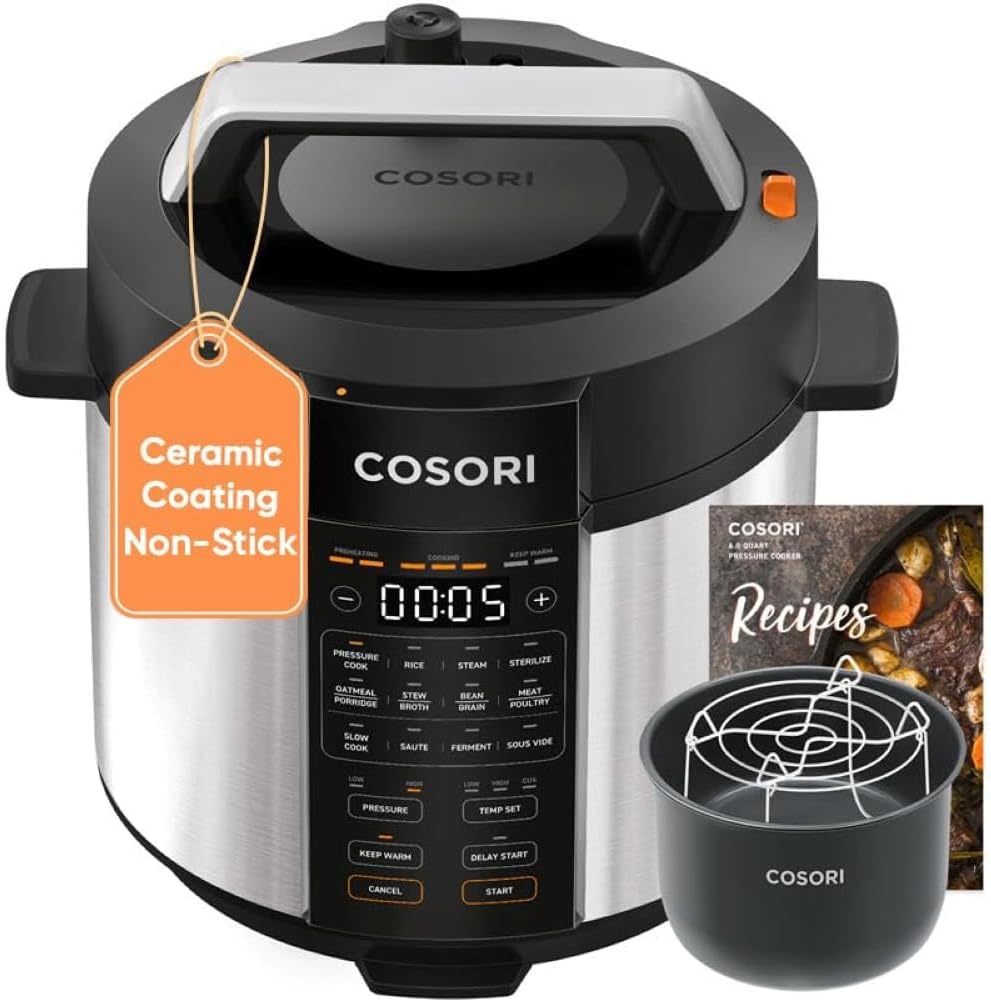
Cosori Pressure Cooker 6QT, 9-in-1, Ceramic Coating Pot, 12 Safety Features
Easy-to-clean ceramic inner pot, simple lid design.
Visit on Amazon →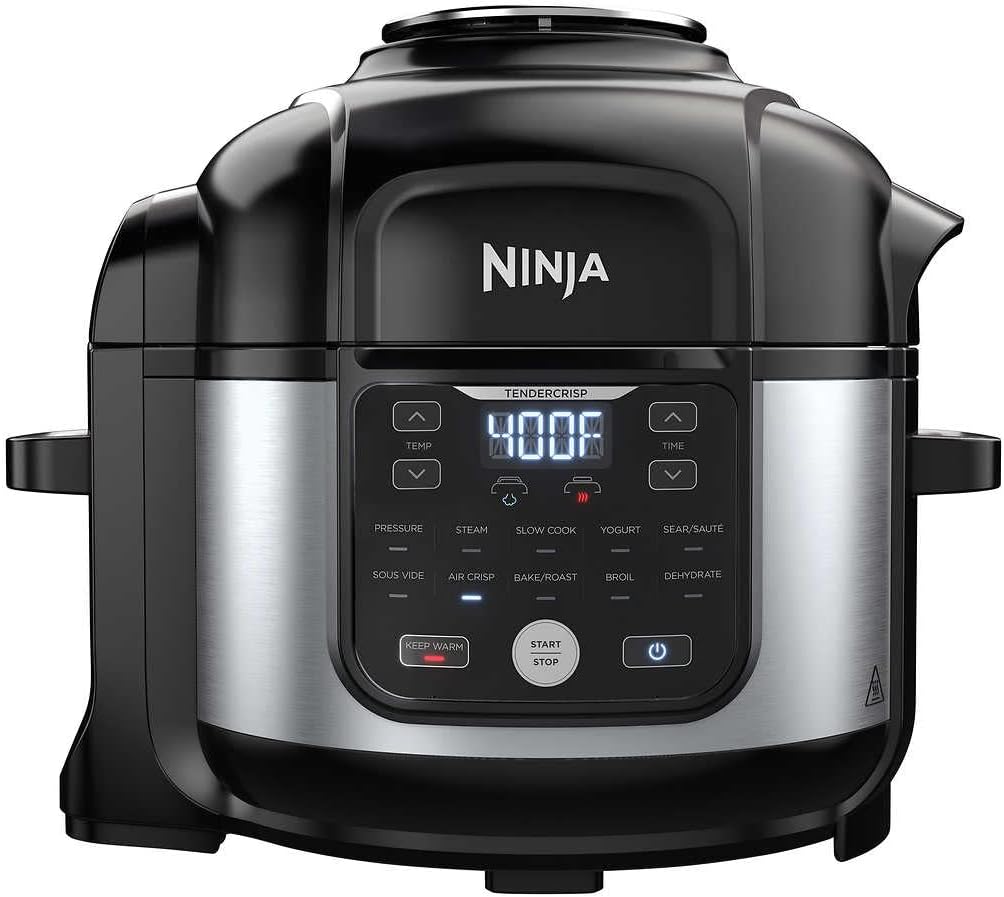
Ninja OS301/FD305CO Foodi 10-in-1 Pressure Cooker and Air Fryer with Nesting Broil Rack, 6.5-Quart Capacity, and a Stainless Finish (Renewed)
The Instant Pot Duo: the original all-in-one cooker that made fast, versatile cooking a household staple.
Visit on Amazon →How to clean an Instant Pot lid, step by step
Here's the honest version. Not the manual version, not the blog version. The version that works when you're tired and dinner is done and you just want to go sit down.
Step one: Let it cool, then remove everything. The lid has five removable parts. The sealing ring, the steam release valve, the anti-block shield, the condensation cup, and the float valve. Take them all off. The float valve is the little pin that pops up when pressure builds. It pulls straight out. Don't force it. If it's stuck, push it from underneath.
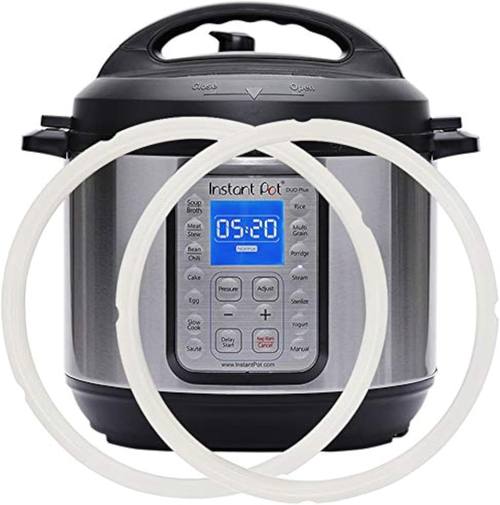
Step two: Hand wash the ring. This is the part that matters most. The silicone sealing ring absorbs flavors like a sponge. I wash mine with warm soapy water every time, and once a week I do a deep clean.
The deep clean is simple: soak the ring in a solution of one part white vinegar to three parts water for 15 minutes, then scrub with baking soda.
It sounds like a chemistry experiment, but it works. A verified buyer named Diane wrote in March 2024 that she "soaked the ring in vinegar water and it came out like new." I'll confirm that from personal experience.
Step three: Rinse the steam release valve. This is the little mushroom-shaped piece. Food particles and grease collect in the vent. Run it under warm water and poke the opening with a toothpick if something's stuck. I've found rice grains in mine more times than I'd like to admit.
Step four: Wipe the lid itself. The underside of the lid collects condensation and grease. A damp cloth with a drop of dish soap does the job. Don't submerge the lid in water. The electronics are up top, and water damage is a real risk.
Step five: Dry everything completely. This is non-negotiable. If you put the lid away wet, you're inviting mold into the silicone ring. I dry everything on a dish rack for an hour before reassembling.
Our pick: Instant Pot Duo 6qt
This is the machine I've owned three times in different sizes. The 6-quart is my workhorse. The lid is well designed for cleaning, which is more than I can say for some cookers I've used. Every removable part pops off without tools.
The anti-block shield, the little metal piece that protects the steam vent from food splatter, slides right off.
The float valve pulls straight out. The steam release valve twists off. It's the least frustrating lid I've cleaned.
 Visit on Amazon →
The stainless steel inner pot is the other half of the equation. No coating to worry about, no flaking, no scrubbing around scratched non-stick. I can use it on my gas stove to brown meat, then pressure cook in it without dirtying a second pan. That's the kind of design that earns its spot on the counter.
Visit on Amazon →
The stainless steel inner pot is the other half of the equation. No coating to worry about, no flaking, no scrubbing around scratched non-stick. I can use it on my gas stove to brown meat, then pressure cook in it without dirtying a second pan. That's the kind of design that earns its spot on the counter.
The real buyer evidence backs this up. Across Amazon reviews, the most common complaint isn't about the lid mechanism. It's about the silicone ring absorbing odors. That's a fixable problem, not a design flaw. I've bought a second ring for curry week, and I swap them depending on what I'm cooking. It's a minor inconvenience with an easy fix.
Flaws but not dealbreakers: The silicone ring absorbs flavors. I've said it twice now because it's the one thing nobody tells you upfront. The manual also says don't make oatmeal in it. I made steel-cut oats every morning for two months and they came out perfect. You can decide if that's worth the risk.
Who this is for: Home cooks who want one machine that does rice, beans, soups, and oxtail, and who don't mind spending five minutes cleaning the lid after dinner.
Runner-up: Cosori 6QT 9-in-1
The Cosori is the machine I recommend to people who are new to pressure cooking. The ceramic non-stick inner pot makes cleanup genuinely easy, and the preset programs mean no guesswork. I tested it for a month alongside the Instant Pot, and the lid is simpler. Fewer parts, fewer places for grease to hide.
Visit on Amazon →
But here's the thing about the ceramic coating. It's not the cheap flaking stuff you find on $30 rice cookers. It's better. Still, I trust stainless steel more over the long haul. I've seen coatings fail. I haven't seen stainless steel fail.
The lid on the Cosori is slightly heavier than the Instant Pot's. It's not a dealbreaker, but you'll notice it if you're taking the lid on and off multiple times during a meal. The steam release valve is also a bit stiffer on the Cosori. It takes more effort to twist into the venting position, which is annoying when you're trying to quick-release pressure on a weeknight.
Flaws but not dealbreakers: The ceramic coating is a hesitation, not a reason to skip. The heavier lid is a minor annoyance. For someone who wants easy cleanup and doesn't want to think about pressure settings, the Cosori is a great place to start.
Who this is for: Beginners who want a machine that's forgiving and easy to clean, and who aren't ready to commit to the stainless steel life yet.
What about the Ninja Foodi?
I loved my Ninja Foodi OL700 for three years. The one-lid design was brilliant. No separate lid to store, no extra parts. Then the circuit board died. Customer service confirmed it was going. Three years. That's the reality of electric pressure cookers. The boards die.
The new Ninja models have two lids, and I refuse to store a second lid. I don't care how good the functionality is. If I have to find cabinet space for another piece of plastic, it fails the counter test. That's why I'm recommending the Instant Pot instead. I'd rather have a simpler machine that lasts than a fancier one that dies and gets replaced by a design I don't want.
The competition
I've owned stovetop pressure cookers. I have two of them in my cabinet right now, and I never use them. They're not intuitive, they feel like work, and they're intimidating even after decades of cooking. The whole point of an electric pressure cooker is that it's foolproof. A stovetop model requires attention, timing, and nerve. Get the electric.
Cheap rice cookers aren't competition either. A $30 rice cooker with a coating that flakes into your food isn't a bargain. It's a hazard. I'd rather spend $100 on an Instant Pot that does rice, beans, soups, and stews than $30 on a machine that does one thing and does it dangerously.
And the Zojirushi question? The gold standard is $440. Even their top model is a pressure cooker, which validates the whole category. But my $100 Instant Pot makes rice just as good. I'm not sleeping on piles of money, so I'm not buying the Zojirushi.
The final word
The Instant Pot Duo 6qt earns its spot on my counter. The lid is the easiest part of the machine to maintain, once you know the drill. Remove the parts, wash the ring, rinse the valve, wipe the lid, dry everything.
Five minutes, done. The curry ring incident taught me that the ring needs attention, but that's a fixable problem.
Buy a second ring if you cook heavily spiced food. Swap them out. Move on with your life.
This machine replaced my rice cooker, my slow cooker, and my stovetop pressure cooker. At $100, that's about $33 per appliance. And it doesn't heat up my kitchen in the summer. That alone is worth the price.
I gave my last Instant Pot away to a baggage guy at an airport because it made my suitcase overweight. I'm planning to buy another one. That's how much I believe in this thing. It's magic, and the lid is just part of the ritual.