My grandma's stovetop Presto rattled like a coffee can full of bolts, and I learned to cook under it anyway. Fifteen years and eleven pressure cookers later, I still judge every machine the same way: 40 minutes, five hungry people, one pot to wash at the end. This Instant Pot vs COMFEE pressure cooker comparison covers the four electric models I keep coming back to for that routine, the Instant Pot Pro 10-in-1, the Instant Pot 6 Qt WhisperQuiet, the Duo Plus 8 Qt WhisperQuiet, and the COMFEE' 12-in-1.
Related: Electric vs Stovetop Pressure Cookers: What Actually Changes
The short answer: the 6 Qt WhisperQuiet is the cooker I would hand to most families, the Pro is worth the step up if you sear in the pot the way I do, the 8 Qt Duo Plus is the pick for batch cooking, and the COMFEE' is the budget machine that still gets dinner on the table. Everything below is how I got there, including the parts where each one loses.
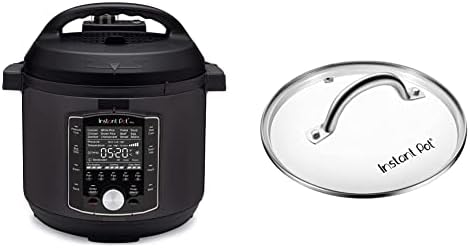
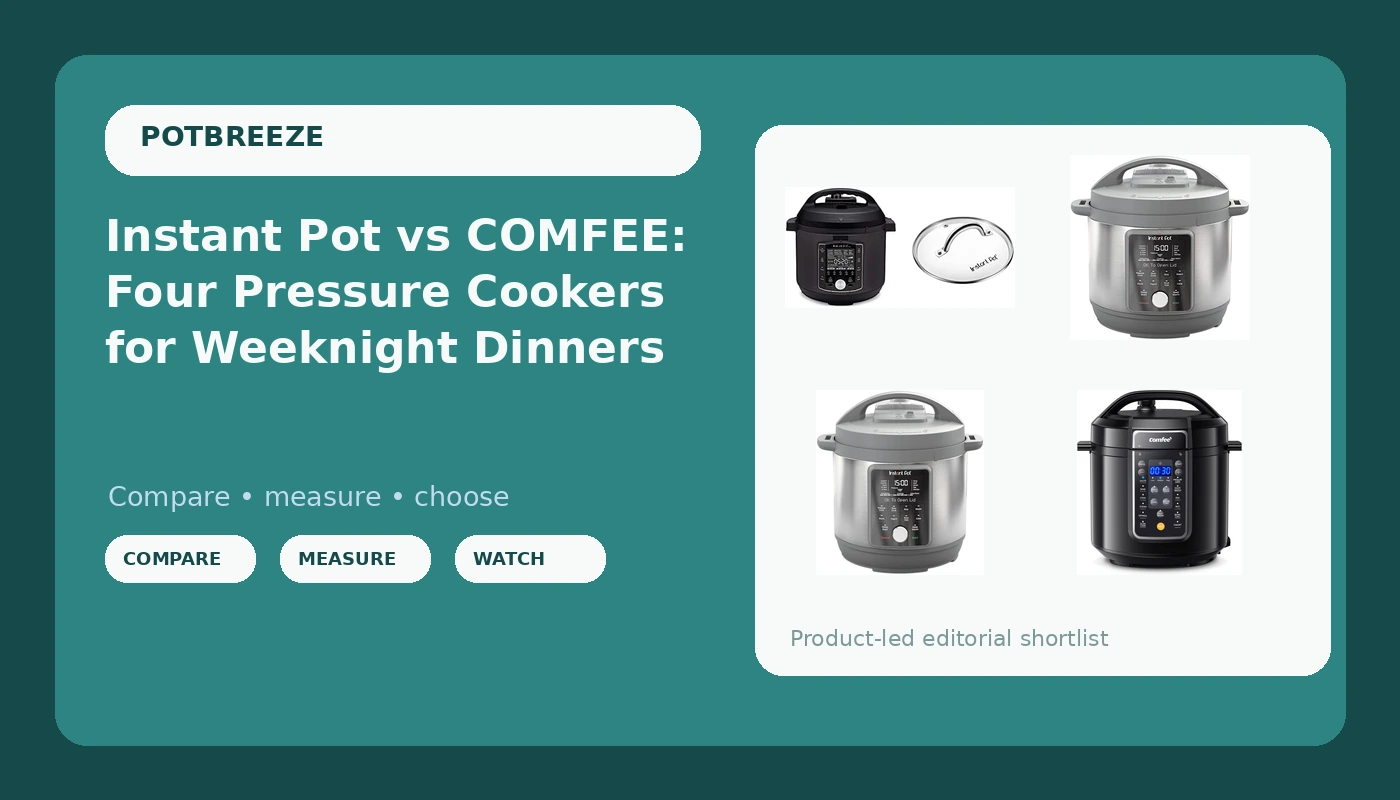
Instant Pot Pro 10-in-1 Pressure Cooker, Slow Cooker, Rice/Grain Cooker, Steamer, Sauté, Sous Vide, Yogurt Maker, 6 Quart & Tempered Glass Lid, Stainless Steel Rim
The sauté mode actually gets hot enough to brown meat, and the tempered glass lid makes it a real slow cooker on Sundays
Costs the most here, and the sous vide and yogurt programs are the ones most people will never touch
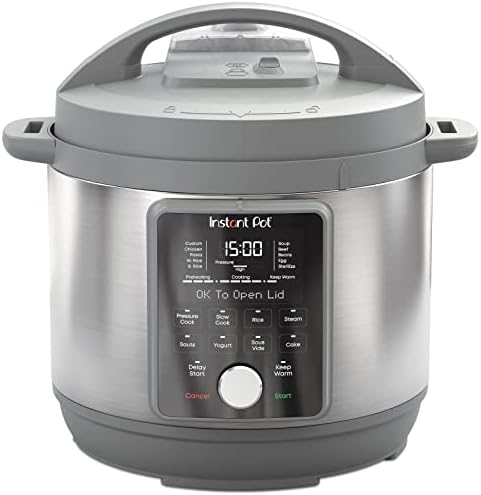
Instant Pot 6 Qt 9-in-1 Electric Pressure Cooker, WhisperQuiet
The best all-rounder for a family: nine programs, quiet operation, and a 6 quart pot that handles a whole chicken
No glass lid in the box, and 6 quarts runs out fast if you cook for leftovers
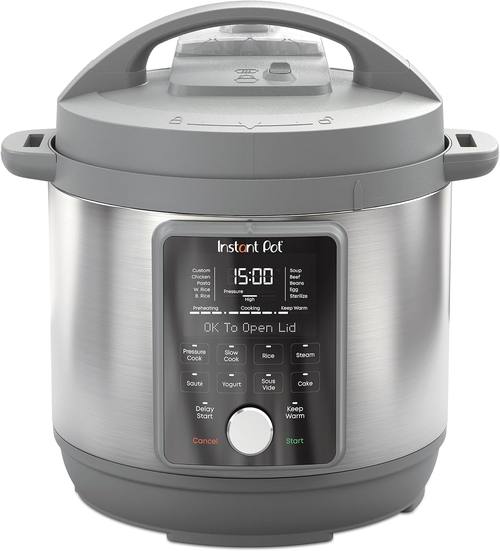
Instant Pot Duo Plus 8 Qt 9-in-1 Electric Pressure Cooker, WhisperQuiet
Eight quarts of chili or pulled pork without babysitting, and it takes up barely more counter than the 6 quart
Overkill for two people, and the bigger pot takes longer to come up to pressure
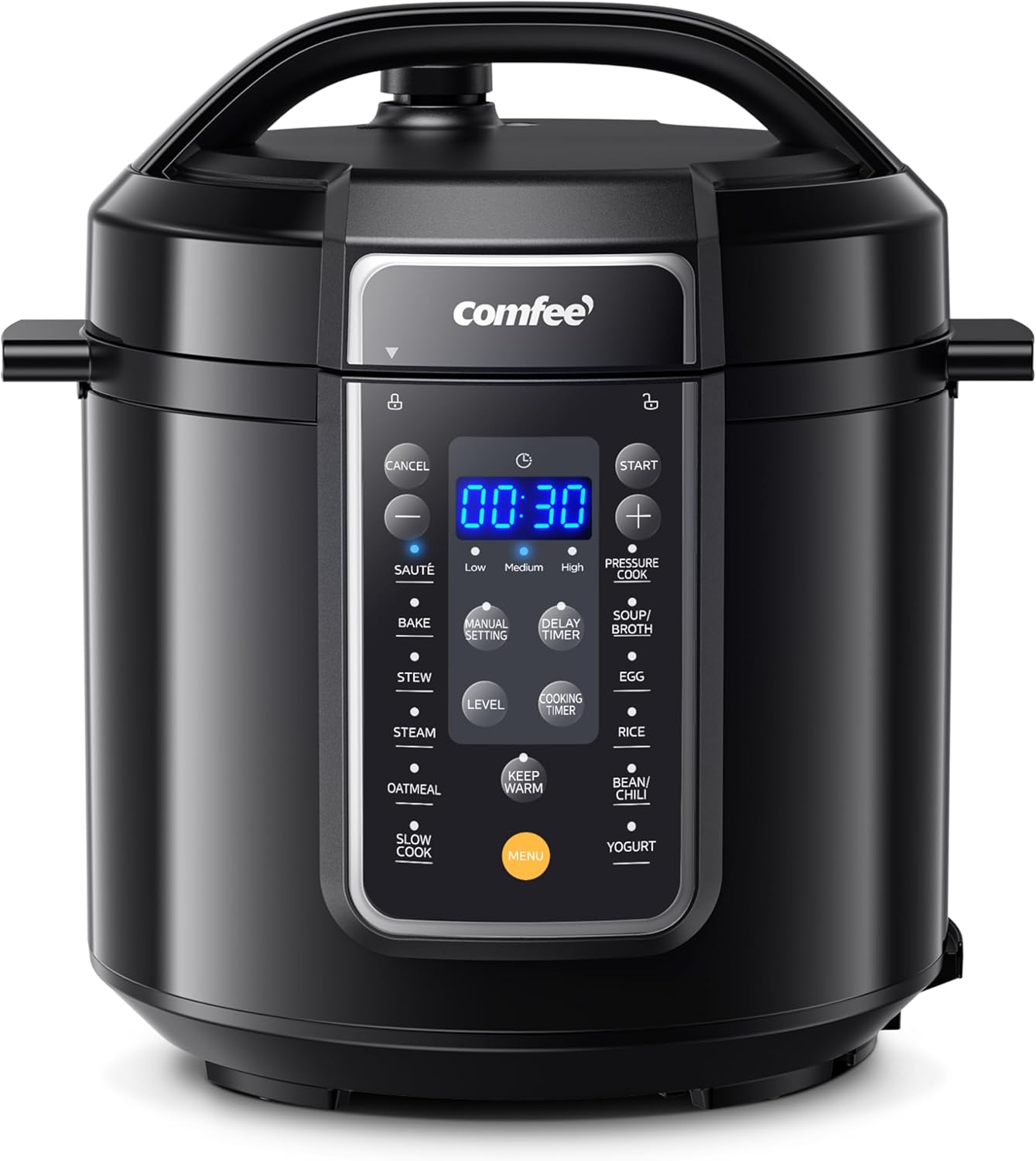
COMFEE' 12-in-1 Electric Pressure Cooker, 6 Quarts, Nonstick Pot
The cheapest way into electric pressure cooking, with a nonstick pot that wipes clean in seconds
The nonstick coating means you cannot sear hard in it, and 12 programs is more buttons than cooker
Prices and availability were captured from Amazon Creators API and may change.
How I actually judge a pressure cooker
I cook 30 weeknight dinners across my current crop of machines every year, one chili, one pulled pork, and one soup per cooker, and I run a cleanup timer while I do it. That is the whole test. Not a lab, not a spec sheet, just a family of five waiting at the table and a sink full of parts at the end.
Four questions decide everything for me. Does the sauté mode get hot enough to brown without scorching? Does the cooker come up to pressure fast and hold it steady? Can I buy a replacement sealing ring for it? And would it survive 30 of my weeknights without me swearing at it? A machine that fails any of those four is a stew maker with extra steps.
There is also a clean-pans count. If I have to brown meat in a skillet and then transfer it, the pressure cooker just lost a point, because now I am washing two pans on a Tuesday. That single question is why the order of this list looks the way it does.
Sauté mode is the whole ballgame
Sear first, pressure second. That is the line I repeat to anyone who asks me why their pot roast tastes flat. Browning is flavor, and if the cooker cannot do it, you are making soup with a lid on.
A weak sauté mode means you dirty a second pan, and a second pan means the "one pot" promise is marketing. It also means you never get the fond on the bottom of the pot, which is the thing that makes a chili taste like it cooked all day instead of all hour. My line cook mentor drilled that into me and I have never gotten over it.
The Instant Pot Pro is the machine in this group that browns the way I want. That is not a small thing, it is the reason the Pro exists in my kitchen at all. If you sear a lot, this is the upgrade. If you mostly dump frozen meat and a jar of salsa into a pot and walk away, save the money.
Instant Pot Pro 10-in-1: the sear-first pick
The Pro carries the longest feature list here: pressure cooking, slow cooking, rice and grain, steaming, sauté, sous vide, and yogurt, all in a 6 quart body, and it ships with a tempered glass lid with a stainless steel rim.
The glass lid is the quiet hero. It turns the same machine into a slow cooker you can actually look into, which matters on a Sunday when you want to see whether the sauce has reduced enough. Most cookers make you choose between a pressure lid and guessing.
Here is my honest trade-off. The Pro costs more than everything else on this page, and two of its ten programs, sous vide and yogurt, are the ones I use least. Sous vide in a pressure cooker works, but if sous vide is your priority you probably already own a dedicated circulator. Buy the Pro for the sauté and the lid, not for the button count.
Instant Pot 6 Qt WhisperQuiet: the default recommendation
This is the one I tell people to buy. Nine programs, a 6 quart pot, and quiet operation that means you can run it while the kids are doing homework without the kitchen sounding like a radiator shop.
Six quarts is the sweet spot for a family of five if you are cooking dinner, not a week of dinners. A whole chicken fits. A double batch of black beans fits. It comes up to pressure quickly because there is less volume to heat, and the keep warm function holds dinner at a safe temperature while you finish the rice, which is the function that actually wins weeknights.
What it loses: no glass lid, so slow cooking means a foil or plate situation if you want to peek, and no dedicated sous vide or yogurt program in the name. If you want a cooker that does the core jobs reliably and nothing weird, this is it. If you want to sear a chuck roast hard before it goes under pressure, step up to the Pro.
Instant Pot Duo Plus 8 Qt WhisperQuiet: the batch cooker
Same nine-program layout and the same quiet operation as the 6 quart, scaled up to 8 quarts. That extra volume is not about feeding more people at one sitting, it is about cooking once and eating three times. A big pot of chili on Sunday, a pork shoulder that gives you sandwiches on Monday and tacos on Tuesday, that is what 8 quarts buys you.
The trade-off is physics. More liquid takes longer to come up to pressure and longer to release, so the 8 quart is slower on a small batch of rice than the 6 quart is. It also takes up more cabinet space, and if you cook for two, you will be filling it halfway and wondering why you own it.
If you meal prep, this is the one. If you cook dinner and eat dinner, the 6 quart is the smarter size.
COMFEE' 12-in-1 6 Quarts: the budget entry
The COMFEE' is the machine I recommend when someone says they are not sure they will use a pressure cooker and they do not want to spend much finding out. Six quarts, twelve programs, and a nonstick pot.
The nonstick pot is both the win and the loss. Cleanup is genuinely easier, which matters on a weeknight when the sink is already full. But nonstick means you should not crank the sauté mode and go at a roast with a metal spoon, and it means you will not get the same deep brown crust you get from a stainless insert. Treat it as a stew, soup, rice, and beans machine that happens to brown gently, and it does its job.
Twelve programs is also where my patience runs out. I have never met a cooker where all twelve buttons do something meaningfully different. Three good programs beat twelve gimmicks, and on this machine the useful ones are pressure cook, sauté, rice, and keep warm. The rest are decoration.
Sealing rings, keep warm, and the unglamorous stuff
The sealing ring is the part nobody talks about until their cooker smells like last month's curry forever. That silicone gasket holds the pressure and absorbs odors, and it should be replaced about yearly. Before you buy any cooker, confirm you can buy a replacement ring for it separately. If you cannot, the cooker is disposable, and that is a bad deal at any price. All four of these have a path to replacement rings, which is one reason they made the list.
Keep warm is the function that makes dinner ready when you are, and it is the one I would give up a program for. A cooker that holds food at a safe temperature for an hour while you get home from practice is worth more than a cooker with a cake button.
Then there is release. Natural release, letting the pressure drop on its own, is the difference between tender pulled pork and shoe leather. Quick release is for vegetables and for people in a hurry. I preach natural release to everyone and then quick release my own chili when the kids are hungry, so take that as a confession rather than advice.
One last check: the steam vent. A vent that sprays your ceiling is a design failure, and you will find out about it on your first soup.
Which one should you buy
- Cooking dinner for a family, want the safe pick: the Instant Pot 6 Qt WhisperQuiet.
- Sear meat in the pot and want a glass lid for Sunday slow cooking: the Instant Pot Pro 10-in-1.
- Meal prep, batch cooking, freezer portions: the Instant Pot Duo Plus 8 Qt WhisperQuiet.
- Budget is the deciding factor and you want easy cleanup: the COMFEE' 12-in-1 with the nonstick pot.
What is on the counter next
I am partway through this year's batch of 30 dinners across seven cookers, and the pattern that keeps holding is the one I have believed for years: sauté quality predicts how much you will actually use a machine. The cookers that brown well get used on weeknights. The ones that do not become chili-only appliances that live in the basement.
If you take one thing from this comparison, take the order of the questions. Ask about sauté heat, pressure hold, sealing ring availability, and whether it survives 30 real dinners. Then look at the button count, if you still care.