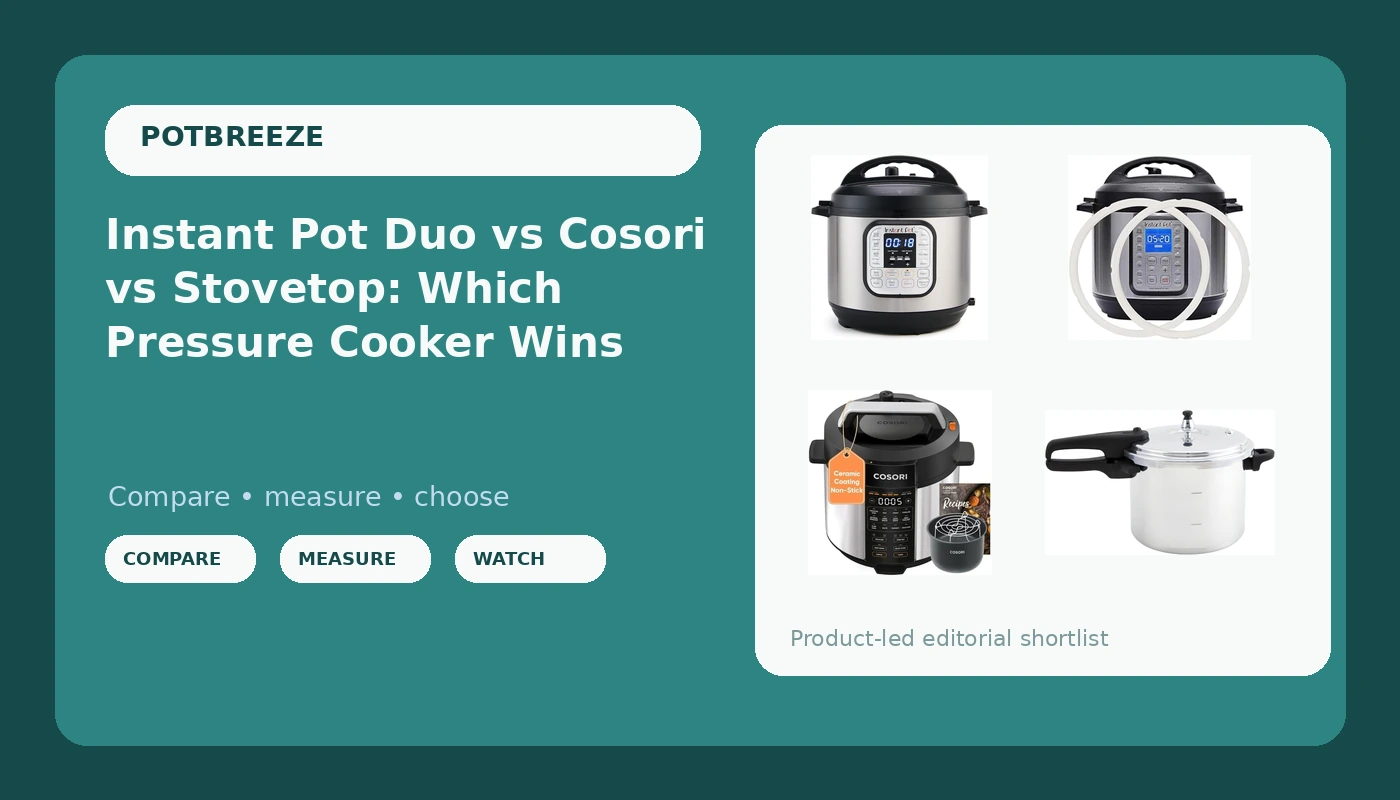
I have owned eleven pressure cookers in fifteen years. The first was a rattling stovetop model my grandma handed me, and the ones since have ranged from a $40 impulse buy to the full Instant Pot lineup. I cook dinner for five people every weeknight and keep a meal-prep spreadsheet with more than 60 recipes and their cook times, so this pressure cooker comparison is not a shelf review. It is the short list I give people at soccer practice when they ask which cooker actually earns counter space.
Here is the thing about pressure cookers: the machine is a time machine, and the only real question is whether it is also a good pot. A cooker that cannot sear, cannot hold pressure steadily, or cannot get a replacement sealing ring is a slow cooker with extra steps and a scary valve on top.
For most families, the Instant Pot Duo 6 Qt 7-in-1 is still the pressure cooker to buy, because it is the most predictable machine of these four and every part on it can be replaced. The Cosori 6QT is the better pick if nightly cleanup is your bottleneck, and the IMUSA 7 quart stovetop cooker is for cooks who already know their way around a valve.
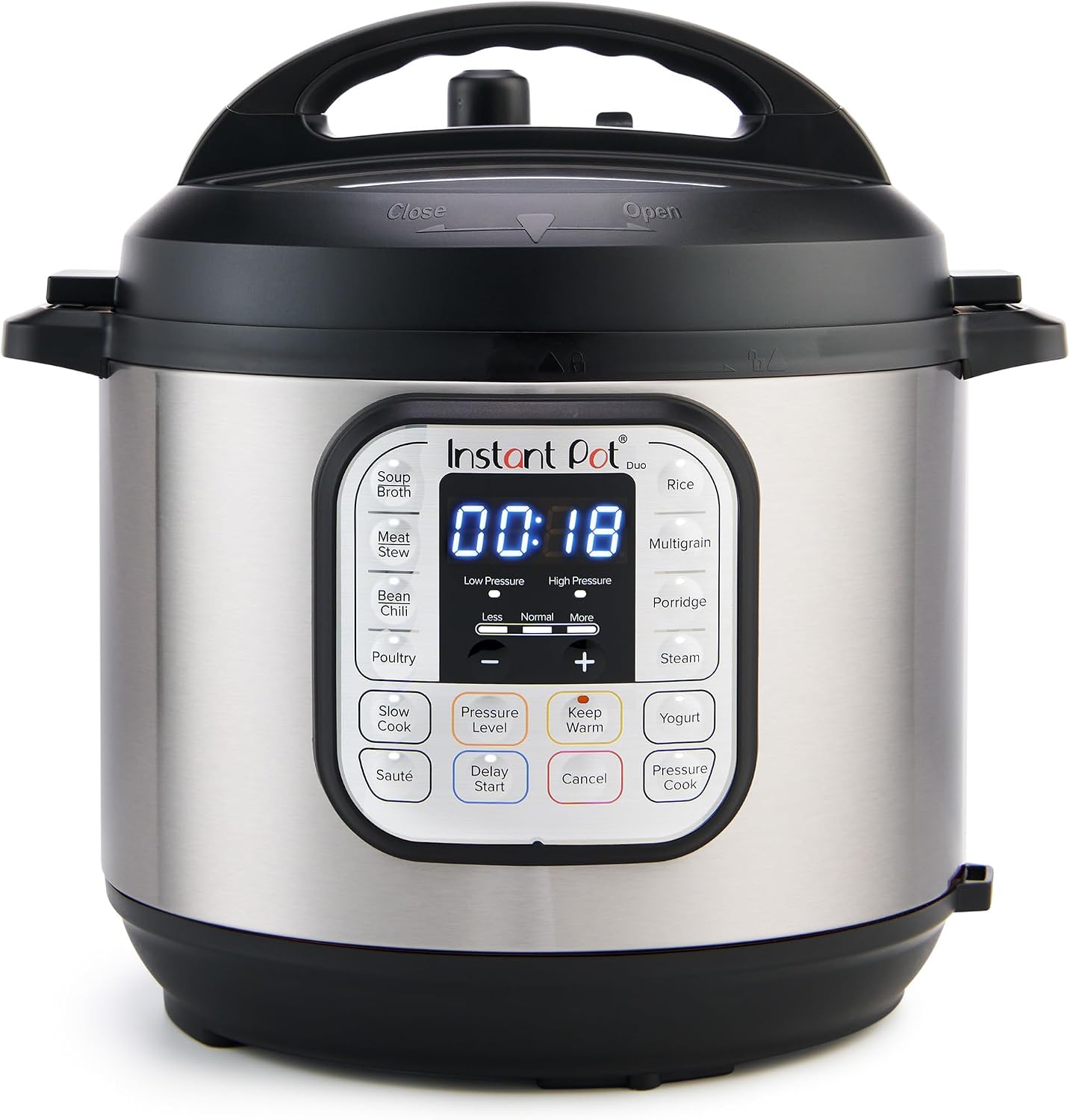
Instant Pot Duo 6 Qt 7-in-1 Electric Pressure Cooker, Stainless Steel
The complete family package: 7-in-1 programs, a stainless steel inner pot, and a replacement ecosystem that actually exists
Sauté is good, not great, and the bare stainless pot shows every hard-water spot
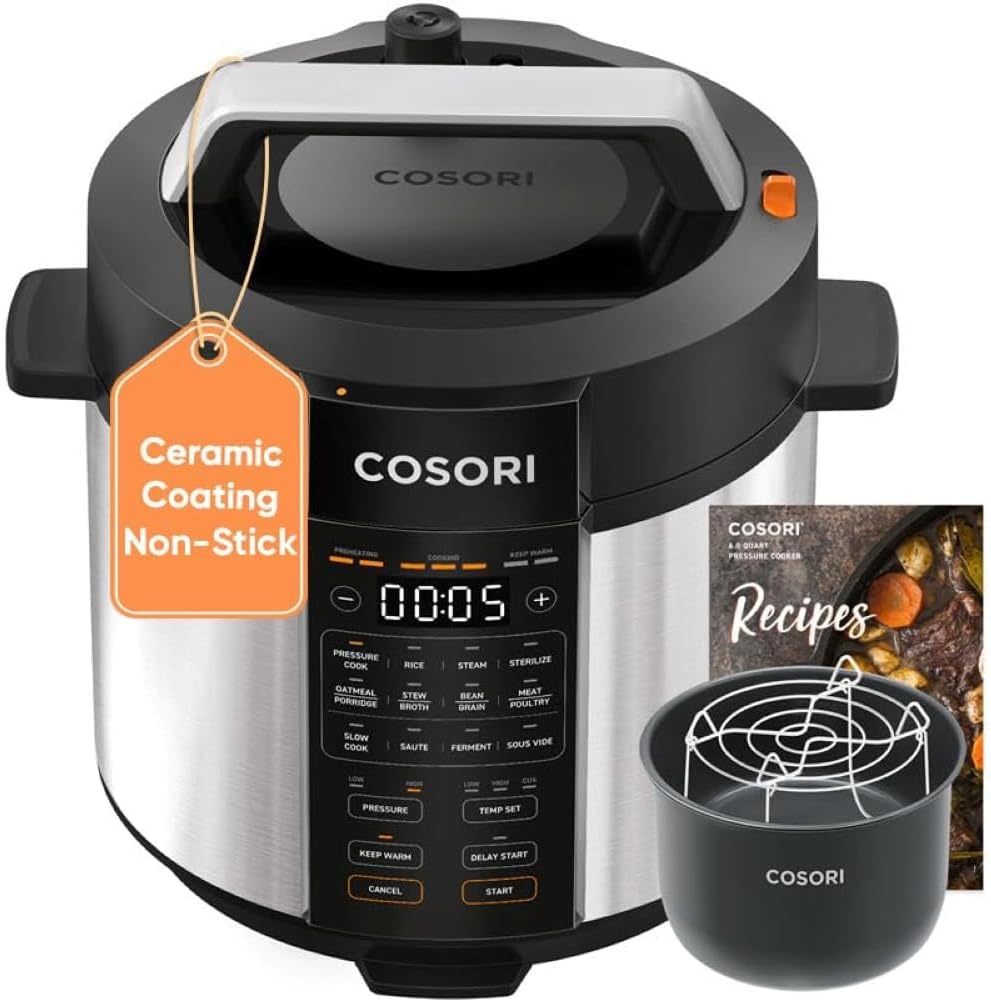
Cosori Pressure Cooker 6QT, 9-in-1, Ceramic Coating Pot, 12 Safety Features
The ceramic coating pot wipes clean in one pass, and 9-in-1 programs cover the dinners most families actually cook
Coated pots demand gentle tools, and long-term part availability is a bigger question mark than it is for Instant Pot
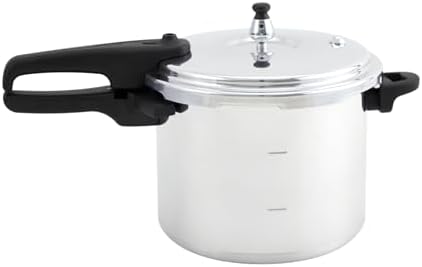
IMUSA 7 Quart Stovetop Aluminum Presure Cooker with safety valves for risk-free opening
Simplest machine here and the fastest route to pressure on a gas burner: no electronics, no control board, nothing to fail
No sauté, no timer, no keep warm setting, and a learning curve that will rattle a beginner
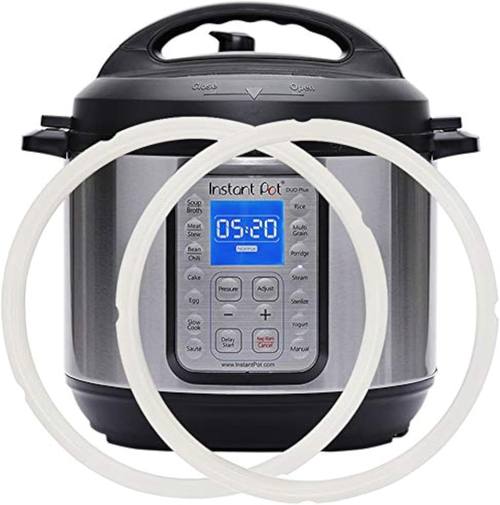
Silicone Sealing Ring 6qt for Instant Pot Sealing ring for 6 5qt Insta Pot, Sweet and Savory, Food-grade Silicone Fits IP-DUO60, IP-LUX60, IP-DUO50, IP-LUX50, Smart-60, IP-CSG60 and IP-CSG50-2 Pack
Two food-grade silicone rings in one pack, one designated savory and one sweet, sized for the listed 5 and 6 quart models
It only fits the models listed in the name, and no ring saves a cooker with a warped lid or a bent valve
Prices and availability were captured from Amazon Creators API and may change.
How I evaluate a pressure cooker
I do not recommend anything I would not cook ten dinners in, and I do not care how many buttons a machine has until it passes four questions. First, does sauté get hot enough to brown meat without scorching the fond to the bottom of the pot? A weak sauté means I dirty a second pan, and the whole promise of a one-pot dinner dies right there. Second, does the cooker come to pressure quickly and hold it steady? Third, can I buy the sealing ring separately, because a ring that only exists inside a sealed unit makes the whole cooker disposable. Fourth, would this thing survive 30 weeknight dinners and the cleanup that follows them?
That is the whole test. Three good programs beat twelve gimmicks, and a machine that needs a phone app to set a timer is a machine that will be unplugged by March.
The all-rounder: Instant Pot Duo 6 Qt 7-in-1
The Duo is the one I hand to friends who are buying their first electric pressure cooker, and nothing in this comparison changes that. It is a 6 quart stainless steel pot with the seven programs a family actually uses: pressure cook, sauté, steam, slow cook, rice, yogurt, and keep warm. That last one matters more than people expect. The keep warm function is where weeknight dinners are actually won, because it is the difference between walking in the door at 6:15 to a finished pot of chili and walking in to a cold pot you have to reheat while five people stare at you.
The stainless steel inner pot is the other quiet advantage. It browns better than a coated pot, it does not care what utensil you grab, and it will outlive the machine. The trade-off is cosmetic and real: stainless shows hard-water spots and protein stains, and it will never look new after a month of pulled pork. You can fix that with a soak and a little vinegar.
The 7-in-1 label oversells things a bit. Rice and slow cook are fine, not great, and the yogurt program is a novelty unless you already make yogurt. But the core pressure cooking is consistent, and the part that matters in year two is the ecosystem: rings, lids, and inner pots are all available, which is not something you can say about every cooker in this price band.
The easy-clean option: Cosori 6QT, 9-in-1, ceramic coating pot
The Cosori 6QT takes the opposite approach to cleanup. The ceramic coating on the inner pot is the headline feature, and if your least favorite part of pressure cooking is scrubbing stuck-on starch off a stainless pot, this one is worth a hard look. A coated pot wipes out in one pass, and that changes how often you actually use the machine. A cooker you dread cleaning is a cooker that ends up in the cabinet behind the stand mixer.
The 9-in-1 program set covers the same ground as the Duo with a couple of extra presets, and the 12 safety features list is unusually specific for this category, which I read as a good sign. Cosori is not a no-name brand in the small kitchen appliance space.
Two honest caveats. A ceramic coated pot is not a lifetime part the way bare stainless is, so treat it with silicone or wooden tools and skip the metal whisk. And when you are three years in and need a replacement sealing ring, Instant Pot's supply chain is the safer bet. That is the trade: easier Tuesday cleanup now, slightly more hunting for parts later.
The stovetop route: IMUSA 7 Quart aluminum
The IMUSA 7 Quart Stovetop Aluminum Presure Cooker with safety valves for risk-free opening is the cheapest path to real pressure cooking, and the simplest machine in this comparison by a mile. There is no control board, no keypad, no firmware. You add liquid, lock the lid, put it on a burner, and manage the heat yourself. Aluminum heats fast and weighs almost nothing compared to a 7 quart electric unit, and the safety valves and the risk-free opening design address the two fears everyone has about stovetop cooking.
What you give up is everything the electrics do for you. There is no sauté, so you brown in a skillet first unless you are making a soup that does not need it. There is no timer and no automatic keep warm, which means the cooker is done when you decide it is done, and you have to be in the kitchen to decide. And plain aluminum is not induction compatible, so check your cooktop before you buy.
I will say the unpopular thing: if you have never used a stovetop pressure cooker, this is not the machine to learn on. The learning curve is real, the jiggle of the weight will scare your family the first three times, and the difference between perfect beans and mush is a couple of minutes of inattention. If you grew up around one, though, you already know that nothing else gets dinner done faster on a gas burner.
The three dollar insurance policy: sealing rings
Here is the part nobody puts on a registry. The sealing ring is the silicone gasket that holds pressure and absorbs odor, and it is the single most failure-prone piece on any electric cooker in this comparison. When a ring goes, the cooker stops sealing, the steam escapes, and dinner is late. When a ring holds onto last night's curry, every pot of rice smells like curry for a month.
The Silicone Sealing Ring 6qt two-pack is a food-grade silicone set sized for the listed 5 and 6 quart models, and the two-ring format is the point: one ring for sweet and one for savory. That is how you keep your yogurt tasting like yogurt. If you own a 6 quart electric cooker, keeping a spare ring on the shelf is the difference between a 30 second fix and a week of waiting on a delivery.
Two limits worth naming. It only fits the models listed in the name, so check yours before ordering, and a new ring will not fix a lid that has been dropped or a valve that no longer seats. Rings are a maintenance item, not a repair.
Sauté, natural release, and keep warm: the three functions that decide weeknight dinner
Every cooker in this comparison can build pressure. What separates them on a Tuesday night is three things.
Sauté mode quality decides whether dinner is one pot or two. The Duo's sauté is good enough to brown a pound of ground beef and soften onions. The Cosori's coated pot browns more gently and cleans up faster afterward. The IMUSA has no sauté at all, so if browning is part of your recipe, plan for a skillet.
Natural release is the second. Letting pressure drop on its own is the difference between pulled pork that shreds with a fork and pulled pork that fights back, and every electric cooker here can do it, which means you can walk away. On the stovetop model, natural release is you standing there watching a valve.
Keep warm is the third and the most underrated. A finished pot that stays at a safe temperature until the last person gets home is a feature that no stovetop cooker offers and both electrics do.
Trade-offs: what you give up with each pick
Pick the Instant Pot Duo and you give up a coated pot and a couple of extra presets. You gain the most predictable cooking and the easiest path to replacement parts.
Pick the Cosori and you give up the bare stainless durability and a bit of peace of mind about buying a new inner pot in a few years. You gain the easiest cleanup in the group and a strong safety spec.
Pick the IMUSA and you give up sauté, the timer, keep warm, and induction compatibility. You gain speed of getting to pressure, a machine with almost nothing to break, and a 7 quart capacity that feeds a crowd.
Pick the sealing ring two-pack and you give up nothing except a few dollars, provided your cooker is one of the models it fits.
Which pressure cooker should you buy?
If you are cooking for a family and you want one machine that does the most with the least drama, buy the Instant Pot Duo 6 Qt. It is the safest recommendation I can make, and the fact that the ring, lid, and inner pot are all replaceable is what makes it a ten year purchase instead of a three year one.
If cleanup is what stops you from using a pressure cooker at all, buy the Cosori 6QT and treat the coated pot well.
If you already speak stovetop, or you cook on gas and want the fastest, simplest route to pressure, the IMUSA 7 Quart is a legitimate tool at the lowest cost of entry here.
And whatever you buy, add the sealing ring two-pack. A pressure cooker is a time machine, but the ring is the part that keeps the time machine sealed, and nobody thinks about it until the night it fails.
What I am testing next
I have a batch of bean and stock recipes queued for the next round of weeknight dinners, which is where cooker differences show up fastest: long cook times, lots of liquid, and a lot of cleanup. I am also tracking how each ring holds up over a year of savory cooking, because that is the failure point that turns a good cooker into a cabinet ornament. Full report when the spreadsheet says something worth repeating.