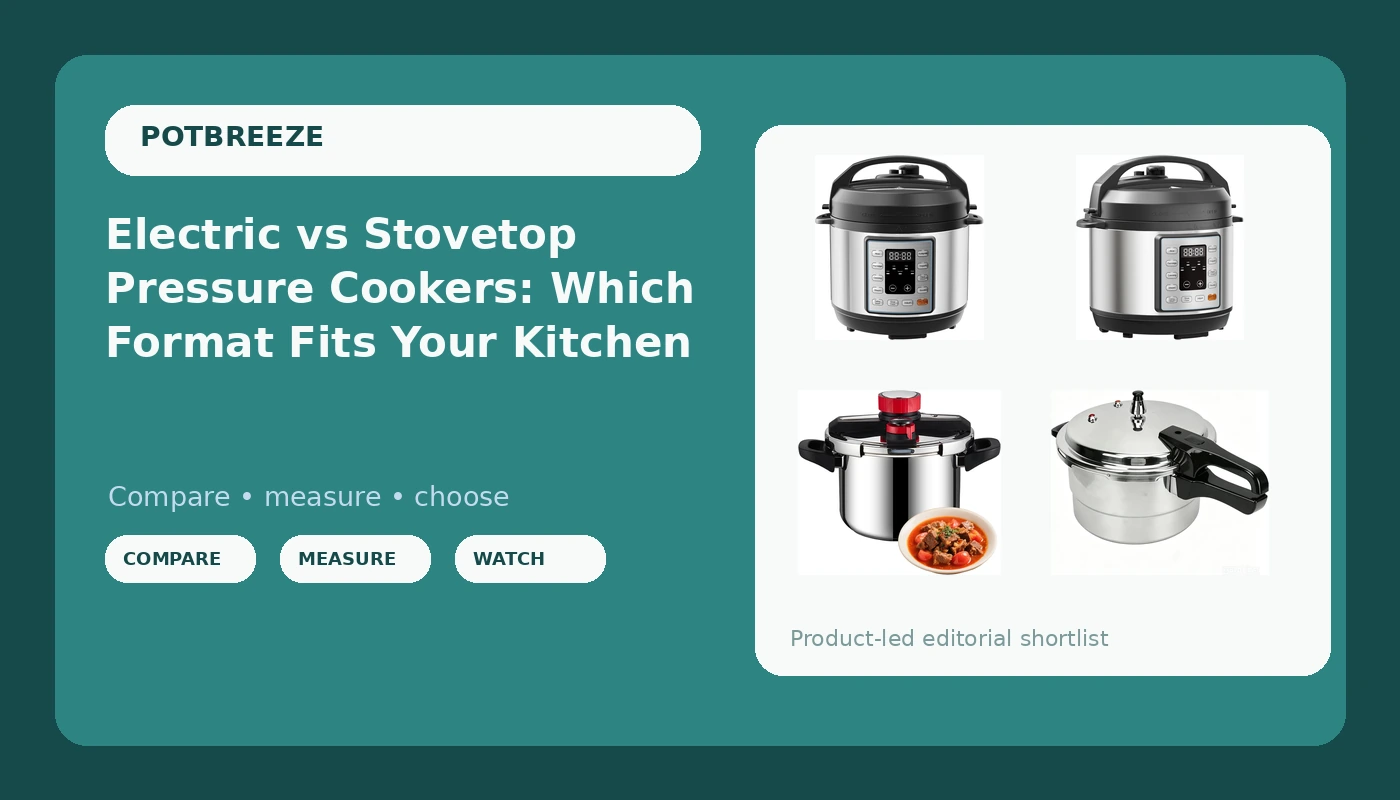
The electric vs stovetop pressure cooker decision looks like a brand question and turns out to be a heat source question. Both formats do the same core job: they seal steam inside a pot so food cooks faster than it would on an open burner. Everything after that is about who controls the heat, how large the batch can be, and how much attention the pot needs while dinner is happening. Electric multi cookers plug into the wall, run their own programs, and hold food at serving temperature after the cook. Stovetop cookers sit on a burner you already own, respond to your hand on the dial, and double as an ordinary pot for browning. The four options below split two and two across those formats, and each one is worth understanding before it goes into a cart.
Related: Pressure Cooker Sizing: How to Match Capacity to Your Family →
Quick answer
For a small kitchen or a first pressure cooker, an electric 3 quart multi cooker is the simpler starting point, because it manages pressure, timing, and keep warm on its own. Choose a stovetop cooker when you want burner-level control and a pot you can brown in directly. Match capacity to the batch you cook most often, confirm the pot works on your cooktop, and check that wear parts such as the sealing ring or gasket can be replaced before you commit.
4 useful options
| Model | Best fit | What stands out |
|---|---|---|
| OLIXIS 10-In-1 Electric Pressure Cooker, 3 Quart Multi Cooker for Rice, Stew and Steam, Small Programmable Stainless Steel Pot with Slow Cook Function and Ceramic Inner Pot | Small households that want hands-off electric cooking | 3 quart programmable multi cooker with a ceramic inner pot and a slow cook function |
| NEWBULIG 10-In-1 Electric Pressure Cooker, 3 Quart Multi Cooker for Rice, Stew and Steam, Small Programmable Stainless Steel Pot with Slow Cook Function and Ceramic Inner Pot | Shoppers comparing the same electric format across two listings | Matching listed format: 10-in-1 programs, ceramic inner pot, slow cook function |
| 4.2 Quart Pressure Cooker with Magnetic Bottom, Small Aluminum Alloy Pressure Pot with Release Valve & Multiple Protective Devices, Pressure Canner Compatible with Gas & Induction Cookers | Gas and induction cooks who want a mid-size stovetop pot | 4.2 quart aluminum alloy body with a magnetic bottom, release valve, and listed protective devices |
| Pressure Cooker - 3-in-1 Stainless Steel Pressure Cooker Compatible With gas Stoves and Induction Cookers Featuring an easy-to-open Lid Safety Lock System and Adjustable pressure Valve | Cooks who want a stainless stovetop pot with a locking lid | Stainless steel body, gas and induction compatible, lid safety lock, adjustable pressure valve |
The compact electric pick: OLIXIS 10-In-1 Electric Pressure Cooker, 3 Quart
Programmable electric cookers are built for set-and-forget cooking: you choose a program, the machine brings the pot to pressure and counts down, and a keep warm step holds the food afterward. The trade is that the heating element sits in the base rather than under an open flame, and a ceramic inner pot is a gentler surface than bare metal, so heavy browning in the pot is not the strength of this format. The 3 quart size is the other thing to weigh. It covers rice, stew, and steamed vegetables comfortably, but a family batch of chili or a whole chicken needs more room than a 3 quart pot offers.
The same-format alternative: NEWBULIG 10-In-1 Electric Pressure Cooker, 3 Quart
Two listings with near-identical spec sheets are a common pattern in small appliance manufacturing, not a trick. When the features match, the decision moves away from the program count and toward the details that decide whether a cooker lasts. Check whether the sealing ring and the inner pot are sold as separate replacements, what the manual says about minimum liquid, and how the release valve is designed, because those are the parts that get cleaned or replaced most often. A pressure cooker whose gasket cannot be bought on its own becomes disposable the first time it holds on to the smell of last month's chili.
The mid-size stovetop option: 4.2 Quart Pressure Cooker with Magnetic Bottom
Stovetop pressure cookers put the heat decision in your hand. You bring the pot up on the burner, watch or listen for the valve to signal pressure, then dial the flame down for the rest of the cook. Aluminum heats quickly and evenly, which is why so many stovetop pots use it, but bare aluminum does not respond to induction unless the base includes a magnetic layer, and that is exactly what this listing specifies. The trade is attention. A stovetop cooker needs a person nearby for the first few minutes and again at the end, when the pressure has to come down before the lid will open.
The stainless stovetop option: 3-in-1 Stainless Steel Pressure Cooker
Stainless steel is the material many cooks reach for when they want a pot they can scrub, deglaze, and leave on the stove without worrying about a coated interior. It is heavier than aluminum and slower to change temperature, which is a fair trade for durability and for a cooking surface that does not react to acidic ingredients. The adjustable pressure valve is the detail worth noticing here: a valve you can set means you choose between a lower pressure for delicate food and a higher one for tougher cuts, rather than taking whatever the pot decides on its own. The lid mechanism is the second detail to check, since the lid is the part you touch every time you cook.
Prices and availability may change. Product images, names, and retailer links are matched to verified listings. No current price, rating, stock status, or measured result is stated here without current evidence.
How the two formats behave on a weeknight
The practical difference between these formats shows up in the first ten minutes and the last ten minutes of a cook. An electric multi cooker does its work from a heating element in the base, with the machine managing pressure and timing once you press start. That makes it predictable: you set rice, stew, or steam, walk away, and come back to a pot that has already moved into keep warm. The cost is counter space and an outlet, and the fact that the pot itself is a dedicated appliance rather than a pan you can also sear in.
A stovetop cooker uses the burner you already have, which means it works on gas, on induction, and during a power outage, and it can be used as an ordinary pot when you are not cooking under pressure. It also gives you direct feedback: you see and hear the pressure signal, and you decide when the heat comes down. In exchange, you have to be present for the ramp-up and for the release.
Capacity is the quieter variable. A 3 quart pot is a side-dish and small-household size, good for grains, beans, and a stew for two or three. A 4.2 quart pot handles a slightly larger batch and leaves more headroom, which matters because pressure cookers need empty space above the food for steam. Buying a pot that is too small for your usual batch is the most common sizing mistake, and it is also the easiest to avoid: think about the meal you cook most often, not the largest meal you might cook once a year.
Release method deserves a line of its own. A natural release, where the pressure drops on its own, keeps more steam and heat in the pot and is the gentler option for large cuts of meat. A quick release stops the cooking immediately and is useful for vegetables and grains. Whichever format you choose, the pot has to cool or vent before the lid unlocks, and that waiting time is part of the recipe.
How to read a pressure cooker listing
The spec sheets for these pots are short, and the parts that matter are easy to skim past. Read them in this order.
- Match quart capacity to the servings you actually cook, not the biggest batch you can imagine.
- Confirm cooktop compatibility: induction needs a magnetic base, gas suits most stovetop pots, and an electric multi cooker needs counter space and an outlet.
- Count the programs you will press. Ten advertised modes often overlap, and rice, stew, steam, and a manual pressure setting cover most weeknight cooking.
- Check the wear parts. A sealing ring or gasket and an inner pot should be replaceable, because those are the pieces that age first.
- Look at the lid and the release valve, since the mechanism you handle twice a day decides how pleasant the cooker is to live with.
Kitchen fit and weeknight practicalities
- Keep the batch inside the pot's fill line. Pressure cookers need headroom for steam, and overfilling risks a blocked vent.
- Write down the cook time and release method for the recipes that work, because pressure cooking rewards repetition more than improvisation.
- Treat the sealing ring as a consumable. Replace it when it stops sealing cleanly or starts holding odors from previous meals.
- On a stovetop pot, stay in the kitchen for the first few minutes to catch the pressure signal, then lower the heat and set a timer.
- On an electric multi cooker, use the keep warm step deliberately and plate when you are ready rather than when the countdown ends.
Which option should you choose?
Choose the OLIXIS 10-In-1 Electric Pressure Cooker, 3 Quart when you want a compact, programmable electric pot for rice, stew, steam, and slow cooks in a small household. Choose the NEWBULIG 10-In-1 Electric Pressure Cooker, 3 Quart when that same format suits your kitchen and you are comparing the two listings on the details that outlast the spec sheet, such as replacement parts and the release valve. Choose the 4.2 Quart Pressure Cooker with Magnetic Bottom when you cook on gas or induction and want a mid-size stovetop pot with more room in it. Choose the 3-in-1 Stainless Steel Pressure Cooker when stainless construction, an adjustable pressure valve, and a locking lid matter more to you than push-button programs.
The descriptions above come from the product listings, not from a test kitchen. Capacity, cooktop compatibility, and the listed features are what those listings state, and how any cooker performs depends on your burner, your altitude, your recipe, and how full you fill the pot. Nothing here is a safety ranking, a speed claim, or a durability verdict.
The bottom line
Electric vs stovetop pressure cookers comes down to who holds the dial. If you want the pot to manage pressure, timing, and keep warm while you do something else, a 3 quart electric multi cooker such as the OLIXIS or NEWBULIG model is the lower-effort choice, and the two listings are close enough that the deciding details are replacement parts and availability. If you want burner-level control, a pot that browns and simmers like ordinary cookware, and a vessel that keeps working when the power does not, a stovetop cooker is the better fit, with the 4.2 quart aluminum pot covering induction and gas at a mid-size capacity and the 3-in-1 stainless cooker offering the heavier build and an adjustable valve. Pick the format that matches your cooktop and your batch size first, then let the program list break the tie.