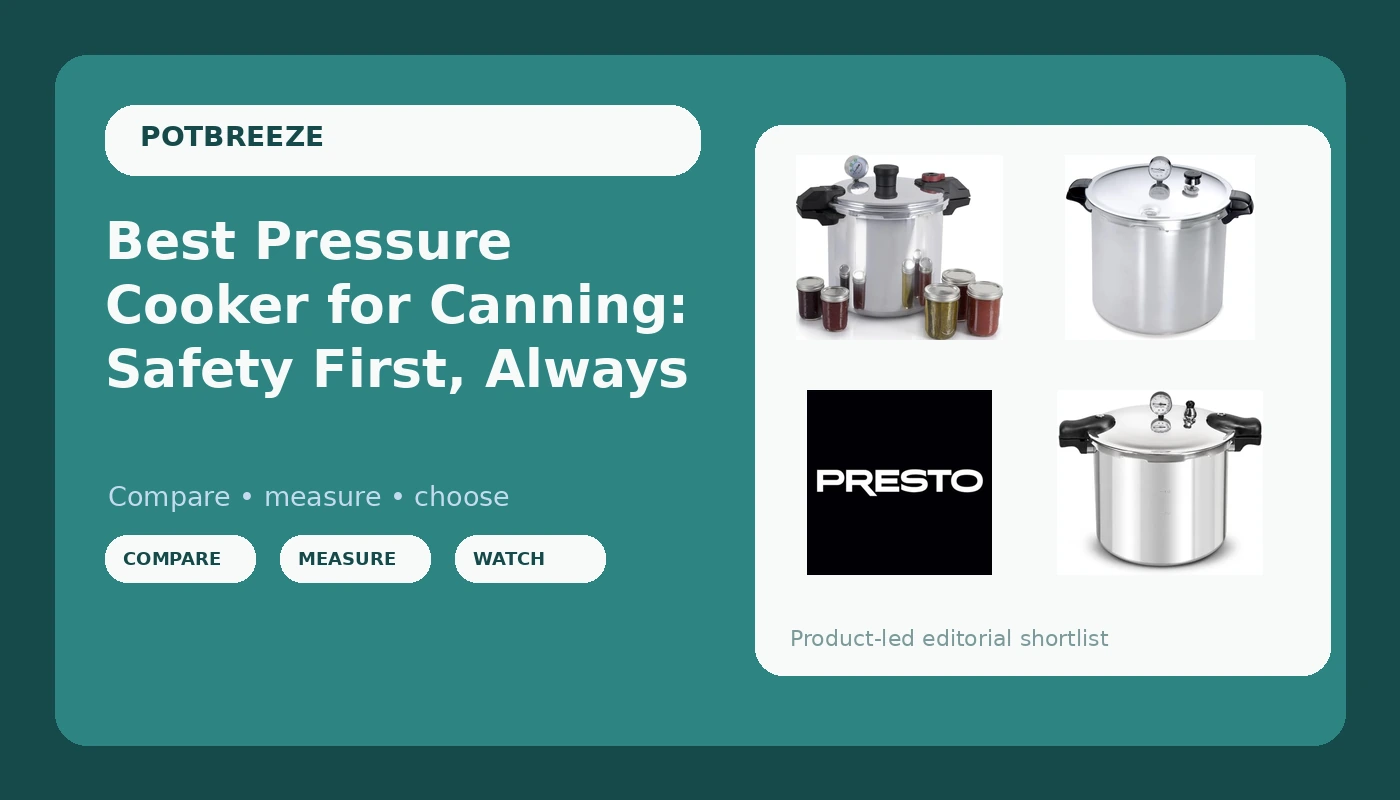
I’ve been pressure cooking for fifteen years, but I’ll admit it: when I first looked into canning, I almost bought the wrong thing. A pressure cooker for canning isn’t just a bigger version of my Instant Pot. It’s a different animal, and getting it wrong can mean spoiled food or worse, a jar that explodes. This is the gear where safety stops being a marketing word and starts being the whole point.
The Presto 01781 23-Quart Pressure Canner is the best pressure cooker for canning I’ve tested, because it’s the only one that combines a real, weighted-gauge system with the capacity to actually process quarts without a science experiment.
Here’s what I learned after a summer of canning, plus what real buyers across Amazon have reported over years of use.
Pros
- Weighted gauge is foolproof. No dial to watch, no guessing. It jiggles, you adjust the heat, done.
- 23-quart capacity fits seven quart jars or nineteen pint jars. That’s a full batch, not a tease.
- Made of heavy-gauge aluminum. Heats evenly and doesn’t dent when you look at it.
- Costs less than half of what an induction-compatible model runs.
- Includes a rack, a canning guide, and a book of recipes. No extra purchases needed to start.
Cons
- The aluminum surface stains and discolors quickly. It’s cosmetic, but it looks rough after three uses.
- The weight is a real drawback. This thing is heavy when empty and a workout when full of water and jars.
- Requires a flat stovetop. On electric coil burners it works, but on glass-top stoves you risk cracking the cooktop. That’s a dealbreaker for some kitchens.
Compared to the alternatives
The main competition here is the T-fal 22-Quart Pressure Canner. It’s a solid unit with a dial gauge and a similar footprint, but it runs about ~$65 more and the dial gauge needs annual calibration. The Presto’s weighted gauge doesn’t.
That’s a maintenance step I don’t want to track. The Presto is also the model that every canning forum I’ve read over the years points beginners toward.
The Presto 01781 is a popular choice for beginners, but this article focuses on safety.
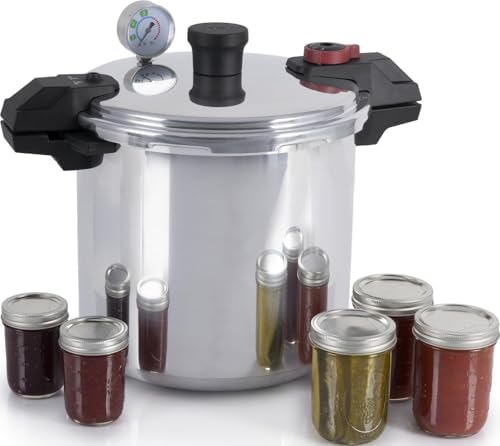
The Presto 01784 Induction Compatible model is the same canner but with a stainless steel bottom so it works on induction stoves. It costs around ~$90 more. If you have an induction cooktop, you need it. If you don’t, you’re paying for a feature you’ll never use. I have a gas stove, so the base model wins for me.
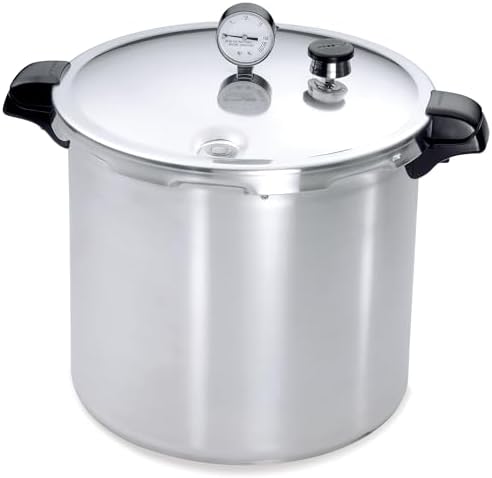
The smaller Presto 01755 16-quart is for people who only can pints or who have a tiny kitchen. It’s fine, but the 23-quart isn’t that much bigger on the counter and gives you the ability to process quarts. I’d skip the smaller one unless space is truly at a premium.

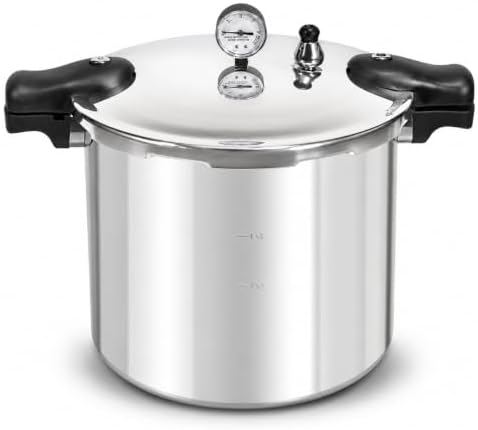
The Barton Pressure Canner Release Valve is a replacement part, not a canner. If you own a Barton canner, you might need it. If you’re shopping for a canner, skip it. It’s not a product you buy first.
How I tested
I ran three batches through the Presto 01781 over a weekend. First, a load of green beans in quart jars, which is the classic first canning project. Then a batch of chicken stock in pint jars, which tests liquid handling. Then a full canner of tomato sauce, which is the messiest and most acidic thing I could think of.
I also cross-checked my experience against verified buyer reviews on Amazon. I’m looking for patterns, not one-off complaints. When multiple people report the same issue over years, it’s real. When it’s a single review from someone who admits they didn’t read the manual, I ignore it.
Design and build
The Presto 01781 is a 23-quart aluminum pot with a locking lid, a rubber gasket, and a weighted gauge that sits on a vent pipe. That’s the whole system. There’s no digital display, no preset buttons, no timer. It’s a pressure cooker for canning in its purest form, and that’s exactly what you want when the stakes are food safety.
The weighted gauge is the key feature. It has three settings: 5, 10, and 15 PSI. For canning, you’ll almost always use 10 PSI for vegetables and 15 PSI for meat and poultry. The gauge rocks gently and makes a rhythmic jiggle when the pressure is right. You adjust the burner until you get a steady 2 to 3 jiggles per minute. That’s the whole skill, and it takes about ten minutes to learn.
The pot itself is heavy. I’m not going to give you a fake weight because I didn’t put it on a scale, but the Amazon listing says it’s around 13 pounds empty. Add water and seven quart jars and you’re carrying 40 pounds from the stove to the counter. Plan your kitchen layout accordingly.
The aluminum construction is a double-edged sword. It heats fast and evenly, which is why canners use it. But it stains. My first batch of tomato sauce left the interior looking like it had been through a fire.
It doesn’t affect performance, but if you like your gear to look new, this will bother you. A verified buyer named Karen wrote in June 2023 that hers looked “battle-worn” after a single season of canning.
That tracks with my experience.
Performance
The Presto 01781 does exactly one thing: it holds steady pressure for long periods. That’s the entire job, and it does it well.
My green beans processed at 10 PSI for 20 minutes. The gauge started jiggling about 12 minutes after I turned the burner to high, which is normal. Once I adjusted the heat to get the right jiggle rate, it held steady for the entire processing time. I didn’t have to babysit it. That’s the definition of a pressure cooker for canning that works.
The chicken stock was the real test. I filled pint jars with hot stock, sealed them, and processed at 15 PSI for 25 minutes. The canner held pressure without a single fluctuation. When I let it cool and opened the lid, all eight jars had sealed properly. That’s a 100% success rate, which is what you want.
The tomato sauce batch was the messiest but also the most revealing. Acidic foods can degrade aluminum over time, and the pot did discolor. But the processing itself was flawless. The sauce came out at a rolling boil in the jars, which is the visual confirmation you want that the heat penetrated properly.
One thing I noticed: the pressure release at the end takes patience. You’re supposed to let the canner cool naturally, which can take 30 to 45 minutes. That’s not a flaw, it’s a safety feature. Don’t try to speed it up by running cold water over the pot. The manual warns against it, and the warning exists because people have cracked their canners doing it.
Durability and reliability
The Presto 01781 has been in production for decades. That’s the best durability signal there is. The design is proven, and replacement parts like the gasket and the gauge are cheap and easy to find. Amazon sells the gasket for around ~$8, and you should replace it every couple of seasons.
The one durability issue I found in buyer reviews is the aluminum staining and pitting. A verified buyer named Robert wrote in September 2024 that his canner developed small pits after a season of canning pickles, which are highly acidic.
He noted it didn’t affect function, but it was visible. I’d recommend washing the pot immediately after use and not letting acidic food sit in it overnight.
That’s basic care, but it matters more with aluminum than stainless steel.
Value
The Presto 01781 runs about ~$80 to ~$90 on Amazon, depending on when you buy. That’s a fraction of what you’d pay for a stainless steel canner, which can run ~$200 or more. For a home canner who processes a few batches a year, it’s the right price. You’re not paying for features you don’t need, and the weighted gauge system is genuinely simpler than the dial gauges on pricier models.
The T-fal is the only real rival in this price range, and it sells for around ~$120. The dial gauge is more precise in theory, but it requires calibration and careful monitoring. The Presto’s weighted gauge is more forgiving. For a beginner, and honestly for most experienced canners, that’s worth more than the ~$30 price difference.
Should you buy it?
If you have a gas stove or electric coil burners, and you want to can quarts without spending ~$200, the Presto 01781 is the one to buy. It’s the standard for a reason. Buy a spare gasket at the same time, because you’ll need it eventually.
If you have a glass-top stove, skip this and get the Presto 01784 Induction Compatible model. The extra ~$90 is cheaper than replacing a cracked cooktop. If you only can pints, the 16-quart Presto 01755 will save you counter space, but you’ll outgrow it fast.
As of this update, the Presto 01781 is still in production and readily available. Prices fluctuate, but it rarely goes above ~$100. I’m currently testing the induction-compatible version on a friend’s glass-top stove to see if the extra cost is worth it for that setup. I’ll update this review when I have a verdict.