I learned to cook under a stovetop pressure cooker that rattled like a freight train and scared everyone in the house, including me. That was my grandma's Presto, and it taught me the thing that still shapes how I shop: a pressure cooker is a time machine, and the only question that matters is whether it is also a good pot. I cook dinner for five people every night in Columbus, Ohio, I have owned 11 pressure cookers over 15 years, and I keep a meal-prep spreadsheet with cook times for more than 60 recipes. So when I line up the best stovetop pressure cookers for a family kitchen, I am not comparing buttons. I am comparing what happens at 6:15 on a Tuesday, when everyone is hungry and the clock is not on my side.
Related: Stovetop vs Electric Pressure Cookers: Which One Fits Your Kitchen
The best stovetop pressure cooker for most families is the KOCH SYSTEME CS 8.5 Quart, because it holds enough for five people, works on induction, locks with one hand, and gives you three pressure settings to choose from. If you want the classic that started all of this, buy the Presto 6-Quart Aluminum first and learn on it.
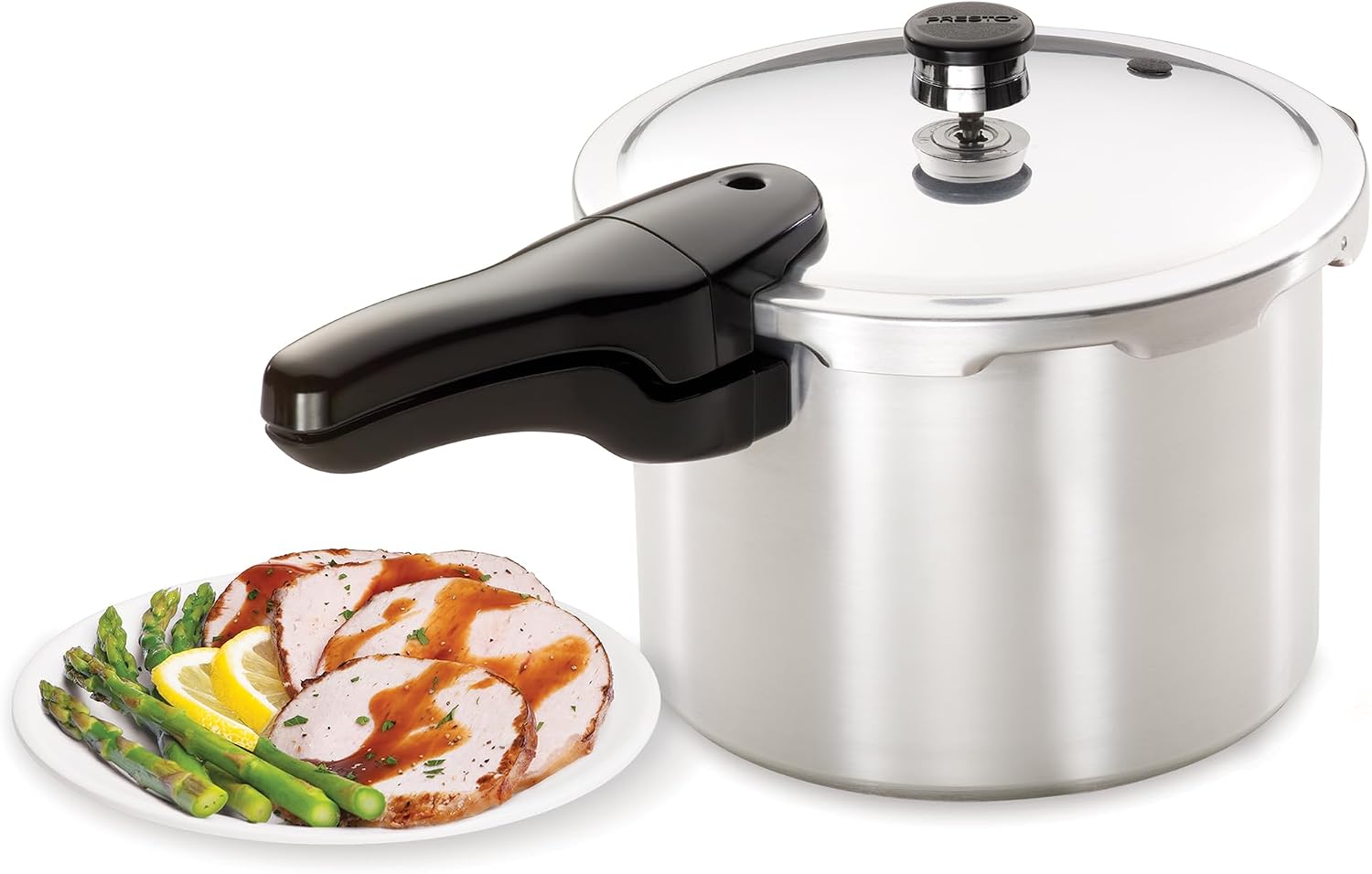
Presto 01264 6-Quart Aluminum Pressure Cooker
Light aluminum body heats fast, and the 6-quart size feeds a family without a second batch
Aluminum is not induction friendly and is the wrong pot for a long acidic simmer
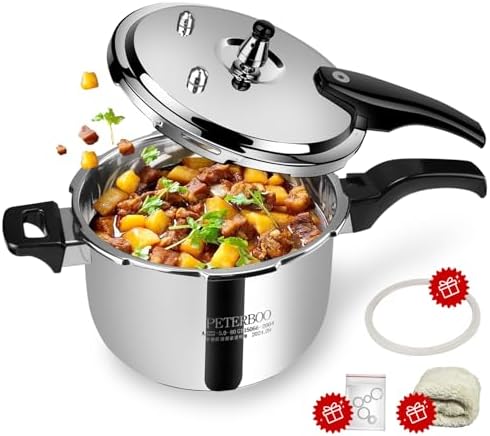
Premium Stainless Steel Small Pressure Cooker 3 quart
Small enough to cook a side dish or a pot of beans without heating a huge pot, and the stainless body shrugs off acidic food
3 quarts is not dinner for five, so it is a second pot rather than the main one
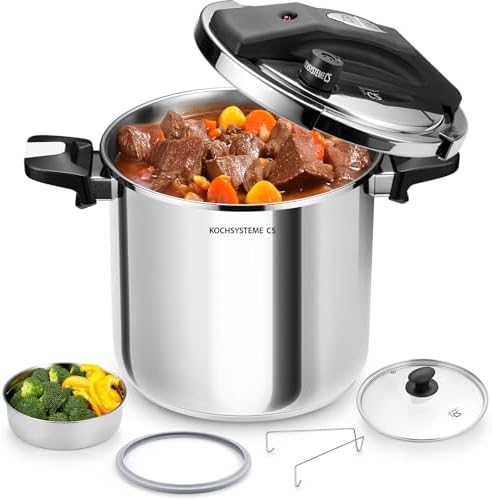
KOCH SYSTEME CS Stainless Steel Pressure Cooker 8.5 Quart, 3-in-1 Olla de Presion
8.5 quarts, induction compatible, one-hand locking, three pressure settings, plus a glass lid and steamer
The biggest footprint and the biggest spend of the three, and more pot than a two-person kitchen needs
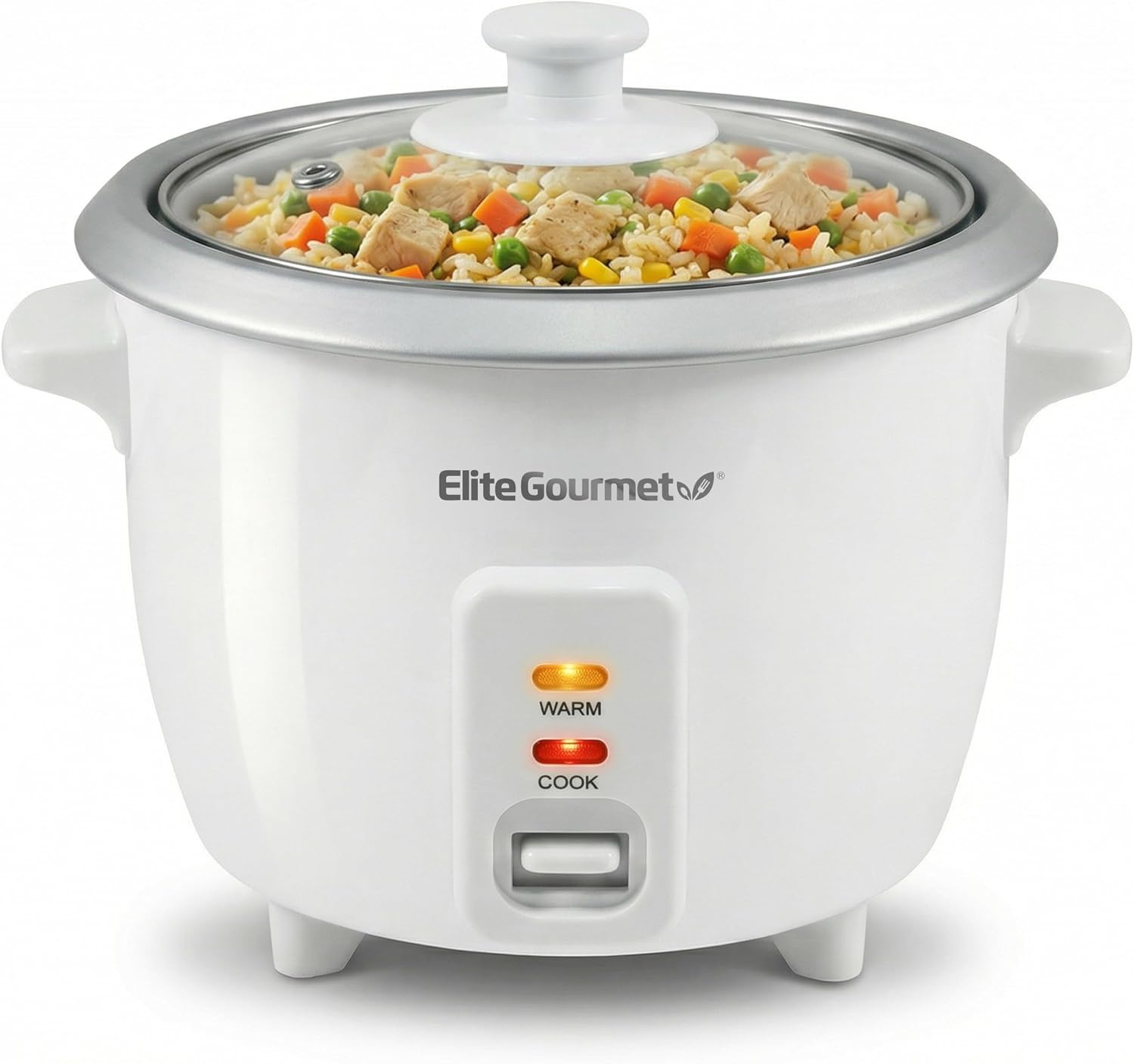
Elite Gourmet ERC-003X Rice Cooker, Keep Warm, White, 6 Cups Cooked
Keep warm holds rice at serving temperature so dinner is ready when the family is, and 6 cups cooked covers five plates
It is a rice cooker, not a pressure cooker, so it cannot build pressure, sear, or braise
Prices and availability were captured from Amazon Creators API and may change.
How I judge a stovetop pressure cooker
Four questions, same as always. Does it brown food in the open pot before the lid goes on? Does it come up to pressure and hold it without me hovering over the burner? Can I buy a replacement sealing ring when this one takes on the smell of last month's chili? And would it survive 30 weeknight dinners in my kitchen without a single meal turning into a cleanup project? That last one is the real test. Anyone can make a pot of soup in a new cooker on a Sunday afternoon. The test is a Thursday, when you get home late, the kids have homework, and you need pulled pork on the table without dirtying three pans.
A stovetop cooker earns its place by being simple. There is no control panel, no steam release button, no firmware to update. You put food in, you lock the lid, you set the burner, and you listen. That simplicity is the appeal and also the risk: everything depends on the pot itself, the gasket, and your ability to pay attention for the next 40 minutes. If you want a machine to do the thinking for you, an electric cooker is the better tool. If you want the fastest, most repairable, most forgiving-once-you-know-it pot in the kitchen, stovetop wins.
I do not recommend anything I have not cooked real dinners in, and I do not call a pot "one pot" until I count the pans that actually got dirty. That is the standard I am holding these four to.
Aluminum versus stainless steel is the real dividing line
The Presto 01264 is aluminum, and aluminum has one job it does better than anything else: it heats fast and it heats evenly. That matters when you are browning a pound of ground beef for chili before the lid goes on. Aluminum responds to the burner almost instantly, so you can build a fond, add your liquid, scrape the bottom, and move on. It is also light. Lifting a full 6-quart aluminum cooker off the stove is a one-hand job, which is not true of a full stainless pot of the same size.
What aluminum does not do is handle acid gracefully. A long simmer of tomatoes, wine, or vinegar is the kind of cooking that makes people nervous about bare aluminum, and I do not blame them. It is also not induction compatible, which matters a great deal if your kitchen has an induction range. My rule: aluminum for fast, meaty, brown-and-braise cooking, stainless when the recipe leans acidic or when the pot is going to live on the stove.
Both the 3-quart Premium Stainless Steel Small Pressure Cooker and the KOCH SYSTEME CS 8.5 Quart are stainless steel, and that is the material I would hand a beginner. Stainless costs more and heats more slowly, but it does not care what you cook in it, it does not take on color, and it looks like something you are happy to leave out. The trade-off is weight and responsiveness. You have to give a stainless pot a minute to come up to temperature before you add oil, or you will sear nothing and steam everything.
Size decides more dinners than any feature
Three quarts, six quarts, eight and a half quarts. This is the decision that actually changes your week.
The 3-quart Premium Stainless Steel Small Pressure Cooker is a sidekick pot. It is the one I would reach for to cook a batch of black beans, a pound of potatoes for mashing, or a quick pot of rice on a night when the main dish is already handled. It is also the right size for a household of one or two, or for anyone who cooks big once and eats for three days. What it is not is dinner for five. If you buy only this, you will be cooking two batches on the nights that matter most.
The Presto 01264 at 6 quarts is the classic family size, and it is the size I would call the default. Six quarts holds a whole chicken with room to spare, a big pot of bean soup, or enough pulled pork for five people plus one lunch the next day. It is the pot my grandma used, and it is the pot most people should learn on.
The KOCH SYSTEME CS 8.5 Quart is the batch cooker. Eight and a half quarts is what you want when you are feeding five people and packing lunches, or when you cook once on Sunday and eat all week. It is also the pot that makes the most sense for a big batch of stock, because you can cover bones and vegetables with water and still have headroom. The cost is footprint. It takes up a burner and a cabinet shelf, and a two-person household will find it oversized for a Tuesday.
Pressure settings, locking, and the parts you can replace
Most stovetop cookers give you one pressure level and a weighted regulator you learn to read by sound. The KOCH SYSTEME CS adds three pressure settings, which sounds like a gimmick until you actually use it. Lower pressure is gentler on delicate vegetables and fish; higher pressure is for dried beans and tough cuts. Having the choice means fewer nights where you are guessing and more nights where the pot does what you intended.
The one-hand locking on the KOCH is the feature I did not know I wanted until I had a pot of hot chili in one hand and a lid in the other. Locking a pressure cooker should be a single motion, not a wrestling match. If you have ever stood at the stove trying to seat a lid while your family asks when dinner is ready, you understand why this matters more than any preset.
Then there is the part nobody talks about until it becomes a problem: the sealing ring. That silicone gasket is what holds pressure, and it is also what absorbs the smell of everything you cook. If you cannot buy a replacement, the cooker is disposable, and I will say that plainly. Before you buy any of these, check that the maker sells the gasket and the overpressure plug as separate parts. A cooker with a two-year life is not a bargain at any price.
Also check the vent. A steam vent that sprays your ceiling is a small design flaw that ruins a big night. And check the bottom: the KOCH is induction compatible, which the aluminum Presto is not, and the 3-quart stainless is the one I would verify against your specific range before you commit to it.
Natural release is the setting nobody lists
Every stovetop cooker has two release methods, and the one that never appears on the box is the one that decides whether dinner is good. Natural release means you take the pot off the heat and let the pressure fall on its own. That is the difference between tender pulled pork and shoe leather. Quick release is faster, and it is what I reach for when I am impatient, which is more often than I like to admit.
The practical reason this belongs in a buying guide: a pot with a wide, stable base and a heavy lid is easier to leave alone. If a cooker feels tippy or the regulator rattles hard enough that you want to stand there and watch it, you will quick release everything, and your braises will suffer for it. A good stovetop pot buys you the confidence to walk away and set the table, which is the whole point of pressure cooking in the first place.
The rice cooker is not a pressure cooker, and that is the point
The Elite Gourmet ERC-003X Rice Cooker is in this comparison because it solves the half of dinner a pressure cooker cannot. Six cups cooked is enough rice for five plates, and the keep-warm function is the unsung hero of a weeknight. That is not a small feature. Keep warm is where weeknight dinners are actually won, because it means the rice is ready when the pork is, not twenty minutes later when the table has already moved on.
I want to be honest about what this appliance is. It cannot build pressure, it cannot sear, and it cannot braise a pork shoulder. It is a rice cooker with a keep-warm function, and if you already own one you like, this comparison does not need to change your mind. What it does is complete a stovetop setup. Pressure cooker for the main, rice cooker for the base, and one clean counter instead of three dirty pans.
Where each one loses
The Presto loses on material and range compatibility. Aluminum is not induction friendly, it is not the pot for a long acidic simmer, and it will not win a beauty contest on your stove. It wins on speed, weight, and the lowest cost of entry here.
The 3-quart loses on capacity, full stop. It is the most useful small pot in this group and the worst choice as an only pot for a family of five.
The KOCH SYSTEME CS loses on size and spend. It is the most capable cooker here, and it is also the one that takes up the most room and asks the most of your budget. In a small kitchen, that footprint is a real cost even before the money.
The Elite Gourmet loses on scope. It is not a pressure cooker, and anyone who buys it expecting one will be disappointed. It is a support appliance, and a good one, but it does not do the main job.
Should you start small or go big?
Start with the size that matches your smallest common dinner, not your biggest. If you cook for five, that means 6 or 8.5 quarts. If you cook for one or two, the 3-quart is the honest answer, and you can add a larger pot later when your cooking changes. Buying an 8.5-quart cooker for two people is how a good appliance becomes a shelf decoration.
One more thing before you buy: decide whether you want a stovetop cooker at all. A stovetop pot comes up to pressure faster and is easier to repair, but it demands attention and it makes noise. An electric cooker trades that speed for convenience and quiet. Neither is wrong, but they are different tools, and the best stovetop pressure cookers only make sense if you actually want to stand at the stove.
What I'm cooking next
I am still working through my 2026 run of weeknight dinners, one chili, one pulled pork, and one soup per machine, with a cleanup timer running the whole time. The next question I want to answer is whether an 8.5-quart stainless pot really replaces a stock pot for Sunday batch cooking, or whether it just becomes a second stock pot on the shelf. I will also be watching how the sealing rings on each of these hold up after a month of chili, because that is the part that decides whether a cooker earns a second year in my kitchen.