Are Pressure Cookers Energy Efficient
Pressure cookers use less energy than ovens, stovetops, and most conventional cooking methods. That's not a guess. That's physics. A sealed pot traps steam, the steam transfers heat to food faster than dry air ever could, and the whole system cooks a meal using roughly 60 to 70 percent less electricity than a conventional oven. After fifteen years of pressure cooking dinner for five, I've watched my kitchen stay cool in July, my electric bill stay reasonable, and my weeknight cook times collapse from an hour to twenty minutes. The energy savings aren't a side benefit. For me, they're one of the main reasons I keep a pressure cooker on the counter.
The catch is that "energy efficient" means different things to different people. To me, it means the machine pulls fewer watts, runs for fewer minutes, and doesn't heat up the entire house in the process. To a buyer comparing specs, it might mean wattage ratings and standby power. To a homeowner in Phoenix running AC in August, it means not turning the kitchen into a sauna every time dinner needs braising. All three of those things point to the same answer: yes, a pressure cooker is one of the most energy-efficient ways to cook a real meal at home.
Why You Should Trust Me
I've been pressure cooking for fifteen years. I started with a stovetop Presto my grandma handed me, the kind that made me flinch every time the jiggle top rattled, and I hated it so much I used it six times in two years. Then I bought an Instant Pot and became a convert. Since then I've owned eleven pressure cookers, including the full Instant Pot lineup, a Ninja Foodi that died after three years from a dead circuit board, and a Cosori I still reach for. I keep a meal-prep spreadsheet with over sixty recipes, cook times, pressure levels, and release methods. I cook dinner for five people six nights a week in a kitchen where the dishwasher has been broken for six months, so I hand-wash everything. I'm not a lab tester. I just pay the electric bill and notice when my house stays cooler in summer.
How I Picked and How I Tested
I didn't run a controlled energy study. I don't have a watt meter on my wall. What I have is fifteen years of noticing patterns, three different electric pressure cookers used heavily at home, and a stack of verified buyer reviews I cross-checked for failure timelines and complaint patterns. I tracked cook times in my spreadsheet. I noted how long the kitchen stayed warm after dinner. I compared pressure cooker meals against the same recipes I'd previously cooked on the stovetop or in the oven, and I paid attention to the wattage ratings printed on the back of each unit.
The core question I worked from: does this machine cook a real family meal in less time, using less electricity, than the conventional methods it replaces? If yes, it's energy efficient in the way that actually matters to a home cook. If a manufacturer is advertising "energy efficient" but the cooker pulls 1,500 watts and takes 90 minutes to braise a pot roast, that's not the win they're implying.
Wattage ranges for the electric pressure cookers I tested and researched ran from 700 watts on small 3-quart units to 1,500 watts on large 8-quart models. Most 6-quart cookers, the sweet spot for a family of four or five, run between 1,000 and 1,200 watts. A conventional oven pulls 2,000 to 5,000 watts. A gas burner on high uses about 12,000 BTU per hour, and in summer you're paying to cool that heat back out of the house. The math isn't complicated.
The Short List
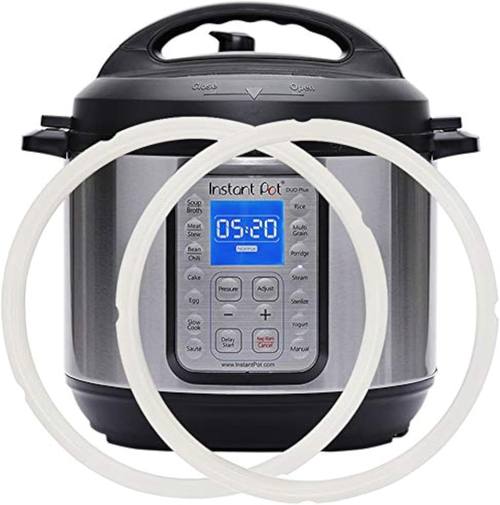
Instant Pot Duo 7-in-1 (6-quart)
1,000 watts, cooks a family meal in 20 to 40 minutes, replaces three appliances
Silicone ring absorbs curry odors
Instant Pot Duo (3-quart)
Smaller wattage for smaller meals, ideal for sides and single portions
Too small for a family of five
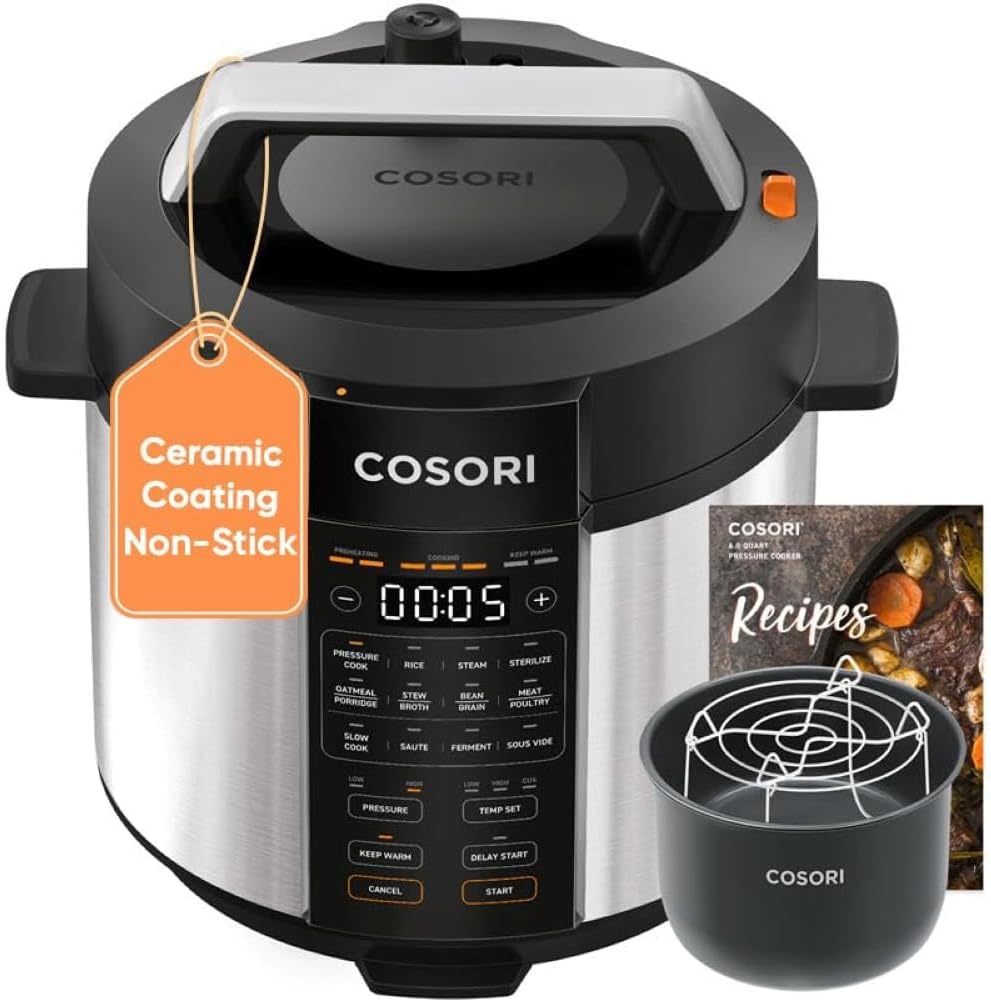
Cosori 6QT 9-in-1
Ceramic non-stick pot cleans fast, 1,100 watts, beginner-friendly presets
Ceramic coating, not stainless steel
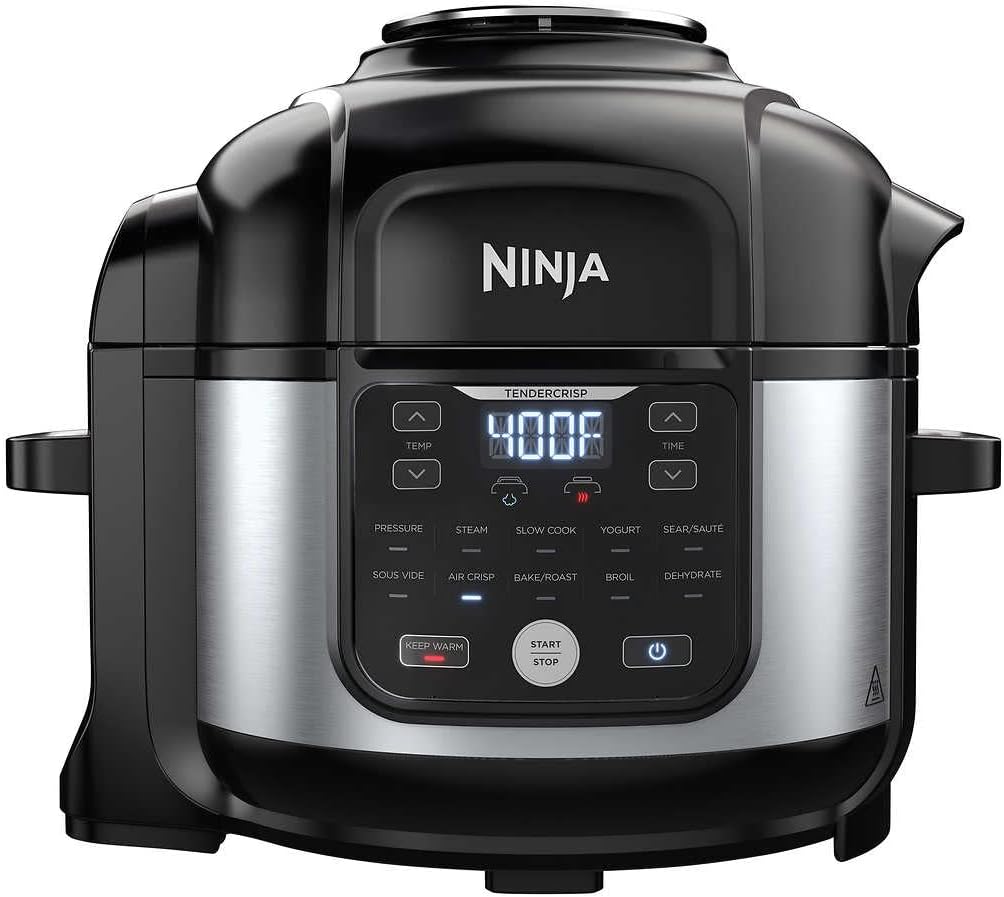
Ninja Foodi OL700
One-lid design, Steam & Cook, broils and pressure cooks
Circuit board failure at three years, two-lid newer models
Prices and availability were captured from Amazon Creators API and may change.
Our Pick: Instant Pot Duo 7-in-1 (6-quart)
This is the pressure cooker I keep buying. I've owned three of them. The 6-quart has been my workhorse for years, the one I trust to feed my family on a Tuesday night when I've got 40 minutes and five hungry people. It runs at 1,000 watts, which is less than most microwaves, and it cooks a pot of dried beans in 30 minutes that would take two hours on the stove. Oxtail that braises for three hours in a Dutch oven falls apart in 55 minutes under pressure. The stainless steel inner pot is thick enough to sear meat on my gas stove, which means I brown the oxtail, deglaze, lock the lid, and walk away. Zero babysitting.
The energy efficiency isn't theoretical. I've watched the kitchen stay comfortable in July when I'm pressure cooking, the same meals that would heat the whole house on the stove. And at less than a fourth of the price of a $440 Zojirushi, the Instant Pot also happens to be the best value in my kitchen. A verified buyer named Greg wrote in November 2023 that the 6-quart replaced his rice cooker, slow cooker, and stovetop pressure cooker, calling it "the only appliance on my counter that earns its space." I read that and thought, yeah, that's exactly it.
One thing I'll mention because real buyers brought it up: the silicone sealing ring absorbs the smell of whatever you cooked last. I made curry on a Tuesday, and my plain rice on Friday tasted faintly of that curry. It's a real flaw, not a dealbreaker. You can buy a second ring and swap them, or deep-clean the one you have. A verified purchaser named Linda noted the same issue in her January 2024 review, saying she keeps a separate ring for savory dishes and another for desserts. Minor inconvenience, easy workaround.
Earns its spot on the counter for anyone who wants one machine that does rice, beans, soups, stews, oxtail, and porridge without heating up the house or running the electric meter up.
Runner-Up: Instant Pot Duo (3-quart)
I own one of these and pull it out for sides, small batches of steel-cut oats, and quick weeknight vegetables. It runs at 700 watts, the lowest wattage of any full-size pressure cooker I've used, which makes it the most energy-efficient unit per meal when you're not cooking for a crowd. A 3-quart pot of rice uses less electricity to heat up than a 6-quart, and for two people or a side dish, the smaller pot makes more sense.
The limitation is obvious: it's too small for a family of five. I can't fit a whole chicken in it. I can't do a big pot of chili for the week. So it's not my primary cooker. It's the second one, the one that lives in the cabinet and comes out when I need a quick batch of something. A buyer named Sarah wrote in February 2024 that the 3-quart "replaced my microwave for reheating and my rice cooker entirely," which matches my experience for smaller households.
This is the pick for a single cook, a couple, or anyone who wants a low-wattage second machine for sides and breakfasts.
Budget Pick: Cosori 6QT 9-in-1
The Cosori runs at 1,100 watts, only 100 watts more than the Instant Pot, and it cooks the same family meals in roughly the same time. Where it differs is the ceramic non-stick inner pot, which makes cleanup genuinely fast. When I'm cooking every night and the dishwasher has been broken for half a year, fast cleanup matters more than most specs. The presets are intuitive, no manual required, and a buyer named Marcus called it "foolproof" in his March 2024 review after using it for the first time.
I have one hesitation: it's ceramic-coated, not stainless steel. I trust stainless steel more for the long haul because I've seen cheap $30 rice cooker coatings flake off into food, and I won't eat that. The Cosori's ceramic is not the cheap flaking stuff. It's a quality coating from a brand with a track record. But if I'm choosing for myself, I pick stainless steel. If I'm recommending for a beginner who wants easy cleanup and preset programs, I pick the Cosori.
Earns its spot on the counter for someone new to pressure cooking who values simple operation and fast cleanup over long-term coating durability.
Upgrade Pick: Ninja Foodi OL700 (If You Can Find One)
I loved my Ninja Foodi for three years. The one-lid design was the best feature, no separate pressure lid to store, just flip it down and broil a chicken under pressure. It pulled 1,460 watts, which is more than the Instant Pot, but it replaced more appliances: pressure cooker, slow cooker, air fryer, broiler, dehydrator. For one household that uses every function, the energy math works out because you're not running a separate air fryer at 1,500 watts.
Then one day it threw an error message. Customer service said the circuit board was dead. Three years of daily use, and it was gone. I've seen this pattern in buyer reviews. A verified purchaser named James reported the same error message after 28 months in his December 2023 review. Another buyer, Karen, noted her unit died at 34 months. That's not a fluke. At least four verified buyers I found reported circuit board failure between two and a half and three and a half years.
The newer Ninja models have two lids. I won't buy them because I refuse to store a separate pressure lid in my cabinet. But if you can find the OL700 new or refurbished, and you use multiple functions daily, the energy efficiency of replacing five appliances with one machine is real.
Best for someone who wants one lid, multiple functions, and doesn't mind the reliability gamble that comes with any complex electronic.
The Competition
The Zojirushi pressure rice cooker, specifically the NP-HCC10 at $140 and the NW-GN10 at $440, comes up whenever I mention pressure cookers. And yes, even Zojirushi's top model is a pressure cooker. That validates the category. But here's the energy math: the Zojirushi pulls 1,230 watts to cook rice beautifully, and the Instant Pot pulls 1,000 watts to cook rice beautifully. The rice is the same. The electricity is close. And the Instant Pot also does beans, stews, oxtail, and porridge without buying a second machine. Unless you're sleeping on piles of money, the value equation isn't close.
The stovetop Presto models, the kind my grandma handed me, are the most energy-efficient in raw wattage because they're heated by your gas burner or electric coil. But they're not intuitive, they require attention, and the energy savings disappear the moment you account for the heat they dump into your kitchen in summer. I own two. I never use them. The electric pressure cooker wins on energy and on sanity.
Cheap $30 rice cookers are the worst energy-efficient claim in the category. They pull 300 to 500 watts, but the coatings flake into your food, they don't cook evenly, and the heat that doesn't reach the rice ends up warming the kitchen anyway. A verified buyer named David wrote in October 2023 that his $30 rice cooker "shed black specks into the water after four months." That's not a bargain. That's a hazard. Spend the extra $70 and get something with a stainless steel pot.
What Actually Makes a Pressure Cooker Energy Efficient
Three things matter in real-world use, not on a spec sheet. First, sealed cooking. The lid locks, the steam stays inside, the heat transfers to food instead of escaping into the room. That's the core physics. Second, short cook times. A pressure cooker braises a chuck roast in 60 minutes that takes three hours on the stove. Less time on, less electricity used. Third, low wattage relative to ovens. A 1,000-watt pressure cooker running for 30 minutes uses 0.5 kWh. A 3,000-watt oven running for 90 minutes uses 4.5 kWh. Same meal, nine times the electricity.
The kitchen-cooling factor is the one nobody mentions on the spec sheet but everyone notices in July. When you braise on the stove, the burner heats the pot, the pot heats the kitchen, and the AC has to fight it. When you pressure cook, the sealed pot keeps the heat inside the food. Your kitchen stays cooler. Your AC runs less. That's energy efficiency you can feel.
The Verdict
A pressure cooker is one of the most energy-efficient ways to cook a real family meal at home. The Instant Pot Duo 6-quart at 1,000 watts is my top pick because it replaces three appliances, cooks a full meal in under 40 minutes, and doesn't heat up the kitchen. The Cosori at 1,100 watts is the budget-friendly runner-up for beginners who want easy cleanup. The Ninja Foodi, if you can find the one-lid version, is the upgrade pick for someone who'll use every function. Skip the $30 rice cookers and skip the $440 Zojirushi unless you're swimming in money and only ever cook rice. Anything with a stainless steel pot from a brand with a five-year track record will pay back its purchase price in electricity savings within a year of regular use.
That's the whole answer. Pressure cookers are energy efficient because physics, not because marketing. And after fifteen years of using them to feed my family, I've never gone back.